
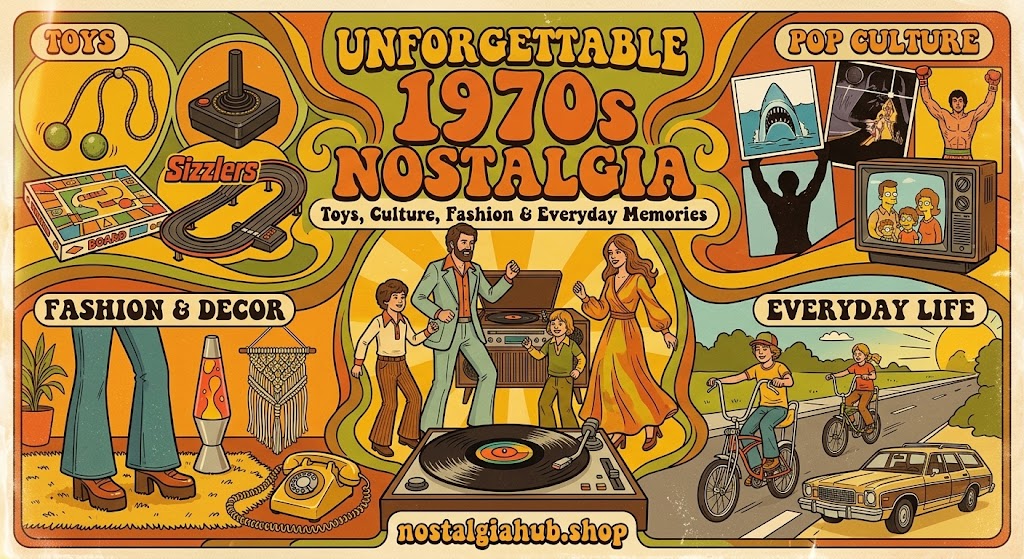
The 1970s was a decade unlike any other. It was a golden era defined by analog warmth, tangible connections, vibrant colors, and an incredible sense of freedom for kids and teenagers alike. Growing up in the 1970s meant living in a world untethered by smartphones, high-speed internet, or endless digital distractions. Life happened outdoors, in neighborhood streets, living room floors, and around family dinner tables.
Whether you remember the distinct hum of a record player, the clack of Clackers toys, or the excitement of Saturday morning cartoons on a CRT television, 1970s nostalgia holds a special, permanent place in our hearts. In this deep dive into retro culture, we are stepping back in time to explore the iconic toys, timeless pop culture, vibrant fashion, and unforgettable everyday lifestyle that made the 1970s truly legendary.
The Magical World of 1970s Toys and Retro Playtimes 1970s Nostalgia
Before screen time dominated childhood, play was tactile, creative, and physical. 1970s toys required imagination, energy, and sometimes even a little bit of physical bravery.
- Classic Board Games and Family Game Nights: Long before online multiplayer games, family entertainment meant gathering around a table for classic board games like Operation, Mastermind, Battleship, and Connect Four. These games were the staple of weekend family fun, fostering friendly competition and creating lasting memories.
- Iconic Outdoor Toys: The neighborhood street was the primary playground. Kids zipped down sidewalks on Sizzlers race tracks, classic Roller Skates with leather straps, and the legendary Big Wheel tricycle. Who could forget the classic Schwinn Sting-Ray bicycle, complete with a banana seat and high-rise handlebars?
- Novelty Toys and Fad Crazy: The ’70s gave birth to some of the most memorable toy fads in history. From the soothing, mysterious appeal of the Pet Rock to the bouncy fun of Hopper Balls, toys were quirky and simple. Atari 2600 made its grand entry late in the decade, introducing home video gaming to millions of excited households.
- Action Figures and Collectibles: The late 1970s saw a massive shift in pop culture toys, thanks largely to the release of Star Wars in 1977. Kenner’s line of 3.75-inch Star Wars action figures, along with GI Joe, Evel Knievel stunt cycles, and Stretch Armstrong, revolutionized the toy industry forever.
Pop Culture, Movies, and the Rise of Blockbuster Cinema
The 1970s was a transformative era for entertainment. It was the age where modern cinema was born, television became a central hub of household entertainment, and music changed its beat.
- The Golden Age of Cinema: Cinema in the 1970s produced some of the greatest films ever made. The decade gave us the concept of the summer blockbuster with Steven Spielberg’s Jaws (1975) and George Lucas’s Star Wars (1977). Meanwhile, cinematic masterpieces like The Godfather, Rocky, Taxi Driver, and Alien captivated adult audiences and redefined story-telling.
- Iconic 1970s Television Shows: Television brought families together every night. Classic TV shows like The Brady Bunch, Happy Days, Three’s Company, All in the Family, and M*A*S*H delivered comfort, humor, and social commentary. On Saturday mornings, kids eagerly woke up early to watch classic cartoons like Scooby-Doo, Super Friends, and The Bugs Bunny Show while eating bowls of sugary cereal.
- Music Revolution: Disco, Classic Rock, and Vinyl Records: Music in the ’70s was a powerful cultural movement. The warmth of playing vinyl records on a stereo console provided an immersive sound experience. The decade saw the birth and rise of Disco—immortalized by Saturday Night Fever and artists like The Bee Gees, Donna Summer, and ABBA. On the other side of the musical spectrum, classic rock icons like Led Zeppelin, Pink Floyd, Queen, Fleetwood Mac, and David Bowie produced timeless albums that still dominate radio airwaves today.
1970s Fashion and Home Decor: Bold, Funky, and Unapologetic
If one word could describe 1970s style, it would be expressive. Fashion and interior design during this decade were bold, earthy, and distinctly unmistakable.
- Fashion Trends and Street Style: Bell-bottom jeans, platform shoes, wide-collared shirts, and polyester leisure suits were absolute staples. Tie-dye shirts, corduroy pants, tube socks with colorful stripes, and denim jackets defined casual youth culture. High fashion embraced bohemian chic with flowing maxi dresses, floppy hats, and suede fringe jackets.
- Earthy Tones and Interior Design: Stepping into a 1970s home was a rich visual experience. The color palette was dominated by earthy tones: avocado green, harvest gold, burnt orange, and deep brown. Shag carpeting, wood-paneled walls, macramé wall hangings, and lava lamps gave living rooms a cozy, distinctly groovy ambiance.
Everyday Life in the 1970s: Simplicity, Freedom, and True Connection
Beyond the pop culture and toys, what people miss most about growing up in the 1970s is the unique rhythm of everyday life. It was a lifestyle grounded in independence, face-to-face social interactions, and analog simplicity.
- Outdoor Freedom and Street Play: Kids in the ’70s enjoyed a level of freedom that seems unimaginable today. The unwritten rule of the summer was simple: leave the house after breakfast, play outside all day with neighborhood friends, and return home when the streetlights came on. There were no cell phones to track locations; parents trusted their kids to explore, build fortresses, and navigate their own adventures.
- Analog Communication: Communication required effort and patience. Long-distance phone calls were expensive, and family phones were anchored to kitchen walls with long, tangled spiral cords. Teenagers spent hours standing in the hallway talking on landline phones, hoping no one else picked up the extension in another room. Writing physical letters, mailing postcards, and waiting weeks for printed photo film to be developed were normal parts of daily routine.
- The Neighborhood Community: Neighbors truly knew each other. Block parties, front-porch conversations, borrowing a cup of sugar, and spontaneous backyard barbecues created tight-knit communities. Life moved at a slower, more deliberate pace, allowing people to fully engage with the world directly around them.
Why 1970s Nostalgia Still Matters Today
In today’s fast-paced, hyper-connected digital age, looking back at the 1970s provides a sense of comfort, warmth, and grounding. Nostalgia isn’t just about missing the past; it’s about remembering a time when life felt simpler, human connections were unfiltered, and joy was found in the little things.
The music, the cinema, the bold design aesthetics, and the carefree childhood memories of the 1970s continue to inspire modern fashion, art, and storytelling. As decades pass, the magic of the ’70s remains timeless, proving that while times change, true golden memories never fade.
3 thoughts on “Unforgettable 1970s Nostalgia: Childhood & Retro Culture”