
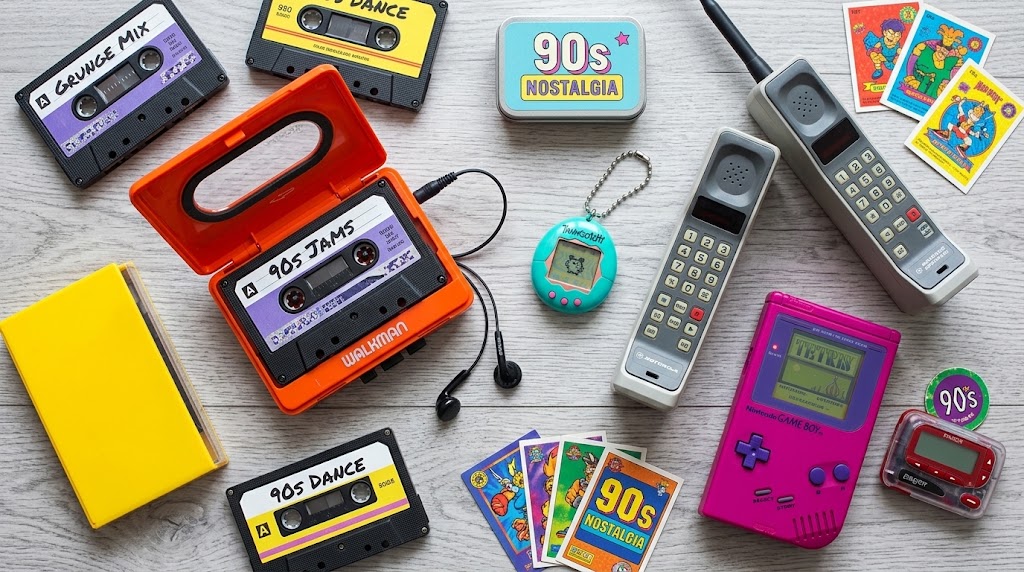
The 1990s was a remarkable decade that bridged the gap between traditional analog lifestyles and the rapid dawn of the digital age. Before hyper-connected smartphones, endless social media feeds, and instant algorithmic entertainment took over daily life, growing up in the 90s meant experiencing a vibrant world defined by physical play, tactile media, and iconic pop culture.
From groundbreaking entertainment to bold fashion choices, retro 90s trends left an indelible mark on history. Today, 90s nostalgia pop culture continues to inspire modern fashion, media revivals, and collective memory. Let’s journey back in time to explore 12 iconic trends and memories that defined what it truly meant to be a child of the nineties.
1. The Cable TV Era and MTV’s Music Video Revolution
Before video streaming platforms allowed viewers to watch any song or show on demand, television was the primary anchor of youth culture. During the 1990s, Music Television (MTV) reached its absolute peak, transforming how music was consumed globally.
Teens and young adults spent hours tuned into music video countdowns, waiting patiently for their favorite tracks to play. Iconic shows like Total Request Live (TRL) created a shared cultural space where fans gathered outside studios to cheer for their favorite pop, rock, and hip-hop icons.
2. Arcade Culture and the Rise of Home Gaming Consoles
The 1990s witnessed an incredible evolution in video game technology. Local shopping mall arcades were bustling hubs of friendly competition, filled with flashing lights, coin slots, and the loud sounds of 8-bit and 16-bit audio effects.
Concurrently, home video game systems brought that arcade excitement directly into family living rooms.
| Gaming Era Marker | Arcade Experience | 90s Home Console Revolution |
|---|---|---|
| Primary Medium | Quarters & Tokens | Physical Cartridges & CDs |
| Social Dynamics | Physical local crowds | Multiplayer split-screen with friends |
| Graphics Evolution | High-end 2D sprites | Introduction of groundbreaking 3D worlds |
The transition from 2D pixel art to full 3D graphics in the mid-90s completely revolutionized interactive entertainment forever.
3. Neon Colors, Windbreakers, and Bold 90s Fashion
Few decades possessed a fashion identity as recognizable as the 1990s. Early 90s street fashion embraced bright neon patterns, geometric color blocking, oversized graphic tees, and loud geometric designs.
- Oversized nylon crinkle windbreaker jackets
- Baggy denim jeans paired with heavy leather belts
- High-top sneakers with bright accent colors
- Flannel plaid shirts tied around the waist
Later in the decade, the grunge music movement introduced a more relaxed style featuring flannel shirts, ripped denim, and combat boots, establishing a timeless aesthetic that continually returns to modern runways.
4. The Magic of Physical Video Rental Stores
Weekend entertainment in the 1990s revolved around visiting local neighborhood video rental shops. Walking down brightly lit aisles surrounded by shelves of VHS tapes was an exciting Friday night routine for families and friends.
Renting a movie required careful decision-making because you were limited by physical inventory. If the popular new release was out of stock, you had to browse the catalog sections to discover hidden cinematic gems.
5. Pocket-Sized Handheld Gaming Systems
Long before mobile phone games existed, portable gaming was dominated by dedicated handheld consoles with monochrome green-and-black screens. Carrying a handheld system allowed 90s kids to take their gaming adventures anywhere—from long road trips to school bus rides.
Playing under a blanket at night required buying clip-on reading lights because early screens lacked built-in backlights. Despite technical limitations, the sheer joy of playing full adventure games on the go was unforgettable.
6. The Phenomenon of Physical Collectibles and Toy Crazes
The 1990s introduced legendary toy crazes that created massive retail excitement worldwide. Children meticulously organized, traded, and preserved their favorite collectible items.
- Pocket Monsters: Trading cards swapped on school playgrounds.
- Beanie Plushies: Stuffed animals saved as potential investments.
- Interactive Digital Pets: Small keychain virtual animals requiring daily care.
The thrill of opening a fresh pack of collectible cards or finding a rare edition toy produced an authentic sense of joy that modern digital collectibles struggle to replicate.
7. The Nostalgic Era of Dial-Up Internet and Early Chat Rooms
Entering the digital world in the mid-to-late 90s was a unique sensory experience. Connecting to the internet involved dialing through physical telephone lines, accompanied by iconic connection sounds and static chirps.
Early internet users gathered in online chat rooms and instant messaging applications. Creating a custom screen name, setting a dramatic away-message, and typing in simple text formatting formed the foundation of early online social interaction.
8. Mixtapes, CD Burning, and Custom Playlists
Music personalization required hands-on effort throughout the decade. In the early 90s, music lovers spent hours sitting next to radio sets to record custom cassette mixtapes.
By the late 90s, recordable compact discs (CD-Rs) became accessible for home computers. Creating a custom CD playlist involved selecting songs, waiting for the disc to write, and writing track titles on the disc surface with permanent markers.
9. Iconic 90s Snack Culture and School Lunchboxes
School lunches in the 1990s featured a distinct lineup of colorful, memorable snack items. Food packaging embraced playful graphics, bright colors, and interactive elements designed specifically for kids.
From fruit-flavored chewy snacks that unrolled like tape to powdered drink mixes that turned water neon colors, lunchboxes were mini trading hubs where kids swapped snacks during recess.
10. The Golden Age of Saturday Morning Animation
For 90s children, Saturday morning television was an unmissable weekly ritual. Kids woke up early, grabbed breakfast, and sat in front of the TV for hours of uninterrupted animated entertainment.
Animated series of the era featured rich storytelling, memorable theme songs, and iconic artwork. These shows created shared cultural conversations among classmates every Monday morning.
11. Print Catalog Shopping and School Book Fairs
Before e-commerce made shopping an instant click-based experience, browsing physical print catalogs was a favorite pastime. Children eagerly flipped through holiday toy catalogs, circling desired items with markers.
Similarly, school book fairs transformed library spaces into pop-up bookstores filled with adventure novels, poster displays, novelty pens, and activity kits that fostered a love for reading.
12. Why Retro 90s Trends Continue to Inspire Modern Culture
The enduring appeal of retro 90s trends lies in the decade’s unique balance between technological progress and genuine human connection. The 90s provided enough technology to connect us, yet retained an analog simplicity that encouraged physical presence and real-world creativity.
As modern life becomes increasingly fast-paced, revisiting the pop culture, media, and memories of the 1990s offers a comforting reminder of a simpler, vibrant era.