
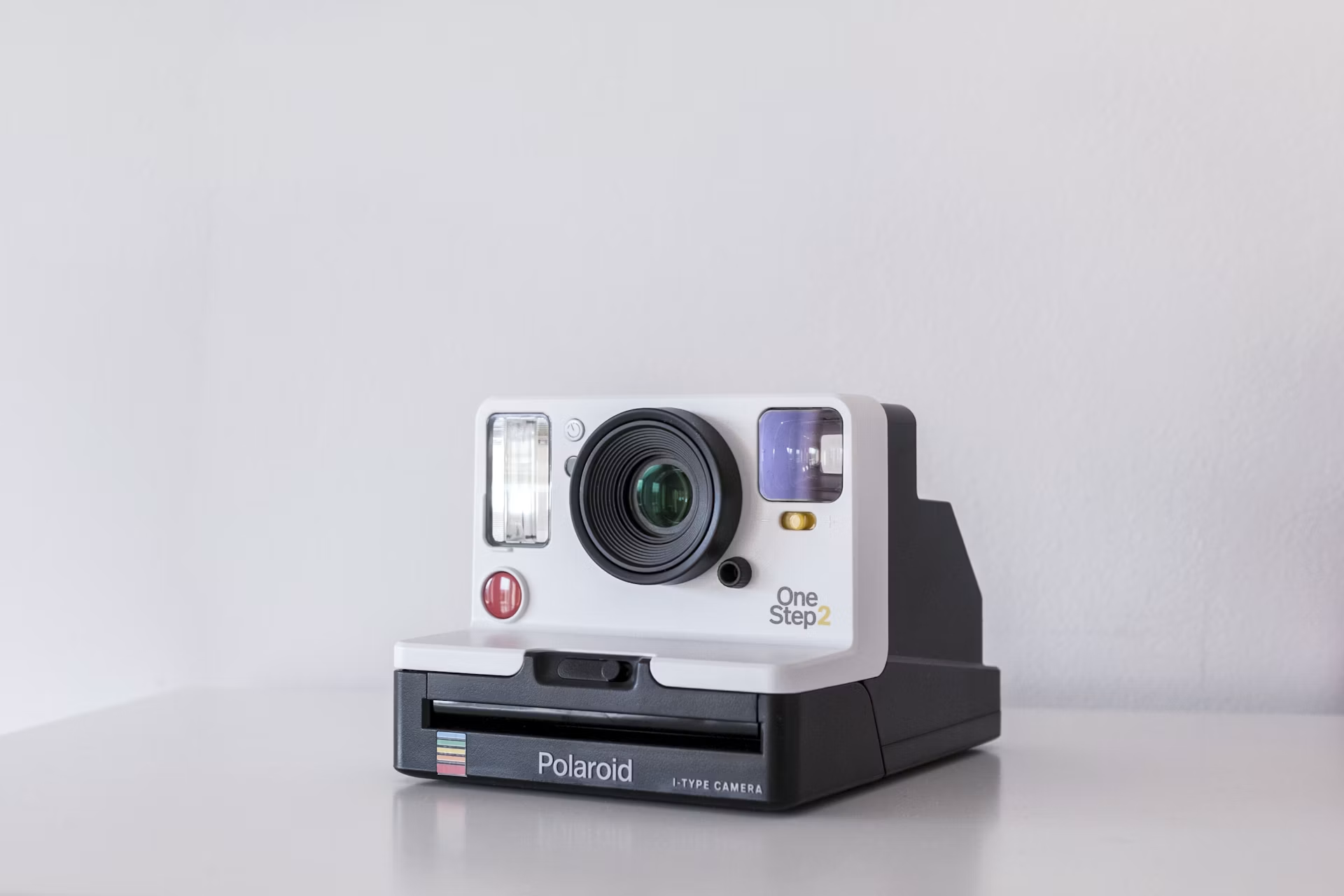
There is a quiet, dusty shoe box sitting at the top of a closet in almost every family home. Inside that box, tucked beneath forgotten documents and old receipts, lies a collection of glossy paper rectangles with soft edges and slightly faded colors. Flipping through those physical photographs instantly transports us back in time—not just to a specific day, but to the exact feeling of a moment frozen forever on film.
In our current digital age, taking a picture requires zero effort. We pull out a smartphone, tap a glass screen a dozen times, check the preview, delete the ones where someone blinked, apply a filter, and store the file on a cloud server where it may never be looked at again. We take thousands of photos a year, yet we rarely touch a single photograph.
Looking back at the lost era of film photos, we realize that photography used to be an event. It was a physical craft that required patience, expense, and emotional investment. Reconnecting with those printed memories reminds us of a time when images were not cheap digital files, but cherished physical keepsakes.
The High-Stakes Art of Taking Film Photographs
When you loaded a 35mm film cartridge into a point-and-shoot camera back in the day, you were making a conscious commitment. A standard roll gave you twenty-four or thirty-six exposures. That was it. You could not erase a mistake, you could not swipe left to try again, and you certainly could not see what the image looked like until weeks later.
This scarcity forced us to be present and intentional:
- Making Every Shot Count: People did not waste film on pictures of their lunch or random street corners. You saved your roll for big milestones—birthdays, family trips, school graduations, and festival gatherings.
- Embracing Natural Imperfections: Because you could not review the photo immediately, human flaws remained intact. Slight motion blur, candid laughter, eyes half-closed, and unexpected sun flares were captured forever. These imperfections are precisely what give vintage photos their genuine human feel.
- The Frame Limit Discipline: Knowing you only had a few shots left on the roll created a natural rhythm to events. You took one or two group photos, put the camera back in its leather case, and went back to enjoying the moment with the people around you.
The Ritual of the Local Photo Developing Lab
For anyone who lived through the 1980s, 1990s, or early 2000s, the trip to the local photo processing lab was filled with unmatched anticipation. Whether it was a corner pharmacy, a dedicated photo studio, or a one-hour photo kiosk at a local shop, dropping off a finished film canister was the first step in a small personal adventure.
The Waiting Period
After handing over the small metal roll, you received a paper claim ticket with a number printed on it. Then began the wait. Depending on your budget, you waited an hour, twenty-four hours, or sometimes a full week if the film needed specialized processing.
That delay created a unique sense of excitement. You spent those days wondering if the shots from the beach trip turned out clear, or if the flash was bright enough during the evening birthday party.
Opening the Paper Envelope
The moment of truth arrived when the clerk handed over the thick paper envelope containing your prints and the processed film negatives. Walking out to the car or sitting on a bench outside the shop, you would immediately break the tape seal and flip through the stack.
There was a distinct smell of photographic processing chemicals on fresh paper, and holding those crisp, glossy prints in your hands created a moment of shared joy as family members leaned in over your shoulder to see how the pictures turned out.
Why Physical Photo Albums Matter More Than Cloud Drives
Digital storage offers infinite space, but it lacks soul. A hard drive containing fifty thousand unorganized JPEG files buried in complex folder directories does not invite spontaneous storytelling. Physical photo albums, on the other hand, are designed for human connection.
The Craft of Album Building
Filling a family photo album was a creative family project. Sitting down at a table with sticky photo corners, colorful pens, and magnetic page albums, parents and children organized prints chronologically. Writing dates, locations, and funny inside jokes in the margins turned a simple binder into a historical record of a household.
Tactile Memory Triggers
Holding a physical object engages multiple senses at once:
- Texture: The feel of thick photographic paper and plastic sleeve covers adds a layer of reality that scrolling on a cold glass screen cannot replicate.
- Focus: Looking through an album forces you to sit down and pay attention. There are no battery warnings, pop-up notifications, or incoming text messages to pull your focus away from the memory.
- Generational Bridge: Passing a heavy, leather-bound album from one person to another across a living room rug creates an environment where elders share stories with younger generations naturally.
Technical Comparison: Film vs. Modern Digital Memories
To understand why old physical photographs evoke such deep emotional responses compared to modern image files, look at how the two mediums function:
| Feature / Aspect | Vintage Film Photography Era | Modern Smartphone Digital Era |
| Storage Medium | Chemical film rolls & paper prints | Digital flash memory & cloud servers |
| Capacity per Event | 24 to 36 shots per film roll | Unlimited shots (thousands of files) |
| Feedback Time | Hours to weeks (requires chemical lab) | Instantaneous live preview |
| Tangibility | Physical, touchable object you can hold | Virtual pixels rendered on a display |
| Aging Process | Fades gracefully, acquires physical patina | Files remain identical or become corrupted |
| Curation Level | Highly curated due to cost and effort | Overwhelming volume, rarely organized |
How to Protect and Preserve Your Family Photo Legacy
Because old print photographs are physical objects made of paper and sensitive organic dyes, time and environmental factors are their worst enemies. Heat, moisture, direct sunlight, and acidic materials can cause prints to stick together, fade, or yellow over time.
Safe Storage Rules for Vintage Prints
If you want to ensure your family’s history survives for future generations, follow these basic archival steps:
- Keep Away from Basements and Attics: Humidity fluctuations in attics and dampness in basements accelerate mold growth and paper rot. Store your photo boxes in a temperature-controlled bedroom closet instead.
- Use Acid-Free Archival Materials: Avoid old-style “magnetic” sticky albums from the 1970s, as the glue turns yellow and ruins the back of prints over time. Use acid-free paper sleeves and photo-safe mounting corners.
- Digital Backup for Safety: While physical prints should always be preserved, scanning your most precious vintage photos using a flatbed scanner gives you a safe digital backup in case of physical loss.
Frequently Asked Questions
Why do old film photographs have a unique warm color tint? Vintage film photos get their iconic look from the specific chemical formulations used by manufacturers like Kodak and Fujifilm during that era. Over time, as the organic dyes in the paper age and react subtly with light and oxygen, the colors shift toward warm yellow, orange, and reddish tones.
Are old photo negatives worth keeping if I already have the prints? Yes, absolutely! The film negative is the true master copy of the image. It contains far more visual detail and dynamic range than the printed paper version. If a print gets damaged or faded, a high-resolution print or digital file can easily be recreated directly from the original negative.
Why is analog film photography becoming popular again among younger generations? Younger people who grew up entirely in a digital world are discovering the beauty of tactile, slow-paced experiences. Film photography offers them a break from constant screens, forcing them to slow down, think about composition, and enjoy the magical mystery of waiting for their shots to develop.
The printed memories tucked away in our old photo albums are far more than just paper and ink. They represent our real, unfiltered past—a time when life moved a little slower, moments were lived before they were captured, and a simple envelope of glossy prints could bring an entire family together around a table. Preserving these physical treasures ensures that our personal stories remain tangible, real, and alive for years to come.