
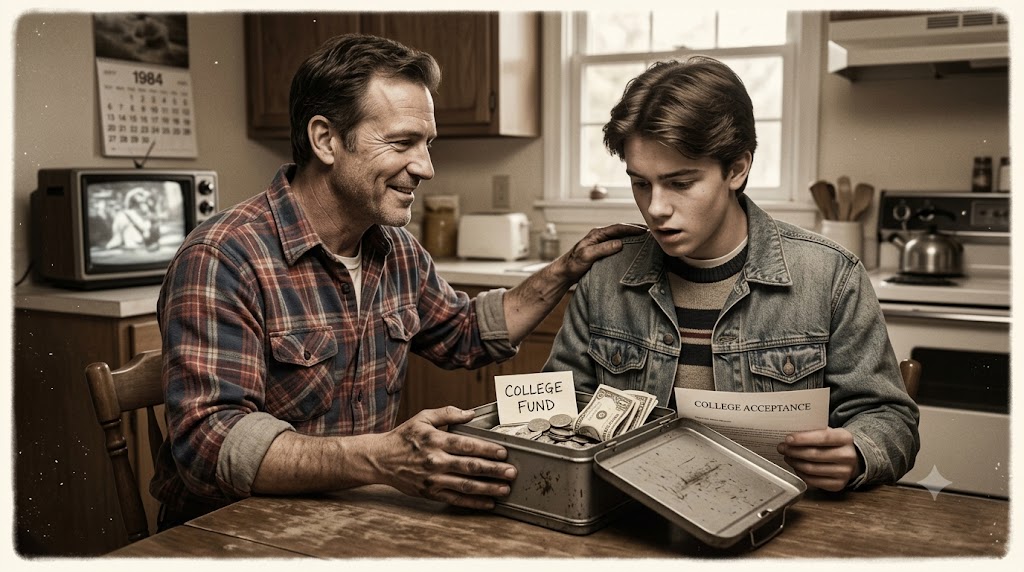
Growing up in suburban America during the 1970s and 1980s was an extraordinary experience. Life was simpler, neighborhood streets were vibrant, and community bonds ran deep. Kids rode their Schwinn bicycles until the streetlights flickered on, spent lazy summer afternoons drinking water straight from garden hoses, and listened to classic rock hits on vinyl records and cassette tapes. Saturday morning cartoons were a sacred tradition, and families gathered around bulky console television sets every evening. Yet, behind the warmth, laughter, and simplicity of those golden decades were hard-working parents who quietly poured every ounce of their energy into building a better future for their children.Growing up in suburban America, the 1984 metal lunchbox represented an extraordinary experience…
Back in the late 1970s, my father was a typical American blue-collar worker. He worked long hours at the local manufacturing plant, coming home every evening with grease on his hands, dust on his clothes, and exhaustion in his eyes. He wore the exact same pair of dark leather work boots for years, carefully patching the seams whenever they tore and replacing the worn soles himself. As a young boy growing up in a world where appearances seemed to matter, I did not always understand his choices. I felt foolishly embarrassed when he picked me up from middle school in his rusty, faded pickup truck while other parents arrived in shiny new sedans. I often caught myself wishing that he wore tailored suits, owned a modern watch, or worked a quiet office job like the fathers of my classmates.
What my young mind failed to realize was that every penny my father spared was dedicated to a goal far greater than personal luxury, new clothes, or a brand-new vehicle.
In the crisp fall of 1984, everything changed. I was sitting at my bedroom desk, staring at an official acceptance letter from the state university. While I was thrilled about the opportunity, a heavy cloud of anxiety hung over me. We were a humble family, and I knew that paying for college tuition, textbooks, and housing would be a massive financial burden.
As I sat there worrying about the future, my father walked softly into the room. He was still wearing his faded flannel shirt from work. In his hands, he carried his heavy, scratched-up metal lunchbox—the very same lunchbox he had carried to the factory floor every single morning for over twenty years. He placed it gently on my wooden desk, looked at me with a quiet smile, and flipped open the steel latches.
I looked inside, expecting to see an empty thermos or leftover tools. Instead, the lunchbox was filled to the brim. Packed tightly inside were rolls of quarters, stacks of worn five-dollar and ten-dollar bills, and envelopes neatly bound with rubber bands. Resting on top of the cash was a small index card with a short note written in his rough, slanted handwriting:
“For my son’s college fund. Today, you become the man I always dreamed you would be.”
My father had lived in total simplicity for over two decades. He skipped buying new shoes, passed on modern conveniences, turned down weekend leisure trips, and saved every extra dollar he earned from overtime shifts—all so that his son could have access to opportunities he was never offered. He was not a man of grand speeches or frequent emotional declarations. He rarely said “I love you” out loud, but he demonstrated those words every single day through sweat, discipline, and unconditional sacrifice.
When we look back at the 1950s, 1960s, 1970s, and 1980s today, we do not merely miss the vintage muscle cars, the classic rock anthems, or the retro fashion trends. We miss the profound core values, the unshakeable integrity, and the selfless devotion of the parents who raised us. They taught us the true meaning of hard work, family honor, and quiet resilience.
1 thought on “The 1984 Metal Lunchbox: A True Story of Sacrifice”