
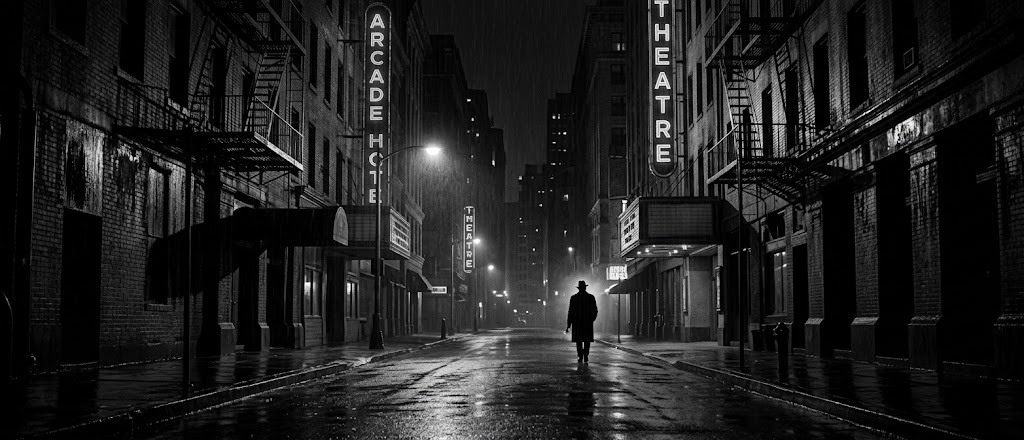
The Golden Era of Film Noir: Shadows & Hollywood Cinema
Film Noir stands as one of the most distinctive, stylized, and influential movements in the history of motion pictures. Emerging in American cinema during the early 1940s and continuing through the late 1950s, this cinematic style transformed how movies explored morality, psychological complexity, and urban life. Characterized by striking visual contrasts, morally ambiguous protagonists, tragic heroines, and fatalistic storylines, Film Noir permanently shifted Hollywood away from simplistic happy endings and introduced audiences to a darker, more realistic narrative landscape.
While classic Hollywood was historically celebrated for lighthearted musicals, heroic Westerns, and epic historical dramas, Film Noir looked into the complex underbelly of post-WWII society. Understanding this iconic genre offers movie lovers, film students, and casual viewers a deep appreciation for how cinematography, screenwriting, and societal anxiety can blend to create timeless artistic masterpieces.
1. The Origins and Historical Context of Film Noir
To fully appreciate the style and tone of Film Noir, one must examine the socio-political climate in which it flourished. Film Noir was not created in an artistic vacuum; it was a direct reflection of mid-20th-century cultural anxiety, global conflict, and shifting economic dynamics.
Post-World War II Anxiety and Disillusionment
During and immediately following World War II, millions of American soldiers returned home from foreign battlefields. Many experienced severe psychological trauma, difficulties re-integrating into civilian routines, and a profound sense of existential disillusionment. At the same time, the rapid growth of industrialized cities created an atmosphere of urban isolation.
Hollywood screenwriters and directors captured this pervasive sense of unease. Instead of portraying ideal suburban families or brave war heroes, noir films reflected:
- Cynicism toward traditional institutions and government authority
- Paranoia regarding hidden motives, crime networks, and betrayal
- Fear of financial instability and the dark temptations of quick wealth
- Existential dread driven by the emerging nuclear age and the Cold War
European Influences and German Expressionism
The visual foundation of Film Noir was heavily influenced by European filmmakers who fled Nazi-occupied Europe during the 1930s. Directors such as Fritz Lang, Billy Wilder, Otto Preminger, and Robert Siodmak brought the bold aesthetic techniques of German Expressionism straight to California studios.
German Expressionism emphasized emotional states over realistic representation. By utilizing harsh angular shadows, distorted set geometry, exaggerated camera angles, and high-contrast lighting, these refugee directors transformed standard American crime stories into dark visual poetry.
2. Defining Visual and Technical Elements of Film Noir
Film Noir is instantly recognizable due to its rigorous visual grammar. Long before digital color grading and advanced computer-generated visual effects, cinematographers used physical lighting techniques, lens choices, and camera positioning to construct mood and tension.
Low-Key Lighting Mastery
Standard Hollywood productions during the 1940s relied on “three-point lighting” to ensure stars looked bright, glamorous, and fully illuminated. Noir cinematographers broke these rules by eliminating fill lights. By relying primarily on a single bright key light alongside deep darkness, they created stark visual contrast. Shadows became active story elements, often hiding characters’ faces or projecting menacing silhouettes against alleyway walls.
Unconventional Camera Angles and Composition
Noir directors frequently placed cameras at extreme low angles, making urban skyscrapers look looming and claustrophobic. Wide-angle lenses were utilized to distort interior spaces, making modest hotel rooms or office spaces feel vast, lonely, and threatening. Framed shots often placed characters behind staircase railings, mirror reflections, or heavy doors, visually reinforcing themes of imprisonment, double identity, and deception.
3. Character Archetypes and Narrative Tropes
Beyond its visual aesthetic, Film Noir is defined by its distinct character dynamics and storytelling structures. Unlike traditional heroic tales where good easily triumphs over evil, noir narratives occupy a gray moral space where every decision carries catastrophic consequences.
The Cynical Anti-Hero
The typical noir protagonist is rarely an idealized hero. Whether working as a private investigator, an insurance salesman, an ex-boxer, or a down-on-his-luck journalist, the protagonist is usually weary, morally compromised, and financially desperate.
Key traits of the classic noir anti-hero include:
- A tragic or mysterious past that haunts his present choices
- A cynical worldview masked by sharp, rapid-fire, sarcastic dialogue
- Vulnerability to manipulation by seductive or ruthless figures
- A flawed moral compass that leads him into dangerous criminal webs
The Femme Fatale
Perhaps the most famous archetype popularized by Film Noir is the Femme Fatale—a mysterious, ambitious, intelligent, and seductive woman who uses her wit and charm to manipulate the protagonist into dangerous situations.
In post-war America, as women entered the workforce in unprecedented numbers, social attitudes regarding gender roles were rapidly shifting. The Femme Fatale reflected male anxiety regarding female independence, sexual agency, and financial ambition. Characters like Phyllis Dietrichson in Double Indemnity (1944) or Kathie Moffat in Out of the Past (1947) were clever, independent, and unwilling to adhere to traditional domestic expectations.
Non-Linear Storytelling and First-Person Voiceover
Noir screenplays pioneered complex narrative structures that rejected simple linear timelines. Films frequently began at the very end of the story—sometimes with the protagonist already dying or arrested—before flashing back to reveal how events unfolded.
Voiceover narration was extensively used to provide internal monologue. This technique allowed audiences to hear the protagonist’s private thoughts, regrets, and fatalistic observations, creating an intimate, tragic bond between the viewer and the doomed main character.
4. Key Masterpieces That Defined the Noir Era
To truly understand the progression of Film Noir, one must explore the benchmark films that established and refined the genre during its prime years.
| Film Title | Release Year | Director | Lead Cast | Cinematic Significance |
| The Maltese Falcon | 1941 | John Huston | Humphrey Bogart, Mary Astor | Widely considered the first official Film Noir; defined the iconic private detective trope. |
| Double Indemnity | 1944 | Billy Wilder | Fred MacMurray, Barbara Stanwyck | Established the benchmark for the Femme Fatale archetype and non-linear murder plots. |
| Gilda | 1946 | Charles Vidor | Rita Hayworth, Glenn Ford | Combined intense psychological obsession, glamour, and atmospheric South American settings. |
| Out of the Past | 1947 | Jacques Tourneur | Robert Mitchum, Jane Greer | A masterclass in shadow cinematography, fatalistic narrative, and complex flashbacks. |
| Sunset Boulevard | 1950 | Billy Wilder | William Holden, Gloria Swanson | Dark critique of Hollywood fame narrated by a dead protagonist floating in a swimming pool. |
| Touch of Evil | 1958 | Orson Welles | Orson Welles, Charlton Heston | Recognized as the classic noir era’s grand finale; famous for its legendary continuous opening tracking shot. |
5. Neo-Noir and the Evolution of Modern Cinema
Although the classic period of Film Noir concluded in the late 1950s as color film became standard and studio structures evolved, the stylistic DNA of noir never vanished. Instead, it adapted to modern eras, birthing the sub-genre known as Neo-Noir.
Transition to Color and Modern Themes
In the late 1960s and 1970s, directors began applying classic noir themes—moral corruption, paranoia, alienation, and flawed protagonists—to modern color films. Masterpieces such as Roman Polanski’s Chinatown (1974) and Martin Scorsese’s Taxi Driver (1976) demonstrated that dark psychological stories did not require black-and-white film to feel intensely atmospheric and unsettling.
Why Film Noir Continues to Captivate Viewers
Film Noir remains one of the most studied and respected eras in world cinema because it dared to examine human flaw without judgment or artificial sugarcoating. It proved that cinema could be sophisticated, psychologically complex, visually bold, and intellectually challenging.
By breaking away from conventional storytelling rules and embracing dark visual experimentation, the directors, cinematographers, and writers of the noir era created a visual language that continues to shape modern blockbusters, television dramas, and independent art-house movies. Whether watching a 1940s black-and-white classic or a modern futuristic thriller, the shadow of Film Noir stretches across every frame of contemporary visual storytelling.