
The Map of a Childhood
Our world in the mid-90s wasn’t defined by pixels or proximity sensors. It was defined by the reach of our bicycle tires. Elm Street was our kingdom, a long stretch of suburban asphalt lined with towering trees that seemed to touch the clouds. Back then, the summer sun didn’t just shine; it glowed. It felt heavy and golden, filtering through the thick canopy of leaves to create dancing patterns of light—what we called ‘God rays’—on the cracked pavement.
We didn’t need a GPS to find our way. We knew the texture of every sidewalk, the location of every loose stone, and the exact spot where the neighbor’s dog would start barking. Our days began with the rhythmic click-clack of bicycle chains and the smell of freshly cut grass. There was a specific freedom in those mornings, a sense that the day stretched out like an infinite, unwritten book.
The Sanctuary of the Corner Store
If Elm Street was our kingdom, Mr. Gupta’s corner store was our treasury. It was a small, weathered building with a screen door that announced every visitor with a sharp, familiar creak. The air inside was thick with the scent of old wood, floor wax, and the overwhelming sweetness of sugar.
I remember the heavy glass jars that lined the shelves, each one filled with treasures that cost only a few coins. Cherry sours, lemon drops, and those sticky, colorful taffies that could keep you occupied for an entire afternoon. We would stand there for what felt like hours, counting our change with the gravity of diamond merchants. To a ten-year-old, a handful of copper coins was a fortune, and Mr. Gupta, with his silver hair and patient smile, was the guardian of our happiness.
The Great Oak and the View from Above
In a vacant lot at the end of the street stood the Great Oak. It was a massive, ancient thing, its branches twisting like the gnarled hands of a giant. We spent our afternoons climbing its heights, our hands stained with sap and our knees scuffed from the rough bark.
From the highest branches, we could see the entire neighborhood. We watched the sun dip below the horizon, painting the sky in deep oranges and bruised purples. We talked about the future—about becoming astronauts or explorers—completely unaware that we were already in the middle of our greatest adventure. We didn’t know we were living in the ‘good old days.’ We just thought we were living. There was no pressure to perform, no digital footprint to maintain, just the cool evening air and the sound of the wind in the leaves.
The Heartbeat of Today
Years have passed, and Elm Street has changed. The old oak is gone, replaced by a row of sleek, modern townhouses. Mr. Gupta’s store is now a boutique coffee shop, and the bikes have been traded for cars and commutes. But the feeling of those days—the warmth of the sun, the taste of a cherry sour, the sound of a best friend’s laughter—that stays.
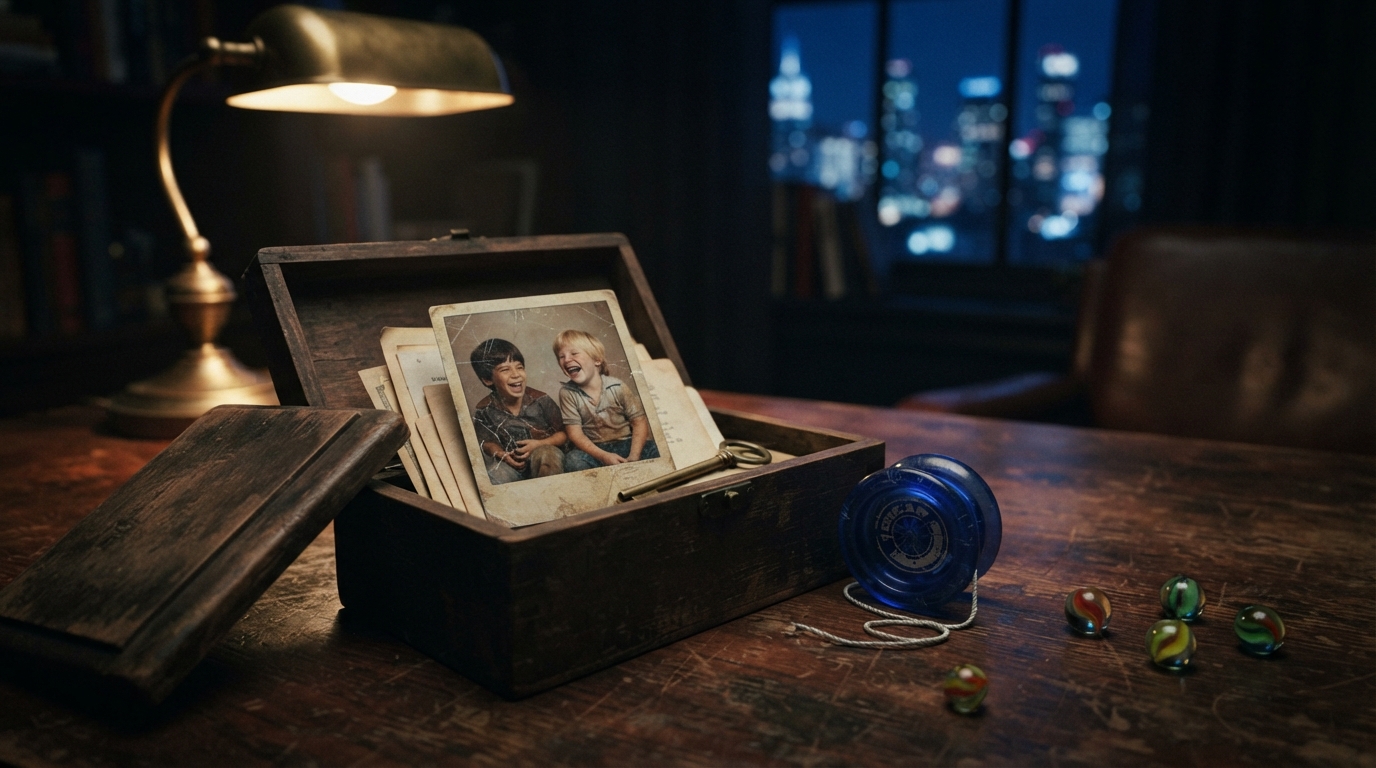
Nostalgia isn’t just a longing for the past; it’s a reminder of the foundation we built. It’s the heartbeat of who we are today. It teaches us that while the world moves forward, the simplicity of a moment, the sincerity of a friendship, and the beauty of a quiet afternoon are timeless. As I place the photo back into its dusty wooden box, I realize that ‘going home’ isn’t about a location on a map. It’s about visiting that quiet, golden place inside ourselves whenever the modern world gets too loud.
This post is copyright-free and intended for personal or creative use on your website. Feel free to adapt the story to your specific memories and local settings.
thumb_upGood responsethumb_downBad responsecontent_copyCopy MessageflagFlag
ye 706 words ke post hai mene kha 1500 words ke post bna do
The Echoes of Elm Street: A Journey Back to Simpler Times
They say that nostalgia is a dirty liar, that it insists things were better than they truly were. But as I sit here in the quiet hum of my modern study, the blue light of the city bleeding through the blinds, I find myself holding a small, faded square of the past that says otherwise. It’s a Polaroid, its edges yellowed and its colors bled into a soft sepia haze. In it, two boys are laughing, their faces caught in a moment of pure, unadulterated joy. One of them is me; the other is Siddharth, my childhood architect of mischief.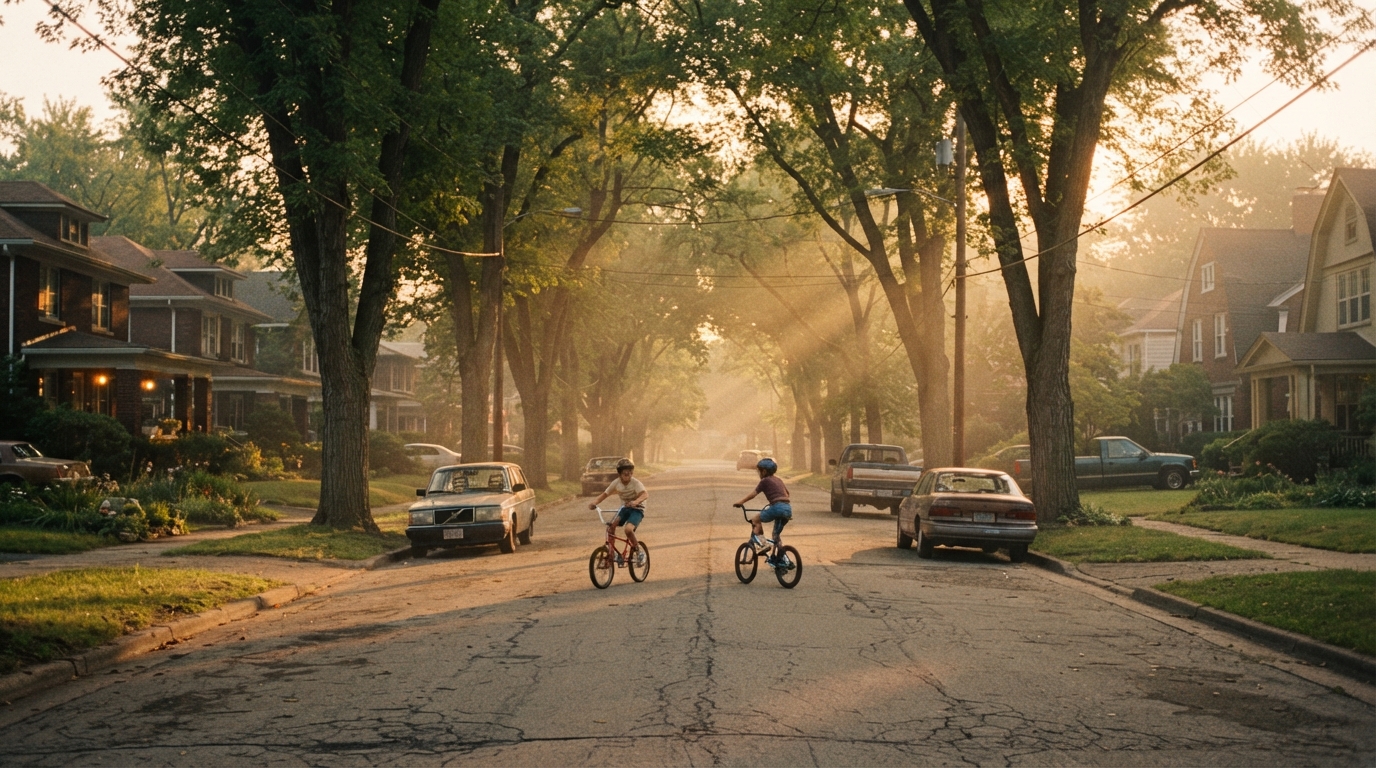
The Morning Rituals of a Analog World
Our world in the mid-90s wasn’t defined by pixels or proximity sensors. It was defined by the reach of our bicycle tires and the skill in our hands. Long before the first smartphone vibrated in a pocket, our mornings were measured in the hum of a yo-yo string. I remember standing in my bedroom, the sun streaming through horizontal blinds to create a striped pattern on the floor, practicing my ‘Walk the Dog’ with a translucent blue Duncan yo-yo. The sound of the plastic spinning against the string was the white noise of my youth.
In the corner of the room sat a velvet pouch, heavy with the clink of ‘cat’s eye’ marbles. We didn’t have high scores; we had physical trophies. A particularly beautiful glass shooter was worth more than any digital badge. We would sit on the rug, carefully inspecting our collection, planning our next match at the neighborhood park. There were no notifications to distract us, just the task at hand and the slow, heavy passage of a Saturday morning.
The Map of a Childhood Kingdom
Elm Street was our kingdom, a long stretch of suburban asphalt lined with towering trees that seemed to touch the clouds. Back then, the summer sun didn’t just shine; it glowed. It felt heavy and golden, filtering through the thick canopy of leaves to create dancing patterns of light—what we called ‘God rays’—on the cracked pavement.
We didn’t need a GPS to find our way. We knew the texture of every sidewalk, the location of every loose stone, and the exact spot where the neighbor’s dog would start barking. Our days began with the rhythmic click-clack of bicycle chains and the smell of freshly cut grass. There was a specific freedom in those mornings, a sense that the day stretched out like an infinite, unwritten book. We were kings on chrome BMX bikes, our lebars adorned with blue tassels or plastic spokey-dokes that sang as we moved.
Tales from the Porch: The Legend of the Hidden Pond
Every neighborhood had its storyteller, and ours was Mr. Henderson. He lived in a house with a creaky wooden porch that always seemed to be framed by overgrown ferns. He was a man with skin like wrinkled parchment and eyes that always looked like they were sharing a secret joke. We would stop our bikes at his gate, lured in by the promise of a tall tale.
One particularly sweltering July afternoon, he leaned forward in his rocking chair and pointed a gnarled finger toward the edge of the Briar Patch Woods. “You boys think you’ve seen it all,” he rasped, a mysterious smile playing on his lips. “But back there, deep in the thicket, there’s a pond that doesn’t reflect the sky. It reflects what you’re gonna be. They call it the Hidden Pond, and only those with enough grit ever find the shore.”
The Great Summer Quest
That was all the spark we needed. Siddharth and I spent the next three days hunched over a crinkled piece of notebook paper, drawing a map based on Henderson’s cryptic directions. We packed our supplies: a lukewarm bottle of orange soda, a few squashed peanut butter sandwiches, and a flashlight with batteries that were half-dead.
Our journey into the Briar Patch Woods was our first true expedition. The air changed the moment we stepped off the pavement. The suburban sounds of lawnmowers and distant radios were replaced by the intense, buzzing vibrato of cicadas. The sunlight became green-tinted as it struggled through the dense canopy. Every snap of a twig felt like a major event.
However, we weren’t the only ones hunting for legends. Halfway to our destination, we encountered the ‘Creek Rats’—a group of older boys led by a kid named Leo, whom everyone called ‘Spike.’ They blocked the narrow dirt path with their bikes, a classic Western standoff in the middle of a suburban forest. Spike stood his ground, arms crossed over a sleeveless denim jacket.
“This path belongs to the Rats, Mateo,” he smirked. “Unless you got something worth the toll.”
I felt my heart hammering against my ribs, but Siddharth didn’t blink. He reached into his pocket and pulled out his prized ‘galaxy’ marble—a deep black sphere with swirling silver dust. He tossed it to Spike. The silence was heavy as Spike inspected it in the dappled light. Finally, he nodded and stepped aside. Courage, it seemed, was the only currency that truly mattered.
The Discovery and the Shifting Seasons
We found it. After hours of trekking through tall grass that made our legs itch and wiping sweat that stung our eyes, we pushed through a final thicket of ferns. There it was—a perfectly still, emerald-green pond. A single dragonfly skimmed the surface, creating ripples that seemed to go on forever. It was so quiet it felt sacred. We didn’t see our futures in the water, but we saw ourselves—flushed, tired, and triumphant. We had gone beyond the map, and the world felt infinitely larger because of it.
But summer, like all good things, had a clock. By mid-August, the heat would begin to lose its edge. The vibrant greens of the trees started to dull into deep, weary olives. Then, almost overnight, the air would turn. The first crisp morning of September always felt like a door closing. The smell of woodsmoke replaced the scent of cut grass, and the yellow school bus would appear at the corner like a harbinger of the end of freedom. Kicking through piles of dry leaves on the way to the bus stop, I realized that the secret world of summer was retreating, waiting to be rediscovered next year.
The Sanctuary of the Corner Store
If Elm Street was our kingdom, Mr. Gupta’s corner store was our treasury. It was a small, weathered building with a screen door that announced every visitor with a sharp, familiar creak. The air inside was thick with the scent of old wood, floor wax, and the overwhelming sweetness of sugar.
I remember the heavy glass jars that lined the shelves, each one filled with treasures that cost only a few coins. Cherry sours, lemon drops, and those sticky, colorful taffies that could keep you occupied for an entire afternoon. We would stand there for what felt like hours, counting our change with the gravity of diamond merchants. To a ten-year-old, a handful of copper coins was a fortune, and Mr. Gupta, with his silver hair and patient smile, was the guardian of our happiness.
The Iron in Our Adult Bones
As I sit here now, an adult in a world that moves at the speed of fiber-optics, I realize that we carry those summers within us. The resilience we built while standing up to Spike, the patience we learned while watching for dragonflies at the pond, and the simple joy of a cherry sour—these are the things that ground us when life gets complicated.
Nostalgia isn’t just about longing for the past; it’s about drawing strength from it. It’s a reminder that we were once explorers of the unknown, masters of our own small universes. These memories aren’t just stories; they are the iron in our adult bones. They provide a sense of continuity in a fragmented world.
As I place the old Polaroid and my velvet pouch of marbles back into the wooden box, I look out the window at the city skyline. The streets have changed, the trees are taller, and the stores are different. But the echoes of Elm Street never truly fade. They are the quiet, golden heartbeat of who we are, reminding us that even in a world of constant change, the feeling of home is always just a memory away.
1 thought on “The Echoes of Elm Street: A Journey Back to Simpler Times”