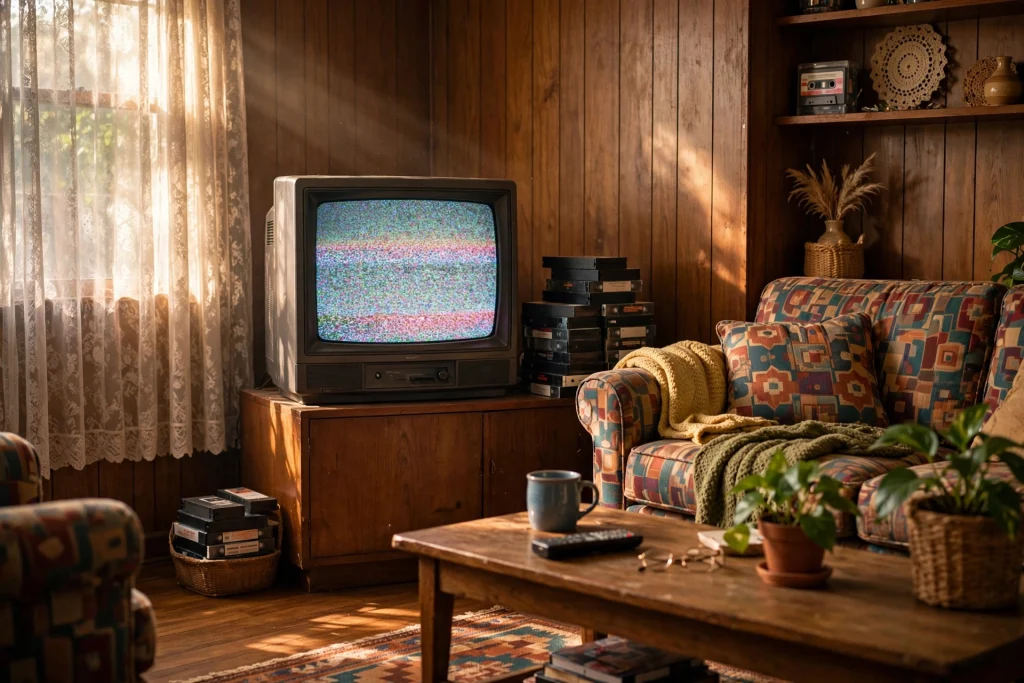
You knew before your eyes were even open. There was a hush in the house that didn’t belong to a school morning — no alarm screaming, no mom calling your name up the stairs. Just the soft, muffled quiet of a world wrapped in white, and your dad’s voice drifting from the kitchen, saying the words that could stop a kid’s heart: “No school today.” If that sentence just sent a shiver down your spine, then these snow day childhood memories are about to take you straight back to the best mornings of your entire childhood.
There has never been a joy quite like it. Not birthdays, not the last day of school, not even Christmas morning. A snow day was the only holiday nobody had to earn. It arrived unannounced, unearned, and absolutely perfect — a whole stolen day, handed to you by the weather, and the only thing on the agenda was fun.
The Best News a Kid Could Ever Wake Up To
Before there were push notifications and automated robocalls, finding out about a snow day was its own little adventure. If the snow was falling the night before, you’d go to bed with one eye half-open, listening for the wind, whispering prayers to the sky like it owed you something. And then the morning would come, and the ritual began.
First stop: the radio. Somewhere around dawn, bleary-eyed parents would twist the dial to the local station, and a DJ with a voice like gravel and coffee would start reading the list. School after school after school, in no hurry whatsoever, and your heart would pound harder with every name that wasn’t yours. Miss it? Too bad. You had to wait for the whole list to circle back around, which felt like an eternity measured in kid-minutes. If you want to know how school closings were announced before the internet, it was equal parts torture and thrill.
Then there was the TV ticker — that slow, alphabetical scroll crawling across the bottom of the morning news. You’d park yourself two feet from the screen, breath fogging the glass, watching district names slide past like lottery numbers. And when yours finally appeared? The scream that came out of you could’ve woken the whole block. It was must-see television in the truest sense: no streaming service has ever, ever matched that feeling.
And let’s not forget the phone tree. One mom would call the next mom, who’d call the next, until the whole neighborhood knew. There was always that one family who heard it first and sent their kid sprinting door to door like a tiny town crier. The news traveled on foot, in pajamas, through knee-deep snow — and honestly, that was half the fun.
Here’s the thing most of us never thought about back then: somebody had to make that call. Superintendents would wake up in the dark, sometimes as early as 4:30 in the morning, drive the actual bus routes themselves, and decide whether the roads were safe. One wrong call either way and the phones lit up. There’s a fascinating look at the surprisingly high-stakes science behind a superintendent’s snow-day call — and it makes you appreciate that sleepy voice on the radio a whole lot more.
The Rituals We Swore By the Night Before
Long before the snow day itself came the ceremony. Oh, you remember this. Every kid in the neighborhood knew the drill, passed down like sacred law from the older kids on the block, and woe to the child who didn’t follow it exactly.
First: pajamas, inside out. Backwards too, if you were really serious. Second: a spoon under your pillow — not a fork, not a knife, a spoon, and nobody could tell you why, but everybody knew it mattered. Third: ice cubes, flushed down the toilet, one by one, while whispering your wish like an incantation. Some kids added a white crayon on the windowsill. Some ate ice cream the night before, which was honestly just an excuse, but the grown-ups allowed it because hope is hope.
Did any of it work? Of course not. Did that stop a single one of us? Absolutely not. There’s something beautiful about a ritual that every kid performs with total sincerity and zero evidence. It wasn’t about meteorology. It was about believing — really, truly believing — that you could tip the sky in your favor. And when you woke up to six inches of fresh powder? Well. The spoon had done its job. Obviously.
Parents played along, too. They’d tuck you in and say “we’ll see in the morning” with that little smile that said they knew exactly what you’d been up to with the ice cubes. Some of them, the really good ones, would even check the forecast and leave the spoon right where you put it, untouched, like it was a sacred object. Because in a way, it was. Looking back, those small acts of belief are stitched into my snow day childhood memories as tightly as the sledding and the snowmen.
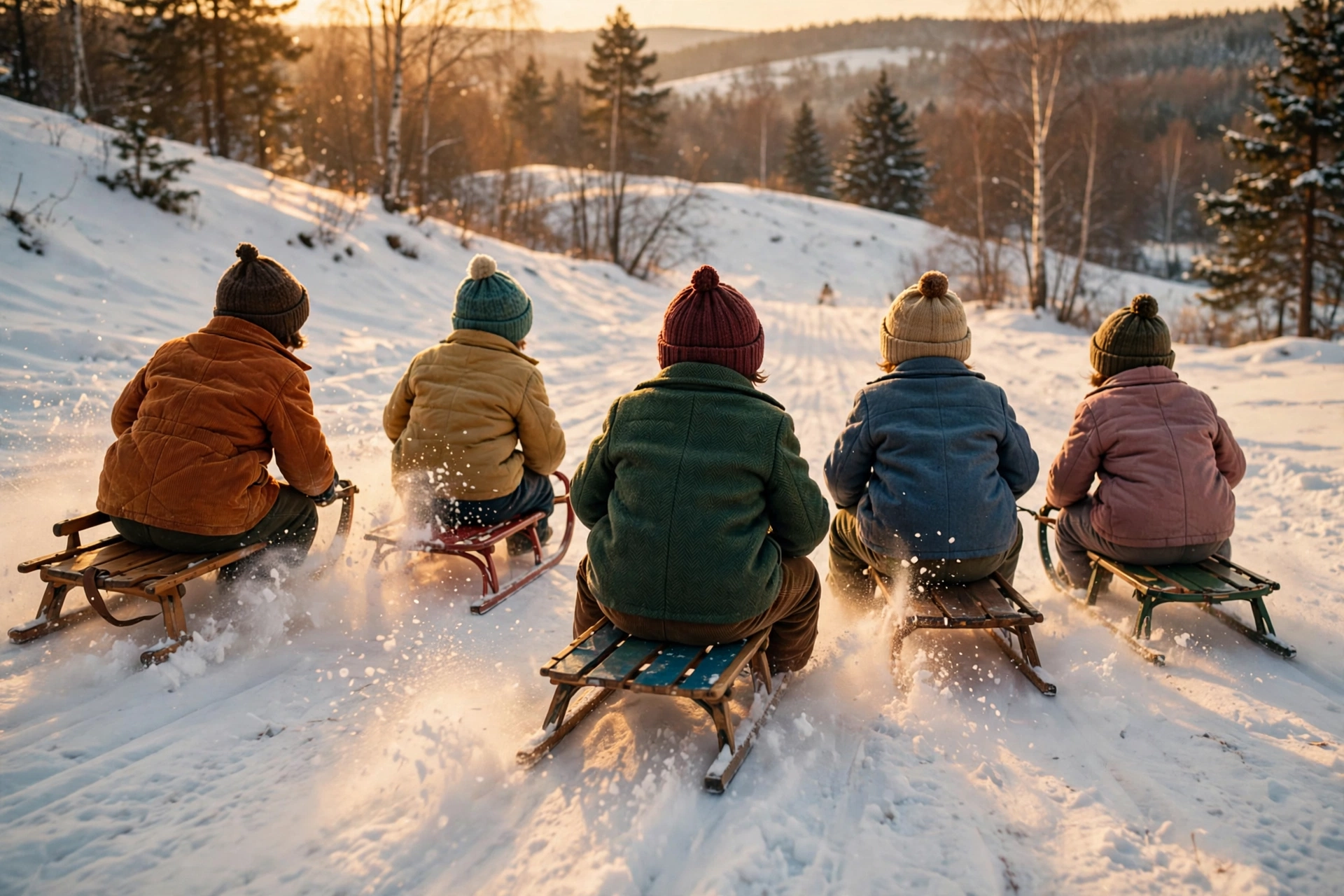
Heading for the Hill: Snow Day Childhood Memories at Full Speed
Once the news was official, there was no lollygagging. You were dressed and out the door before your mother could finish saying “eat your—” — gone. The transformation from sleepy kid to snow warrior took about four minutes flat, and it involved more layers than a wedding cake.
Thermal underwear if you were lucky. Two pairs of socks. Snow pants that swished when you walked — that unmistakable nylon swish-swish that announced your arrival from a block away. Boots with the laces you could never quite tie right with mittens on. A coat so puffy you couldn’t put your arms down. A hat, a scarf wrapped until only your eyes showed, and mittens — always mittens, never gloves, because gloves meant each finger froze individually and mittens meant your fingers could huddle together for warmth like tiny refugees.
And then: the hill. Every neighborhood had one. Maybe it was an actual sledding hill at the park, or maybe it was just the steepest driveway on the street, or the drainage ditch behind the school that some genius discovered was perfect. It didn’t matter. What mattered was that it was yours, and today it belonged to every kid in a half-mile radius.
Steering With Your Boots
Sled technology was serious business. The rich kids had the wooden toboggans with the curled fronts, the ones that could fit three kids and went fast enough to be genuinely scary. The rest of us made do: plastic saucers that spun you in circles until you were dizzy, foam sliders that disintegrated by February, and the legendary trash-can lid, which every kid tried exactly once before learning a hard lesson about steering.
Steering, of course, was done with your boots. Drag the left heel, veer left. Drag the right, veer right. Drag both and you’d stop — eventually, dramatically, usually in a snowbank, to the delight of everyone watching. There was an art to leaning into a turn at speed, snow spraying up behind you, the cold air burning your lungs in the best possible way. Going down headfirst? That was the advanced course. That was for the brave.
The Walk Back Up Was Always Worth It
Here’s the part the movies leave out: sledding is about 10 percent sledding and 90 percent climbing back up the hill. Dragging your sled behind you, boots slipping, thighs burning, cheeks stinging — and you’d do it twenty, thirty times without a single complaint. When has a kid ever volunteered for that much exercise? Only on a snow day. Only with that hill calling.
And the walk up was social hour. That’s where the plans were made, the dares were issued, the alliances formed. “Race you to the bottom.” “Loser buys hot chocolate.” “I dare you to go down backwards.” The hill was the town square, the playground, the arena — all rolled into one glorious white slope. We didn’t have weather apps — we had a radio DJ, a TV ticker, and hope. And once we were outside, we didn’t need anything else at all.
Snowmen, Snow Forts, and the Great Snowball Arsenal
Not every snow day was a sledding day. Some days, the snow was the heavy, wet, packable kind — the snowman snow — and the whole neighborhood shifted into construction mode. Building a proper snowman was architecture. There were standards.
The base had to be big. Not big-big, but the kind of big that made adults stop and say “how did you—” before shaking their heads. You’d start with a small ball and roll it, and roll it, picking up snow like a rolling stone gathering moss, until it was too heavy to push and you had to recruit help. The middle ball went on with a grunt and a team lift. The head was placed with ceremony. Then came the face: coal eyes or pebbles, a carrot nose (always a carrot — where did the carrots even come from? somebody’s mom sacrificed a carrot every single time, no questions asked), and a smile made of whatever was handy.
Arms were sticks, obviously. The scarf was the finishing touch, and there was always a debate about whether the snowman got a hat. The fancy ones got hats. The fancy ones also got names, and woe to the kid who suggested a boring name. A snowman wasn’t finished until somebody’s dad came out with the camera and you all posed around it, red-cheeked and grinning, like you’d built the Eiffel Tower.
Snow forts, though — snow forts were engineering. Walls packed tight, a proper entrance, maybe a second room if you were ambitious. The best forts had a flag on top, usually a stick with somebody’s bandana tied to it, planted like you’d claimed the territory for your nation. And every fort existed for one reason: the snowball fight. Stockpiles were built with military precision, lined up along the wall like ammunition. There were rules, mostly. No ice balls — that was the Geneva Convention of the playground, and violators were dealt with swiftly. Face shots were discouraged but happened anyway, followed by the sacred ritual of rubbing snow in the victim’s face while everyone laughed, including, eventually, the victim.
Those frozen afternoons on the block had the same magic as the street games and playground battles that owned our afternoons the rest of the year — same crews, same rivalries, same feeling that the whole world was right outside your front door.
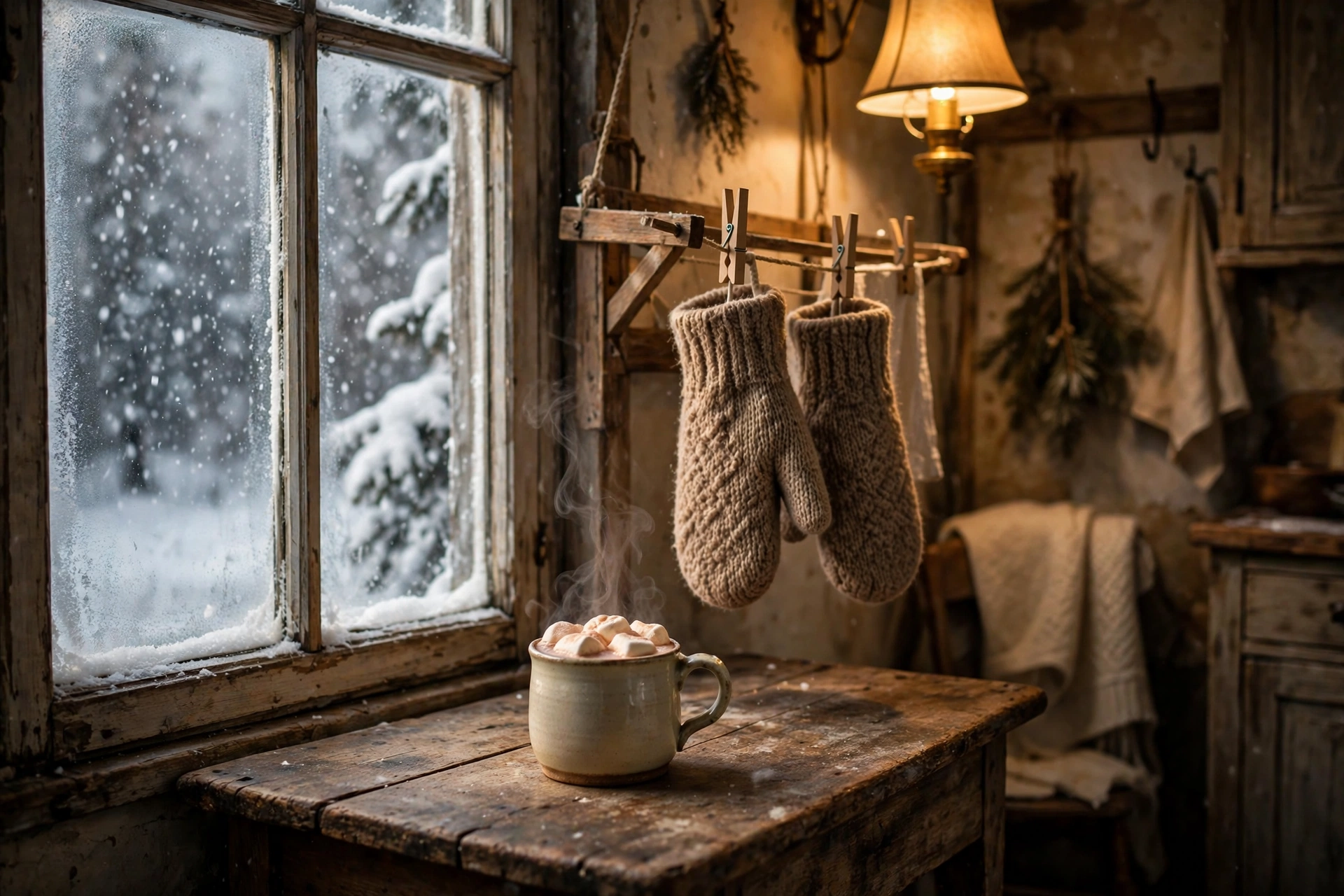
The Hot Chocolate Intermission
Every snow day had a halftime. You’d come bursting through the back door in a cloud of cold air, a snow-crusted statue of yourself, and your mom would take one look and point at the kitchen. Boots off. Coat off. Everything off, and don’t you dare drip on the carpet.
There was a specific choreography to the great thaw. Mittens went on the radiator — or draped over the heating vent, or lined up on the windowsill above the warm air — where they’d steam gently and smell like wet wool for the rest of the day. Socks came off with a peel, revealing pruney toes. Your cheeks burned as they warmed up, that pins-and-needles tingle that was somehow pleasant, and your nose ran like a faucet and nobody cared.
And then: the hot chocolate. Not the fancy kind. The packet kind, stirred with a spoon in a mug that was too hot to hold, so you wrapped your still-tingling hands around it and let the warmth seep back into your bones. It tasted like heaven because you’d earned it — because an hour ago your fingers were too numb to feel the sled rope.
Mini Marshmallows Were Non-Negotiable
Let’s settle this once and for all: the little marshmallows were mandatory. Not the big ones — the big ones were for camping. Snow-day hot chocolate required the tiny ones, the ones that floated on top in a little white raft and melted into sweet swirls. If your house only had the big marshmallows, you cut them up. Everybody knew this. It was in the unwritten constitution of childhood.
Some families did the whipped cream thing. Some did the cinnamon stick. But the purists — the real snow-day veterans — knew that a packet of cocoa, hot milk if you were lucky (water if you weren’t, and you didn’t complain), and a snowfall of mini marshmallows was all it took. You’d sit by the window, blowing on it, watching the snow keep falling outside, and feel like the richest kid in the world. Nothing has ever tasted as good as hot chocolate with frozen fingers. That is a scientific fact. Do not argue with me on this.
Cartoon Marathons and Blanket Forts
By mid-afternoon, the cold had done its work. Fingers were raw, noses were chapped, somebody’s snow pants had a tear, and the troops retreated indoors for phase two of the snow day: the great indoor sprawl.
This was the era of the cartoon marathon. You’d claim your spot on the couch — the good spot, the corner with the blanket — and settle in for hours of animated glory. Saturday morning cartoons on a weekday felt like a glitch in the universe, a delightful error. Bowl of cereal in hand (dry, eaten by the handful, because who had time for milk), you’d watch until your eyes glazed over, and it was perfect.
The ambitious ones built blanket forts. Chairs dragged from the kitchen, every blanket in the house, clothespins if your mom had them, and suddenly the living room was a castle. Flashlights inside. Snacks smuggled in. Siblings admitted only under strict treaty terms. From inside the fort, with the snow falling outside the window and the cartoons murmuring beyond the blanket walls, the world felt impossibly safe and impossibly yours.
Board games came out, too — the ones that only appeared on rainy days and snow days, with the box lids held together by hope. Card games. Coloring books for the little ones. Somebody always wanted to play the game nobody else wanted to play, and somebody always flipped the board when they were losing, and somehow it was all part of the tradition. These were the hours that stitched families together without anyone noticing. Nobody called it “quality time” back then. It was just a snow day.
Why We’ll Never Have Another One Like It
Here’s the part that gets me, even now. Snow days still happen, technically. Schools still close. But the magic? The magic had an expiration date, and it expired the day we grew up.
Think about what made those snow day childhood memories work. It was the surprise — nobody scheduled it, nobody planned it, it just arrived like a gift. It was the togetherness — the whole neighborhood, all at once, no invitations needed, no group chat required. You just walked outside and there everybody was, because where else would they be? It was the simplicity — a hill, a sled, some snow, and six hours felt like a lifetime.
And it was the freedom. Real freedom, the kind kids barely get anymore. Nobody tracked your location. Nobody scheduled your play. Your mom said “be home when the streetlights come on” — or in this case, “be home for dinner” — and that was the entire safety plan. You roamed. You explored. You got lost in the best way and found your way back with stories.
A snow day was the only holiday nobody had to earn. Think about that. Every other good thing in childhood came with strings: birthdays meant getting older, holidays meant relatives and obligations, summer vacation meant the long countdown and then it was over too fast. But a snow day? A snow day was pure, uncut joy, dropped out of the sky, no purchase necessary. It asked nothing of you except that you go outside and be a kid as hard as you possibly could.
I think that’s why we still talk about them with that faraway look. It’s not really about the snow, these snow day childhood memories. It’s about the last time the world surprised us in a good way — the last time a whole day opened up in front of us with nothing in it but possibility. We didn’t know it then, but those white, silent mornings were teaching us something: that the best days of your life are the ones you never saw coming.
So here’s to the radio DJs who read the lists, the moms who sacrificed the carrots, the dads who drove the bus routes at dawn to make the call, and every kid who ever wore their pajamas inside out and believed with their whole heart that it would work. It worked. It always worked.
Just like those chalkboard-and-lunchbox school days we were so happy to escape, the snow day reminds us that childhood’s greatest treasures were often the simplest ones — and the ones we never had to ask for twice.
Now it’s your turn. What’s your all-time greatest snow day memory — the announcement, the hill, the snowman, the cocoa, all of it? And be honest: did you do the pajamas-inside-out thing? Drop your story in the comments — I have a feeling this one’s going to bring back a flood.