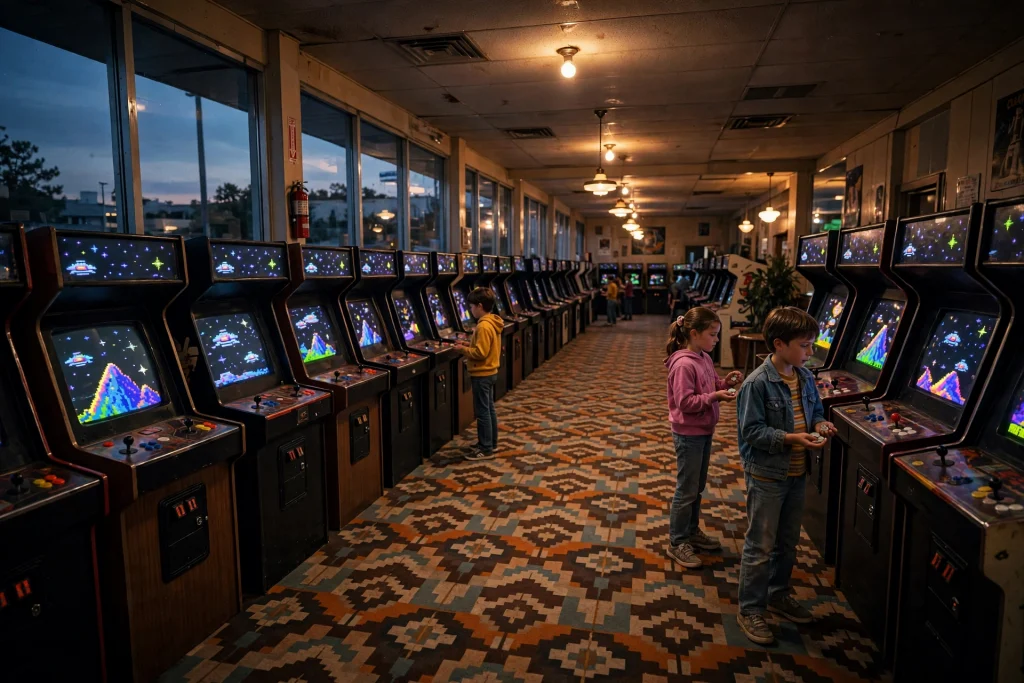
Picture the bowl. You know the one — sitting on the porch rail or just inside the front door every October, heaped with those little orange-and-yellow-and-white kernels that glowed like tiny lanterns in the porch light. You reached in without even thinking about it. Everybody did. Those candy corn memories are wired into every Halloween you ever had, whether you were the kid who guarded every kernel like treasure or the one who traded them away before the costume even came off.
Here is the funny thing about this candy: nobody is neutral about it. Candy corn is the most argued-about sweet in America — the one treat that can start a family debate faster than the thermostat in November. But tonight, on Halloween itself, let us set the argument aside for a little while and just remember. Remember the sound of kernels rattling in the bottom of a pillowcase. Remember dumping the whole haul on the living room carpet and sorting it into piles. Remember being seven years old and absolutely certain that this — this waxy little triangle — was exactly what October tasted like.
Table of Contents
The Candy That Starts Fights at the Dinner Table
Let us get the controversy out of the way first, because it is honestly part of the charm. According to a 2013 survey by the National Confectioners Association, 18 percent of Americans love candy corn, 28 percent hate it, and everybody else just stands there shrugging. That makes it the most divisive candy in the country — not the most disliked, the most divisive. It shows up on “worst Halloween candy” lists every single October, and then, like clockwork, a counter-wave of defenders rises up to fight for it.
And here is the punchline the haters never see coming: Americans buy roughly 35 million pounds of the stuff every year. Thirty-five million. If nobody liked it, who is eating all of that? The truth is that candy corn is the candy people love to argue about precisely because it is unforgettable. You do not start fights over a candy you have forgotten. You start fights over the one that still has a hold on you.
That is what makes it perfect nostalgia material. Candy corn is not just a sweet — it is a personality test, a family heirloom, and a conversation starter all at once. Say “candy corn” at any gathering of people over forty and watch what happens: half the room lights up and the other half makes a face, and within ninety seconds everyone is telling a Halloween story. Name another candy that does that. I will wait.
They Used to Call It Chicken Feed
Now for the part that always floors people. This candy is older than trick-or-treating itself. Most accounts trace candy corn back to the 1880s, to a Philadelphia confectioner named George Renninger, who worked for the Wunderle Candy Company. He figured out how to mold butter cream — a soft, sweet confection made mostly of sugar and corn syrup — into the shape of a corn kernel. The tri-color layers were the masterstroke: each kernel poured in three separate passes of hot sugar, one color at a time.
Renninger apparently did his market research on live chickens. As his grandson later told the Palm Beach Post, the elder Renninger would toss his proto-candy corn toward the family’s hens — and when the chickens started coming after the candy, he knew he had the shape right. If it could fool a chicken, it could fool anybody.
In 1898, the Goelitz Confectionery Company picked up the recipe and scaled it up — and this is the part I love — they sold it under the name “Chicken Feed.” The box had a rooster on the front and the slogan “Something worth crowing for.” Imagine that: one of the most famous candies in American history started life as a joke about chicken food. Goelitz, by the way, is the company that eventually became Jelly Belly. So the same folks behind those fancy gourmet jelly beans spent more than a century making the candy half of America claims to despise.
Why corn? Because in the 1880s and 1890s, roughly half of the American labor force was connected to farming. An agricultural country loved agricultural candy — sweets shaped like pumpkins, chestnuts, turnips, and corn kernels felt familiar and wholesome. Candy corn was not spooky. It was not Halloween at all. It was a year-round penny candy for farm-country kids.
If you want the full story told properly, the National Geographic’s saccharine history of candy corn is a wonderful read, and the Smithsonian’s piece on how little the recipe has changed will make you appreciate that little kernel all over again.
Poured By Hand, One Color at a Time
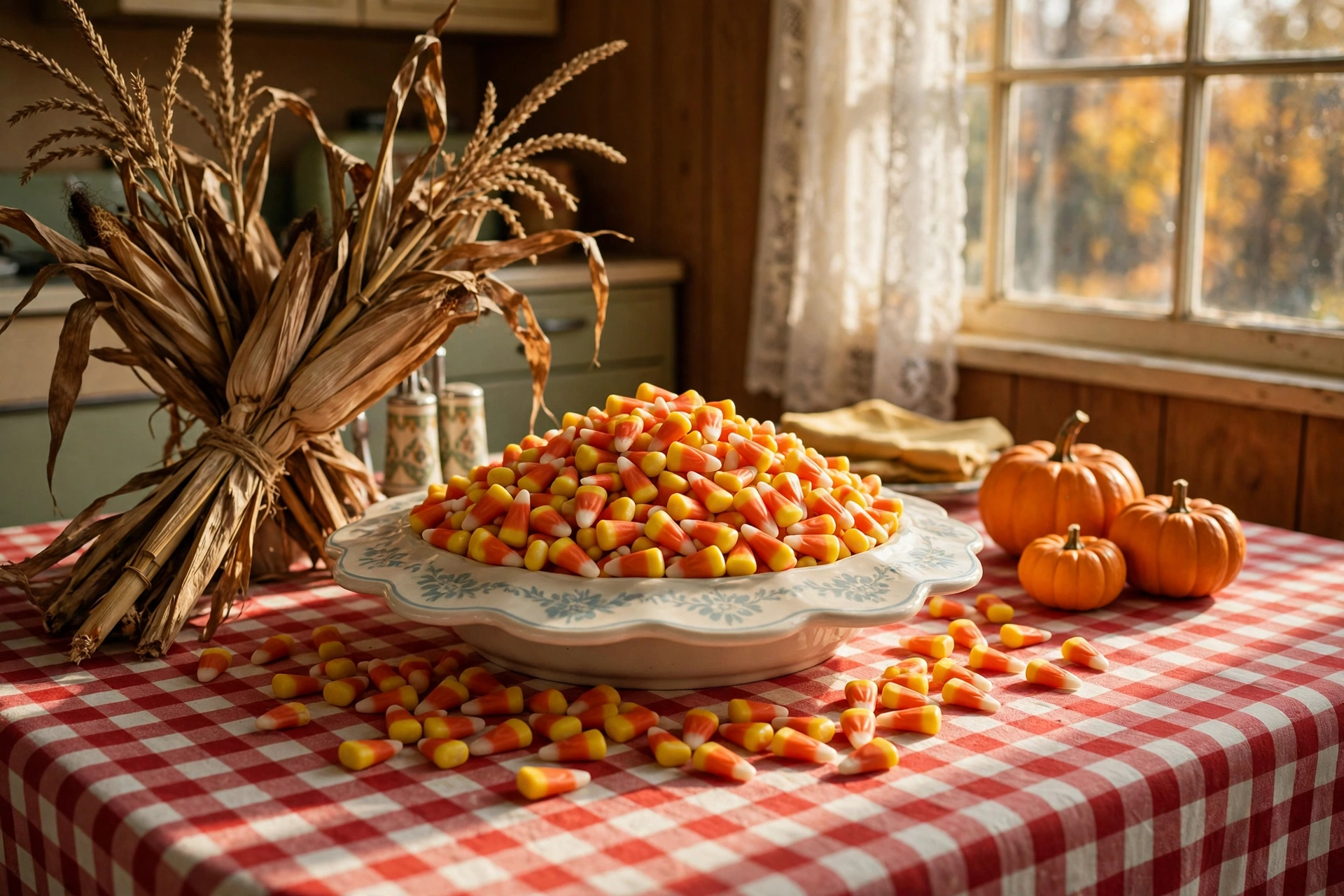
Here is a detail that makes me love this candy even more: for decades, every single kernel was made by hand. Workers stood over long trays of kernel-shaped molds with buckets of hot liquid sugar and poured them one color at a time — white first, then orange, then yellow — waiting for each layer to set before adding the next. It was slow, fiddly, laborious work, and it barely changed for most of the candy’s life. Even today, with automation doing the pouring, the recipe is essentially what it was in the 1880s: sugar, corn syrup, fondant, vanilla, marshmallow creme, and a little carnauba wax for that unmistakable chew.
Think about that the next time someone calls candy corn “cheap.” A candy that has survived 140 years with its recipe basically intact is not cheap — it is a survivor. It outlasted the companies that invented it (Wunderle wound down in the 1980s), it outlasted the horse-and-buggy era it was born into, and it is still here, still tri-colored, still starting arguments at Halloween parties.
And the look of it — that perfect little kernel, white tip, orange middle, yellow base — has barely budged either. In a world where every candy gets reformulated, rebranded, and “improved” into something unrecognizable, candy corn just kept being candy corn. There is something deeply comforting about that. The candy in your grandmother’s bowl in 1975 is the same candy in your bowl tonight.
It Was Never Supposed to Be a Halloween Candy
This is my favorite plot twist in the whole story. Candy corn had nothing to do with Halloween for the first sixty years of its life. It was a harvest-season, fall-themed penny candy — the kind of thing you bought for a few cents at the penny candy counter at the five-and-dime, right next to the wax lips and the licorice pipes.
Trick-or-treating itself only really took off in the late 1940s, after World War II sugar rationing ended and the suburbs filled up with kids. The door-to-door candy ritual we all remember is younger than the candy corn — the candy was already a fifty-year-old veteran by the time the first pillowcase hit the first porch.
But once the two met, it was a perfect match. The harvest colors, the autumn timing, the cheap-by-the-bag economics — candy corn was born for the Halloween bowl. Brach’s, which became the biggest candy corn maker of them all, started producing it in the 1950s, right as the holiday was exploding into the commercial juggernaut we know today. The candy and the holiday grew up together, and now you cannot picture one without the other.
The numbers are staggering. The National Confectioners Association estimates that candy makers produce nearly 35 million pounds of candy corn a year — about 9 billion individual kernels. Laid end to end, that is enough to circle the moon nearly 21 times. Brach’s alone turns out around 7 billion pieces each Halloween season. And here is a sweet little detail for tonight: yesterday, October 30, was National Candy Corn Day. The candy gets its own holiday the day before Halloween, like it is warming up for the main event.
The Secret Rules Nobody Ever Wrote Down
Here is something I have never understood: nobody ever taught us how to eat candy corn, yet every kid in America somehow agreed on the method. You did not just pop the whole kernel in your mouth like an animal. You ate it in layers. White tip first — always the white tip first — then the orange middle, then the yellow base. Each color had its own little flavor moment, its own texture, its own tiny ceremony. Breaking the rules was unthinkable. A kid who ate a whole kernel in one bite was regarded with the same suspicion as a kid who peeled the stickers off a Rubik’s Cube.
And then there was the ultimate power move: candy corn teeth. You pressed two kernels against your front teeth, white tips out, and suddenly you were a vampire, a jack-o’-lantern, a tiny orange-toothed monster. Every Halloween party in America had at least one kid walking around with candy corn fangs, grinning like it was the funniest thing ever invented. Because at age eight, it was.
The connoisseurs had their own rituals, too. Some of us swore that candy corn tasted better after sitting out overnight and going just slightly stale — chewier, denser, more serious. Others mixed it with salted peanuts, a combination so good it tastes like a secret handshake. That sweet-salty crunch is honestly elite, and if you have never tried it, tonight is the night. Your grandmother probably knew this trick. Grandmothers always knew the tricks.
The Great Halloween Haul Audit
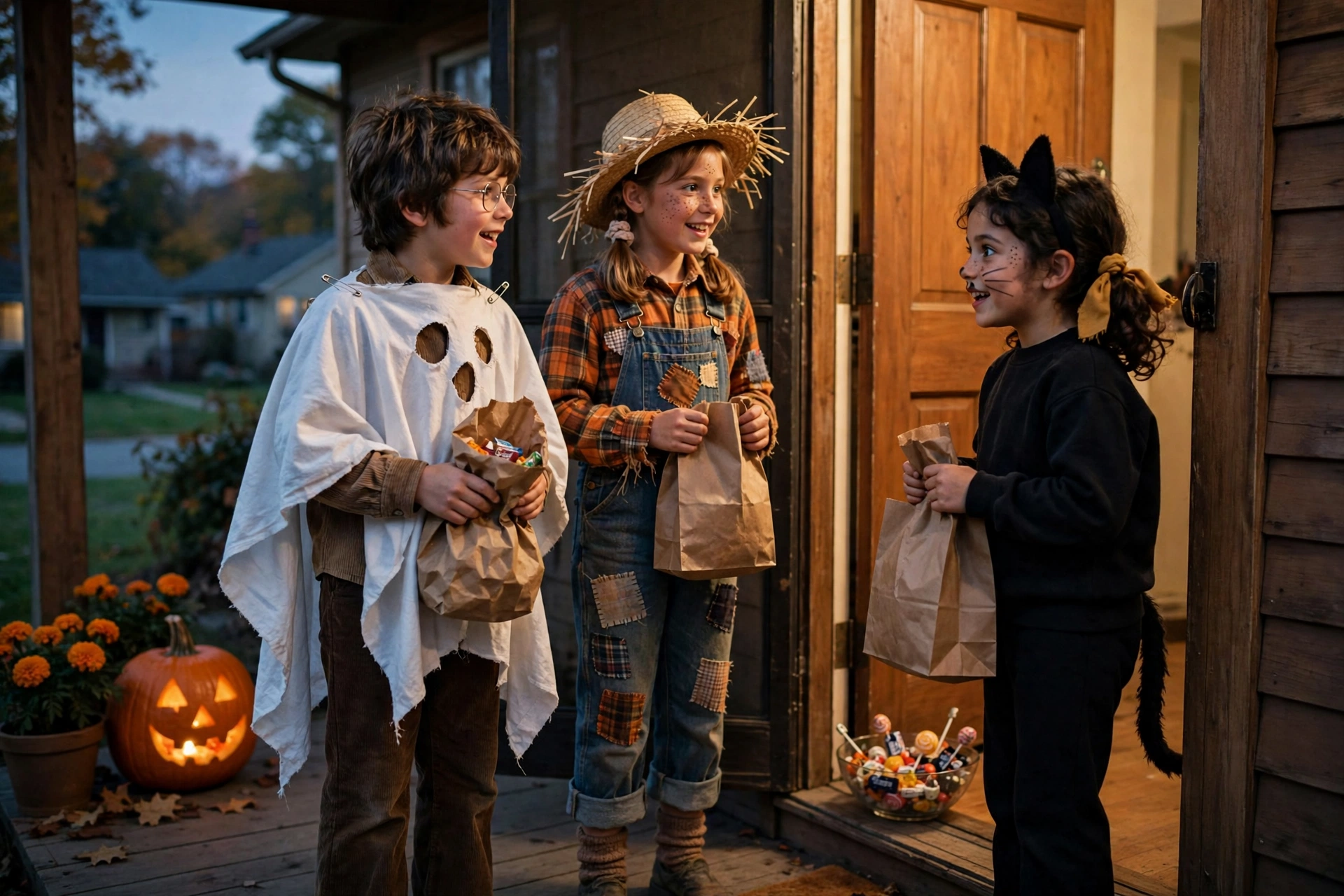
But the real ceremony — the one every kid remembers — happened after the trick-or-treating was done. You dumped the pillowcase (or the plastic pumpkin, if you were fancy) onto the living room floor and the audit began. Candy corn went into its own pile, always. Not with the chocolate, not with the gummies — it had its own category, its own little kingdom of orange.
Then came the trading. This was serious business, conducted with the gravity of a stock exchange. Siblings negotiated across the carpet like tiny diplomats. Candy corn was fascinating trade currency because its value was completely subjective — worthless to the haters, priceless to the believers. I knew kids who would trade three full-size chocolate bars for a fistful of candy corn, and I knew kids who would give away their entire candy corn pile for a single fun-size Snickers. Both sides walked away convinced they had won. That is the magic of a divisive candy: every trade feels like a heist.
And there was always the parental tax — the quiet confiscation of a handful “for quality control” that everyone pretended not to notice. Moms and dads claimed they were checking for tampered wrappers. We all knew they just wanted the candy corn. The parents who said “ugh, who even likes this stuff” were the same ones caught red-handed with orange-stained fingers. We saw you, Mom. We all saw you.
October Has a Flavor
Here is the thing I keep coming back to: candy corn is one of the very few foods that is also a season. You cannot separate it from October. The colors are the colors of the month — pumpkin orange, harvest yellow, the white of the first frost that has not quite arrived. Pumpkins get carved, leaves turn, the air goes crisp, and the candy corn appears in bowls and bags and plastic pumpkins across the country, right on schedule, like the swallows coming back to Capistrano.
Over the years they have tried to dress it up for other holidays — Indian corn with its chocolate-brown base for Thanksgiving, green-and-white “reindeer corn” for Christmas, pink “cupid corn” for Valentine’s Day. They are all fine. They are all perfectly nice candies. But none of them is the candy corn. The real one belongs to October the way fireworks belong to July, and no amount of rebranding will ever change that.
That is why the hate never sticks, by the way. Every October, the internet declares candy corn dead, and every November the sales figures roll in and the candy is doing just fine. You cannot kill a candy that is wired into this many childhoods. It is in the pillowcases and the porch bowls and the school-party goodie bags and the bottom of a million trick-or-treat sacks. It survived the 1880s, the Great Depression, two world wars, and the rise of the internet. It is going to survive your group chat’s candy rankings.
Tonight, Raise a Kernel
So tonight, on Halloween night, when the doorbell rings and the little ghosts and superheroes come calling, take a second with the bowl. Pick up one kernel. Hold it up to the porch light and look at those three perfect stripes — the same three stripes some tired factory worker poured by hand back when your great-grandparents were kids.
Then eat it the right way. White tip first. You know the rules.
Candy corn is the only candy in America that can start an argument at the dinner table — and that is exactly why we love it. It is the taste of coming home in the dark with a heavy pillowcase. It is the sound of kernels rattling at the bottom of the bag. It is the orange-stained proof that October happened, that you were a kid once, that the porch light was on and somebody was home.
So tell me — and be honest now — are you Team Candy Corn or Team Absolutely Not? Did you eat the white tip first, or were you a whole-kernel chomper? And what is the one Halloween trade you still think about, all these years later? Drop it in the comments. I have a feeling this one is going to start some friendly fights.