Beep-beep-beep-beep-beep. Five sharp little chirps, slicing straight through the middle of a packed movie theater — and every person in the row went rigid. Someone’s pager had just gone off. Someone, somewhere, needed them right now, and the whole theater held its breath while a man in the dark fumbled at his belt, tilted that tiny glowing green screen toward his face, and read three little numbers that only he understood. Then he was up, out of his seat, gone — off to find a pay phone like his life depended on it. Tell me your pager memories don’t start exactly the same way, with that sound freezing you in place and your whole body asking the same question: what does it say?
Table of Contents
Mine do. And honestly? I don’t think any notification on any phone I’ve owned since has ever hit quite like that did.
There is something about the beeper era — roughly the late eighties through the late nineties — that modern smartphones can’t recreate no matter how many custom ringtones they let us pick. A pager was tiny, dumb, and nearly useless by today’s standards. It couldn’t call anyone. It couldn’t text. It just vibrated and showed you a handful of glowing digits. And yet we were obsessed with it. We clipped it to our belts like a sheriff’s badge. We checked it the way people check watches. We learned an entire secret numeric language just to say the simplest things. It was ridiculous, and it was perfect.
So buckle up, pull your chair closer, and let’s take the long walk back together — to the beeps, the codes, the belt clips, and the mad dashes to the nearest pay phone. Because the little black box deserves its legend.
Why Pager Memories Still Give Me Goosebumps
Here’s what nobody who didn’t live it understands: owning a pager made you feel important. Not internet-famous important. Not influencer important. Something older and deeper than that. When that little box buzzed on your hip, it meant someone had made an actual effort to reach you — picked up a real telephone, dialed your pager number, punched in a code, and hung up, all to send you ten digits of nothing but mystery. That took intention. Nobody paged you by accident. Nobody spammed your pager. Every single beep was somebody saying, “You are the person I need.”
And the not-knowing was half the drug. A pager couldn’t tell you who it was or what they wanted. It just gave you a number and left the rest to your imagination. Was it your girlfriend? Your boss? Your buddy with concert tickets? That little green screen turned ordinary afternoons into tiny thrillers, three digits at a time.
I remember getting my first one — a chunky black Motorola Bravo, the classic — and the weight of it on my belt felt like a promotion. I was sixteen. I had no job, no real responsibilities, and absolutely no one who genuinely needed to reach me in an emergency. Didn’t matter. The second I clipped that thing on, I walked different. Slower. More deliberate. I was on call. If you’ve never worn one, that might sound insane. If you have, you’re nodding right now, because you know exactly what I mean.
The pager ran on a single AA battery that lasted for weeks — weeks! — and the monthly service cost a few bucks, far less than the brick-sized mobile phones of the day. That was the whole magic of it. According to the history of the pager, pagers exploded in popularity in the 1990s precisely because they were the cheap, practical alternative to expensive mobile phones. The first telephone pager had been patented way back in 1949 by Al Gross for physicians, Motorola built a transistorized version in 1960, and the Bellboy system followed in 1962 — but it took until the nineties for the beeper to escape the hospital and land on everyone’s belt. Teenagers, repairmen, parents, plumbers — suddenly everybody had one, buzzing and beeping in classrooms and restaurants and theaters across the country.
And here’s a quotable truth for you: a pager didn’t ring — it summoned you. Pass that one around. It’ll start a conversation every time.
The Secret Language of Beeps: Cracking the Numeric Codes
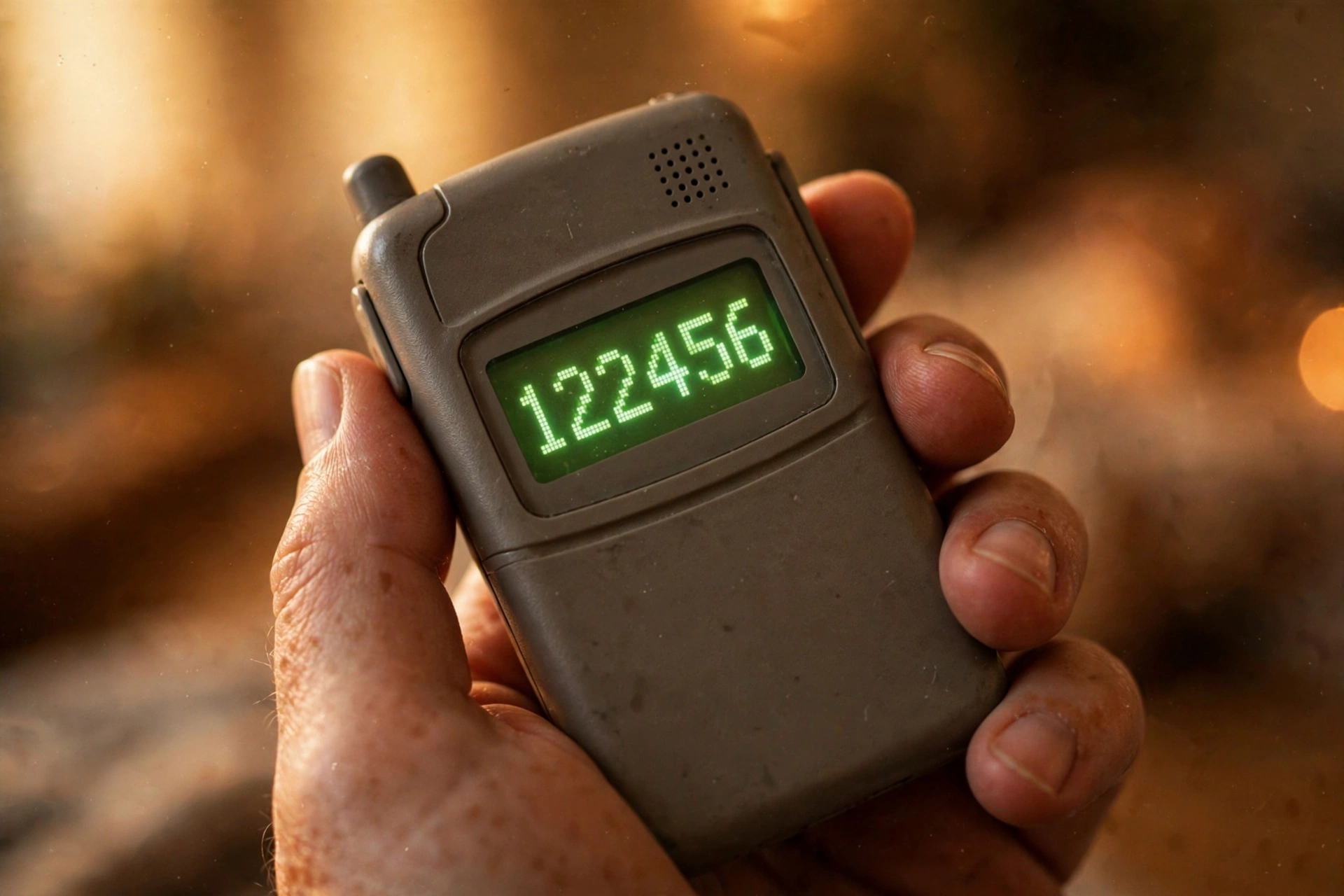
This is the part that gets me every time, because how wild is this: an entire generation of teenagers invented a language out of numbers — no letters, no keyboards, no screens bigger than a postage stamp — and we all just… agreed on what they meant. It was like Morse code for the MTV generation, and if you knew it, you were in the club.
The most famous one, of course, was 143. I love you. One letter, four letters, three letters. Somebody had counted the letters in the words — one, four, three — and suddenly every teenager in America was sending their whole heart through three digits. Getting paged 143 from your girlfriend after a fight? There was no better feeling in the world. None. It said everything without saying anything, and it said it in a way nobody else in the room could understand. That’s the thing about the codes: they were ours. Parents didn’t get them. Teachers didn’t get them. They were whispered in hallways like passwords to a secret society.
Then there was 911. Not a call to emergency services — a page that meant call me back NOW, this is urgent. Getting a 911 page in the middle of math class was genuinely terrifying. Your stomach dropped. You’d spend the next forty minutes spiraling — did something happen to my family? Did my car get towed? Was it the girl? Was it bad news? — and the pager sat there on your belt, smug and silent, refusing to elaborate. Three digits. That’s all you got. The imagination did the rest.
143, 911, and the Codes That Ruled the Night
But it went so much deeper than the big two. We had codes for everything. 69 — call me back, simple and universal. 99 — the same, for people who liked their shorthand double. 411 — give me information, like you were your own little directory service. 411143 — tell me you love me, a whole sentence built from numbers. 637 — “miss you,” because M-I-S-S-Y-O-U spelled out on a phone keypad is 6-3-7… no wait, actually it was 647? See, this is the beautiful part: every school, every friend group had its own slight variations, and you learned yours the way you learned inside jokes. Someone would page you 1212 and you’d just know it meant meet me at the usual place, because you’d worked it out together one night, laughing, decoding like it was the world’s most important spy mission.
We had 07734 too — the famous upside-down trick. Flip your pager over (or your calculator, which is where most of us first learned it) and 07734 spells out “hELLO” in that blocky digital-letter way. It was the goofiest, most wonderful thing: teenagers holding their pagers upside down, squinting at the screen, cackling because it said hello. That one still makes me grin thirty years later. Tell me that’s not the most charming technology prank of all time.
07734: The Upside-Down Hello and the Joy of Decoding
Here’s what the codes really gave us: the thrill of being let in. Every time you decoded a page, you felt like you’d cracked something. The beep would hit, you’d glance down, see something like 143143143, and your face would do something ridiculous before you even realized you were smiling. Nobody else in the room had any idea. Your mom thought it was just numbers. Your teacher thought it was a prank. But you and the sender shared a private little world, transmitted through the air in ten digits or less.
And there’s another quotable one for the road: before anyone slid into DMs, we sent each other 143 — and it meant more. Because it did. It meant someone had picked up a phone, paid for the page, and chosen to reach out with nothing but numbers and nerve. It meant something.
Who Wore the Little Black Box?
If you only know pagers from movies, you might think they were just for drug dealers and doctors. And look — the stereotypes existed for a reason. The movies loved the guy in the trench coat checking his beeper, and yes, that was a real thing; the anonymity of a one-way numeric message had its appeal for people who didn’t want a paper trail. But the truth is so much bigger and funnier than the stereotype.
Doctors were the originals. That’s where the whole thing started — physicians getting paged for emergencies, way back when Al Gross patented the first telephone pager in 1949. And honestly, hospitals are still the last place you’ll find pagers today. Emergency services never gave them up. There’s something about a device that does exactly one thing — scream at you until you acknowledge it — that you just can’t replace when lives are on the line. Long after Motorola ended new pager manufacturing in 2001, the beeper kept humming away in hospital hallways.
Doctors, Dealers, and Every Cool Teenager in Town
But the nineties democratized the beeper, and that’s when it got great. Plumbers wore them. Electricians wore them. IT guys wore them — and man, the IT guy with two pagers on his belt was the undisputed king of the office. Parents wore them so the kids could reach them. Kids wore them so their friends could reach them. I remember a kid in my school — nobody special, average grades, quiet in class — who had three pagers clipped in a row on his belt like bandoliers. We treated him like royalty. Three pagers! What kind of vital, in-demand life must this man lead?! The answer was: he had a pager for his mom, a pager for his girlfriend, and a pager for his part-time job at the car wash. It didn’t matter. He was a legend.
The belt clip was its own whole aesthetic. There was a whole etiquette to it. You clipped it on the right side, screen facing out so you could read it at a glance. You learned to silence the beep in class — there was always a little switch, or you just pressed it into your leg — because nothing was more embarrassing than your pager screaming in the middle of a pop quiz. And the cool kids could do the one-handed check: thumb hits the button, eyes flick down, brain decodes, face stays neutral. All in one second. It was a skill. We practiced it in mirrors.
Different companies became status symbols. A SkyTel pager meant you were fancy — SkyTel had that nationwide coverage and the two-way messaging that felt like science fiction. A Motorola Bravo meant you were classic. The cheaper drugstore brands meant you were just happy to be there. And every pager came with its own little holster or clip, and losing your holster was a minor tragedy, because then you had to carry it in your pocket, and everyone knows a pager in the pocket doesn’t buzz as loud — which is how you end up missing a 911 page and getting dumped. Ask me how I know. Actually, don’t.
The Great Pay Phone Sprint
Okay. This is the section. This is the one that’ll make you put down your coffee and stare into the middle distance for a minute.
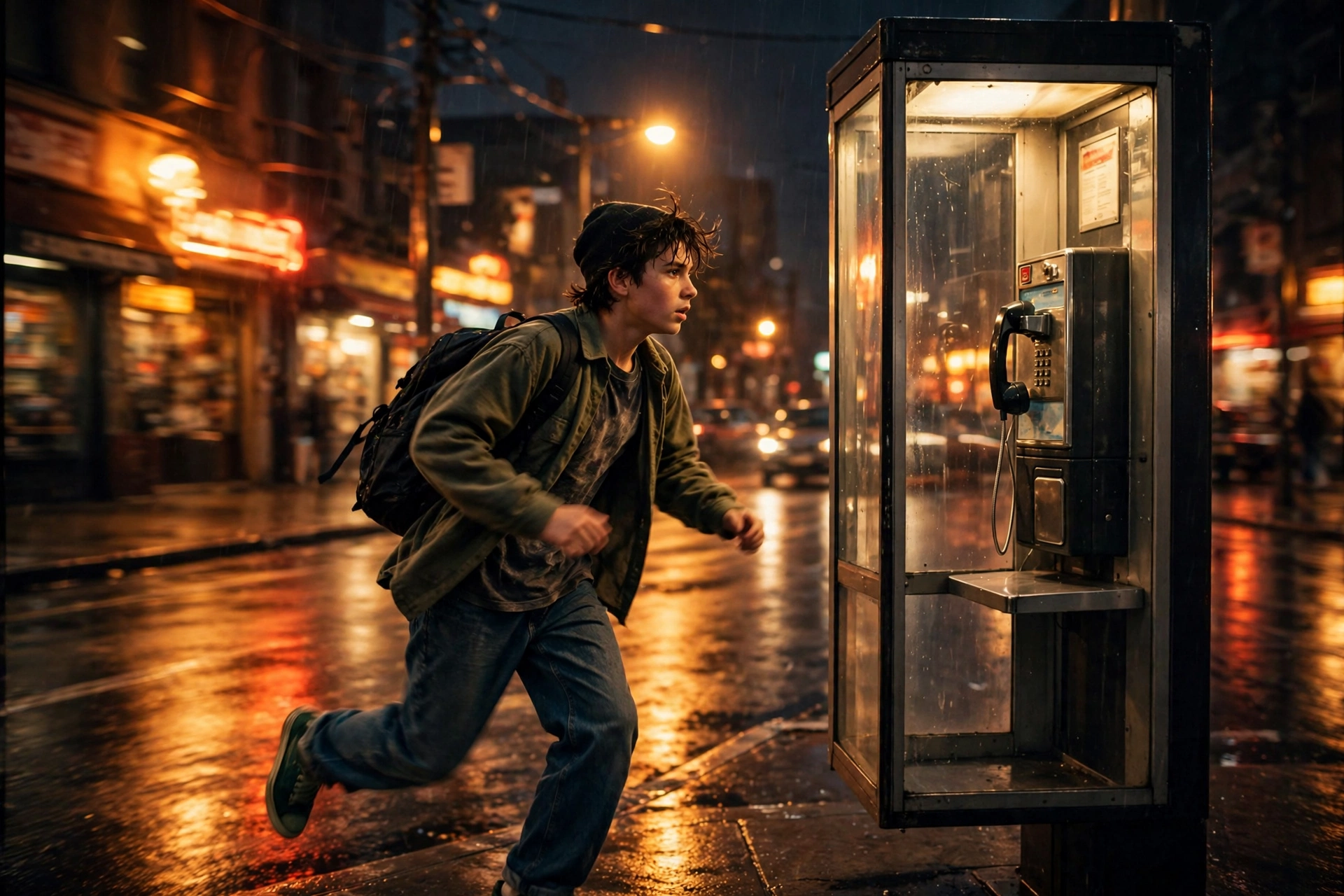
Because here’s the thing about a pager: it couldn’t call anybody back. It was a one-way street. You got the beep, you got the number, and then the clock started ticking — because now you had to find a phone. Not your phone. A phone. A public, coin-operated, hopefully-not-broken, hopefully-not-occupied pay phone. And you had to do it fast, because someone had just sent you 911, or 143, or a string of digits you couldn’t decode yet, and they were waiting.
So you ran. Not jogged. Ran.
I have done the pay phone sprint more times than I can count, and every single one is burned into my memory like a photograph. Sprinting down a mall concourse, pager still buzzing in your hand, eyes scanning for that familiar blue sign. Spotting one outside a gas station and sliding to a stop like a baseball player. Digging in your pockets — please, please have quarters — and discovering you only had dimes and a nickel, which meant you had to go buy a pack of gum you didn’t want just to get change. The whole country ran on this absurd little relay race: beep, sprint, dig, dial, pray.
And the pay phone itself was an adventure. Was it working? Was the handset sticky? (It was always sticky.) Was there someone ahead of you, taking their sweet time, having a leisurely chat while your life was on fire? Was it raining, so you were crammed into that half-booth with water running down your neck, shouting “WHAT? NO, YOU PAGED ME!” over traffic? Half the calls started with you yelling at a confused person who had no idea why you were so out of breath. The other half started with the best news of your week. You never knew which one you were getting until you heard their voice.
Two Quarters and a Prayer
There were rituals. Everybody had the same rituals. You kept an emergency quarter stash — in your shoe, in your wallet, taped inside your locker — because running out of change during a 911 page was the nineties equivalent of your phone dying during an emergency today. You memorized where the working pay phones were, the way people today memorize where the good coffee shops are. The one by the 7-Eleven was reliable. The one at the bus station was a gamble. The one inside the mall near the food court was always, always occupied by somebody’s grandmother having the longest conversation in human history.
And the callback itself — that moment when the number connected and you heard click and then a voice — was pure theater. Sometimes it was your buddy: “Dude, where ARE you? The tickets!” Sometimes it was your mom: “Call your father.” Sometimes it was her, and your whole week got better in three seconds flat. And sometimes, the cruelest trick of all, you’d call the number back and get a wrong number — someone had fat-fingered the digits, and you’d just sprinted a quarter-mile and spent fifty cents for absolutely nothing. You’d hang up, look at the receiver, and laugh at yourself. What a world. What a ridiculous, wonderful world.
Here’s my third quotable for you, and I mean this one: we had no GPS, no caller ID, and no texting — just a beep, a sprint, and a prayer. And we were never more connected.
The End of the Beeper Era
Nothing lasts, and the pager went out the way most beautiful things do: slowly at first, then all at once. The Nokia brick phones were the beginning of the end. Why carry a device that only receives numbers when you could carry one that actually talked? The early cell phones were expensive and huge and had terrible battery life, but they could do the one thing a pager never could: let you answer. And once people tasted that — the instant reply, the actual voice on the other end — there was no going back.
Then came texting. Then came the smartphones. And the pager, that beautiful little one-trick box, got quietly retired. Motorola stopped making new pagers in 2001, which feels almost poetic — the beeper belonged so completely to the twentieth century that it barely made it into the new millennium before bowing out. The belt clips came off. The holsters went into drawers. The secret numeric language faded, replaced by actual words, actual sentences, actual conversations that could stretch on forever without anyone having to decode anything.
And yet. I don’t miss it the way I miss, say, video rental stores or Saturday morning cartoons — I miss it in a different, weirder way. I miss the anticipation. I miss not knowing. I miss the sprint. Because the pager era was the last era where communication had friction, and friction made it exciting. Every beep was a gift-wrapped mystery. Every callback was a small adventure. You couldn’t just fire off a thoughtless text at 2 AM; you had to mean it, pick up a phone, punch in numbers, and then wait and wonder if they’d call back. That slowness gave everything weight.
Today my phone buzzes a hundred times a day and I feel nothing. Back then, one little beep could change my whole afternoon. Tell me that isn’t worth remembering.
So here’s my question for you, and I genuinely want to hear this: what was your pager code? Were you a 143 romantic? Did you live for the 911 adrenaline rush? Did you have a secret code with your best friend that nobody else understood — the one that still makes you smile when you think about it? Or were you the kid with three pagers on the belt, living your best on-call life? Drop your story in the comments. Because those little black boxes may be gone, but the memories? The pager memories are still beeping away, loud and clear, right here in our heads. All we have to do is listen.