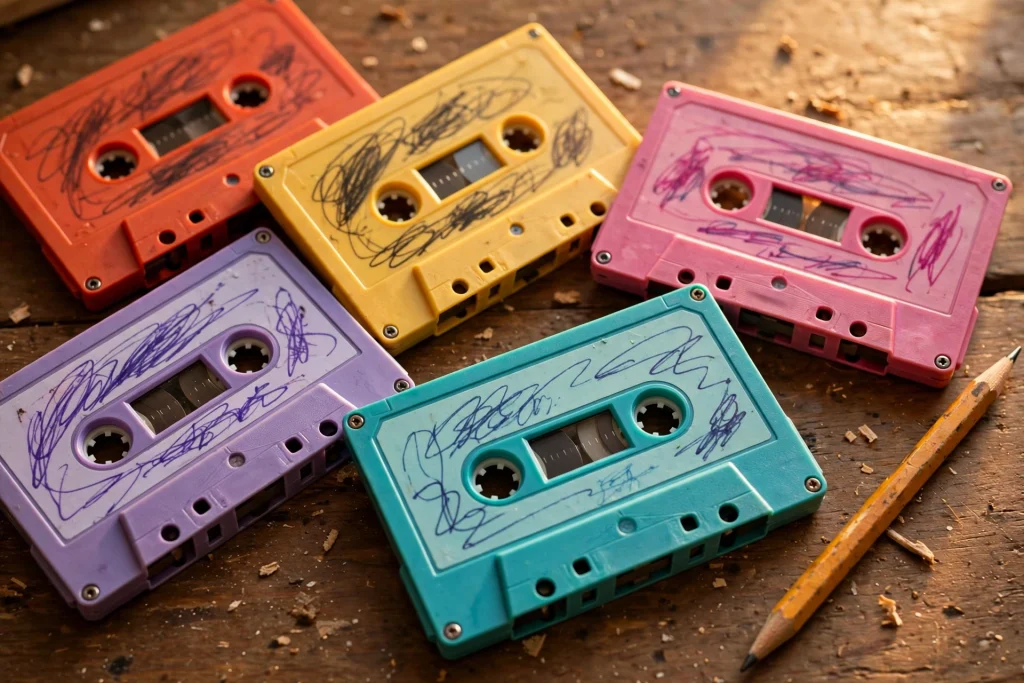
Some Columbia House memories start with a smell — printer’s ink, cheap glue, and the faint sweet-metal tang of a penny taped into the corner of the order form. You remember the moment, don’t you? You’d fish the mail out of the box for your parents, flip past the bills, and freeze on a card promising twelve CDs for a single cent. Your heart did the math before your brain could object. This had to be a glorious typo from the universe. And it had your name on it.
Those Columbia House memories don’t fade, because they were our first brush with a feeling every modern subscription service now tries to sell us: something for nothing, arriving at your door, addressed to you by name. Streaming gives us everything instantly. It never once made us sprint to the porch.
The Magazine Ad That Looked Like Free Money
They were everywhere. Folded into the Sunday paper. Tucked inside the music magazines your older cousin left on the coffee table. Glossy inserts with rows of tiny album covers, all shouting the same impossible headline: twelve CDs for a penny. Eight tapes for a penny, if you were a little older. The numbers changed over the years, but the promise never did — a whole shelf of music, for less than the gum stuck under your school desk.
Here is what nobody tells kids about being thirteen: you are the perfect mark for this ad, and you know it, and you do not care. Because somewhere on that page is the album you’ve been rewinding on a borrowed cassette. Somewhere on that page is the band your friends talk about at lunch. And the whole dazzling wall of it costs a penny. One. Cent.
The fine print was there, of course. It was always there. A dense little block of gray text at the bottom that nobody read and everybody signed. We’ll come back to the fine print. It deserves its own chapter, and it will get one.
The Little Perforated Card
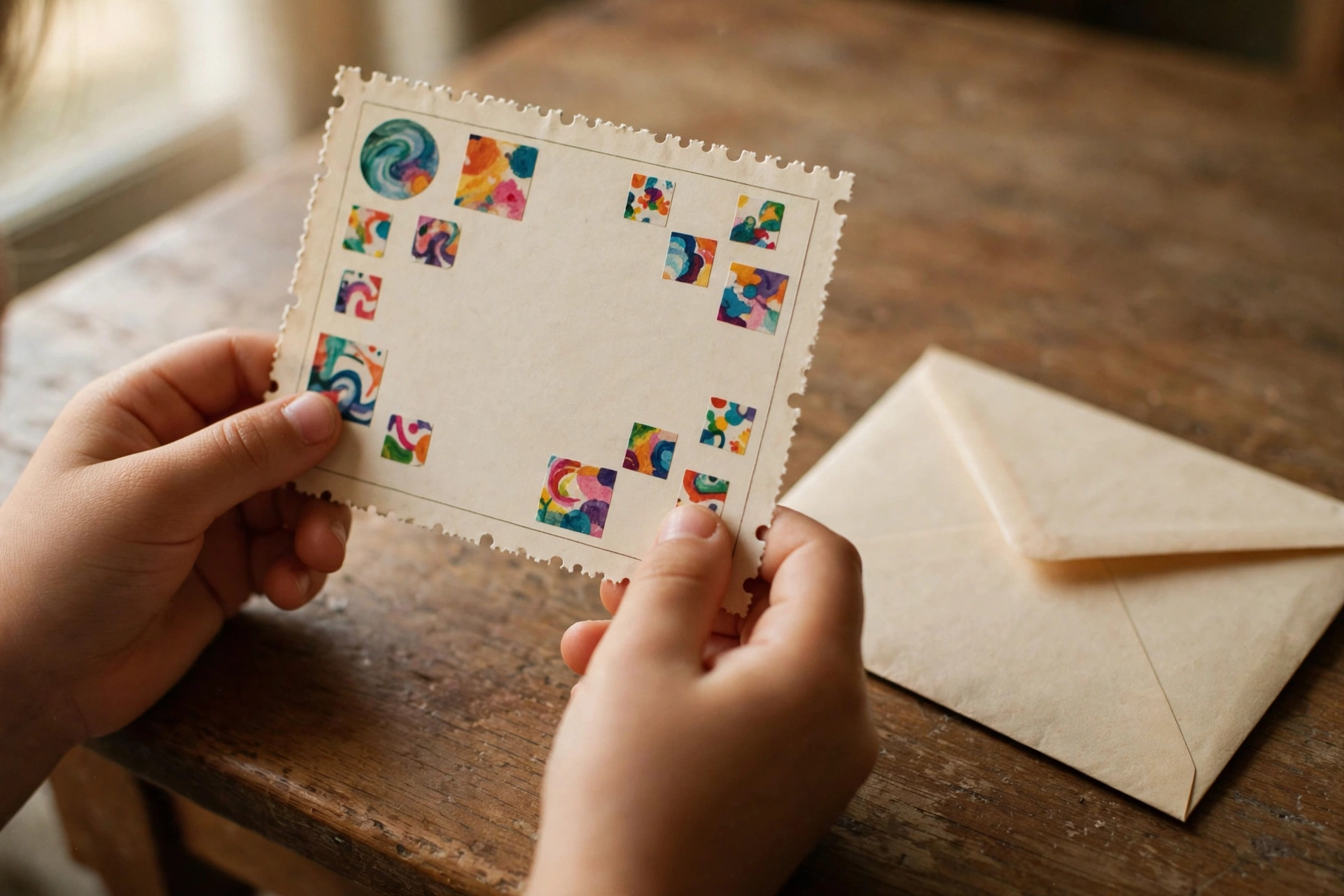
The real Columbia House ritual wasn’t the ad. It was the order card — a stiff little rectangle covered in perforated boxes, each one waiting for a stamp. Not a postage stamp. A tiny square picture of an album cover, printed on sheets like postage, that you tore off, licked (yes, licked, like it was 1975), and pressed onto your card next to the title you wanted.
Choosing twelve albums from a sheet of postage-stamp covers was the hardest decision of 1994. You spread the sheet on the kitchen table and negotiated with yourself like a tiny United Nations. One for the band everyone likes. One for the secret obsession you’d die if anyone found out about. One your friend swore changed his life. The stubs tore off with a soft zip that still lives in my ears. Then you slid the whole thing into the business-reply envelope, dropped it in the mailbox, and raised the little red flag like you were launching something.
Where Columbia House Actually Came From
This wasn’t some fly-by-night scheme, which is the wildest part. Columbia House began in 1955 as the Columbia Record Club, a direct-mail experiment by CBS and Columbia Records to sell records to people the record stores weren’t reaching. In its first year it signed up over 125,000 members who bought 700,000 records. By 1963 it had grabbed a tenth of the entire recorded-music retail market in America. All by mail. Before the internet, before the phone tree, before anything you could click.
The operation moved early to a distribution center in Terre Haute, Indiana — a name that would become holy scripture to every kid who ever mailed back an order card. Everything went to Terre Haute. Every selection card, every check, every order. The return address sat on every envelope like a tiny postmark from another world.
The club rode every format wave: stereo LPs, reel-to-reel, 8-tracks, cassettes, and then CDs — and at its peak in the mid-90s, clubs like this one accounted for an enormous slice of all CD sales, with membership around 16 million and annual revenue near $1.4 billion. Then the internet arrived, and iTunes arrived, and streaming arrived, and nobody cared about owning a shiny disc anymore. But we’ll get to the goodbye. First, the good part.
The Day the Box Arrived
Nothing in the modern world prepares you for the physics of that box. It was heavier than it had any right to be. The cardboard was plain, the tape was plain, but inside — twelve jewel cases, stacked like gold bars, still smelling faintly of plastic and possibility. You didn’t own twelve CDs. Nobody you knew owned twelve CDs. You were, briefly, the richest kid on the block, and your currency was music.
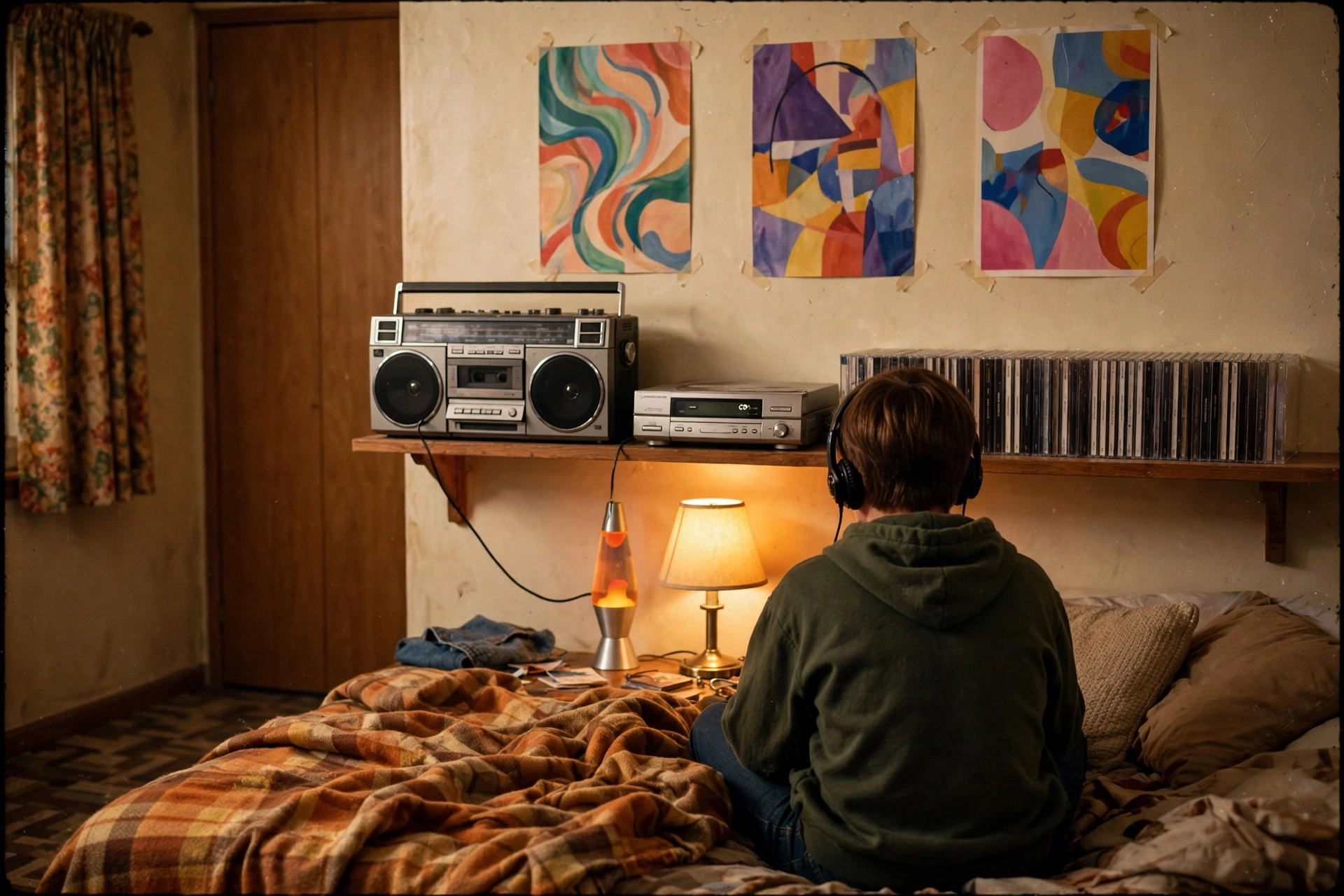
You opened each one slowly, because rushing it would have been a sin. The booklet. The tray card. That little booklet you read cover to cover while the first track played. Then the great ceremony: alphabetizing. On the shelf, in order, spines out, where anyone who walked into your room could see them and know exactly who you were. A Columbia House shelf was a personality you could read from across the room.
And then came the best part, the part no streaming queue will ever give you: the shared listening. Friends came over. You played the albums in order. You argued about track four. Someone borrowed one and returned it with a cracked case and a story. Every scuff on those cases was a memory. Nobody screenshots a playlist with that kind of tenderness.
Columbia House Memories: The First CDs I Ever Owned
Mine arrived on a Tuesday in the spring, and I remember the lineup like it was a family photograph. There was the grunge album everyone had. The hip-hop record my mother would have confiscated if she’d read the lyrics (she didn’t, thank heaven). The movie soundtrack I bought entirely for one song and ended up loving front to back. And the wild card — the album by a band I’d never heard, picked purely because the tiny stamp-cover looked cool. That wild card became my favorite record of the year. This is how discovery worked before algorithms: a licked stamp, a hunch, and four weeks of mail.
Everyone I know has a version of this story. The girl down the street ordered nothing but boy bands and played them until the plastic warped. My best friend built his entire personality out of the club’s rap selection and defended it at lunch like it was territory. Our parents watched this parade of boxes with a mixture of amusement and suspicion, and they were right to be suspicious — because while we were living our best lives, the fine print was quietly ticking.
“Nobody joined Columbia House because they’d read the contract. They joined because somebody promised them twelve CDs for a penny — and who reads the fine print on a miracle?”
The Fine Print Nobody Read
Okay. Deep breath. Let’s talk about what that penny actually cost. Columbia House ran on a model called negative option billing, which is a polite industry term for “we’ll keep sending you stuff unless you stop us.” Here’s how it worked, and here’s the part we all signed without reading.
The Monthly Selection Card
Once you were a member, a little card arrived every month announcing the Director’s Selection — an album the club had picked for you. If you wanted it, you did nothing. If you didn’t, you had to mail the card back by the deadline saying “no thanks.” Forget to return it, and the album shipped anyway, at full club price, plus shipping and handling. Every month was a pop quiz you didn’t study for. And flunking it cost you real money.
Ask any 90s kid about the selection card and watch their face change. We all have the story. The card got buried under school papers. The dog ate it (probably). You were at camp. And then a CD you never wanted showed up with a bill, and you learned the first hard lesson of adulthood: silence, to a mail-order club, means yes.
The Buying Obligation
The second half of the deal: those twelve penny CDs weren’t free. They were the down payment on a promise to buy several more albums at regular club prices over the next two or three years. And “regular club prices” were anything but. Where the record store sold a CD for about twelve dollars, the club charged closer to twenty. The penny was the hook; the obligation was the line, the sinker, and the whole boat.
Did we care? Reader, we did not. We were teenagers with a penny and a dream. Some of us fulfilled our obligations like good citizens. Some of us — and the club’s own former staff have admitted this with a laugh — signed up under creative names, collected the penny bounty, and vanished like ghosts. Columbia House knew the game. The game knew us.
“Columbia House was the first subscription box any of us ever got. We just didn’t know we’d subscribed to the fine print too.”
BMG vs. Columbia House: The Schoolyard Divide
Every kid knew you had to pick a side, because there were two clubs and loyalty mattered. Columbia House had the history, the magazine ads, the Terre Haute mystique. BMG Music Service — once the RCA record club — was the scrappy rival with its own penny deals and its own monthly selection cards. You were a Columbia kid or a BMG kid the way you were a Coke kid or a Pepsi kid, and the debate had the same fierce, evidence-free energy.
The truth is they were practically twins, right down to the fine print. And in 2005, the rivalry ended the way all great rivalries end: BMG bought Columbia House outright, merged the operations, and the two clubs became one. By then the music club era was already winding down — music mail-order shut down entirely in 2009 — but for a while there, two giants fought over our pennies, and we were the winners. For a penny, anyway.
There was one more thing both clubs gave us that the streaming era can’t replicate: the trade. You’d swap a Columbia House CD with a friend the way kids used to trade baseball cards, and the lost art of trading mixtapes with friends grew up right alongside it. Music was physical, which meant it was shareable in a way that felt like generosity, not piracy. Handing someone a disc you loved was a whole love language.
The Quiet Goodbye
Nothing lasts, not even a penny empire. The internet made buying music a two-click errand. Then iTunes made the disc optional. Then streaming made owning anything feel like a hobby for collectors. Club membership, once 16 million strong, bled out year after year. In August 2015, the parent company filed for Chapter 11 bankruptcy, and the Columbia House that had sold a billion records went out the way all giants go: quietly, in paperwork.
The brand didn’t die completely — it was relaunched online as a vinyl subscription service, which is almost poetic. The company that taught us to love shiny new discs now sells the format your grandparents owned. And there’s something right about that, because the same kids who licked stamps onto order cards are the adults now hunting for vinyl records and that warm crackle that never really left us.
“The monthly selection card was a pop quiz you forgot to study for — and flunking it cost you nineteen dollars.”
Here’s what I keep coming back to, though. Columbia House understood something about us that Spotify never will: anticipation is half the music. The waiting. The flag up on the mailbox. The box on the porch. Nobody ever felt a dopamine rush from a playlist updating itself. But a box from Terre Haute, Indiana, addressed to you, holding twelve albums you chose one stamp at a time? That’s a memory you carry for thirty years and write about on a nostalgia blog.
The club’s whole history — from a 1955 record-club experiment to a billion records shipped — is documented in Wikipedia’s detailed history of the Columbia House club, and NPR’s report on the 2015 bankruptcy filing tells the story of the quiet ending better than I ever could.
So tell me, and be honest: were you a Columbia House kid, a BMG kid, or the smug one who somehow got the penny deal twice? What was the first album you picked with those little stamps — and did you ever actually return a selection card on time? Drop it in the comments. I have a feeling this thread is going to be very, very long.