Go ahead. Try it. Think of a jingle from your childhood — the one for the cereal, the one for the toy, the one your whole class used to sing at lunch. Can you still do it? Of course you can. Every word. Every note. The little dance move, if there was one. Meanwhile, you probably can’t remember what you had for dinner on Tuesday. Funny, isn’t it, how old TV commercials carved themselves into our brains deeper than half the things we were actually supposed to learn in school?
I’m not exaggerating when I say those thirty-second spots were a genuine part of childhood culture. They weren’t interruptions. They were events. We quoted them. We acted them out on the playground. We begged our parents for whatever they were selling with the kind of passion usually reserved for much bigger causes. And decades later, hearing one of those jingles again is like finding a time capsule buried in your own memory — crack it open and the whole era comes flooding back.
Why Old TV Commercials Stuck in Our Heads
There’s actual science behind why old TV commercials are so hard to forget, and it’s not a conspiracy — it’s just good craftsmanship. A jingle is basically a memory cheat code: melody plus repetition plus emotion. The advertisers knew that if they could get a tune stuck in your head, the product rode along for free. So they hired real songwriters, real singers, and sometimes full orchestras to produce thirty seconds of audio. Thirty seconds! Some of those jingles had bigger production budgets than the shows they interrupted.
But the real secret wasn’t the music. It was the timing. Commercials aired during the shows we loved most — Saturday morning cartoons, after-school blocks, the evening lineup the whole family watched together. We weren’t scrolling past them or skipping after five seconds. We sat there. We watched. We absorbed. When the same ad ran for months — sometimes years — it didn’t feel like repetition. It felt like an old friend showing up. You’d see the first frame and start singing along before the first note played.
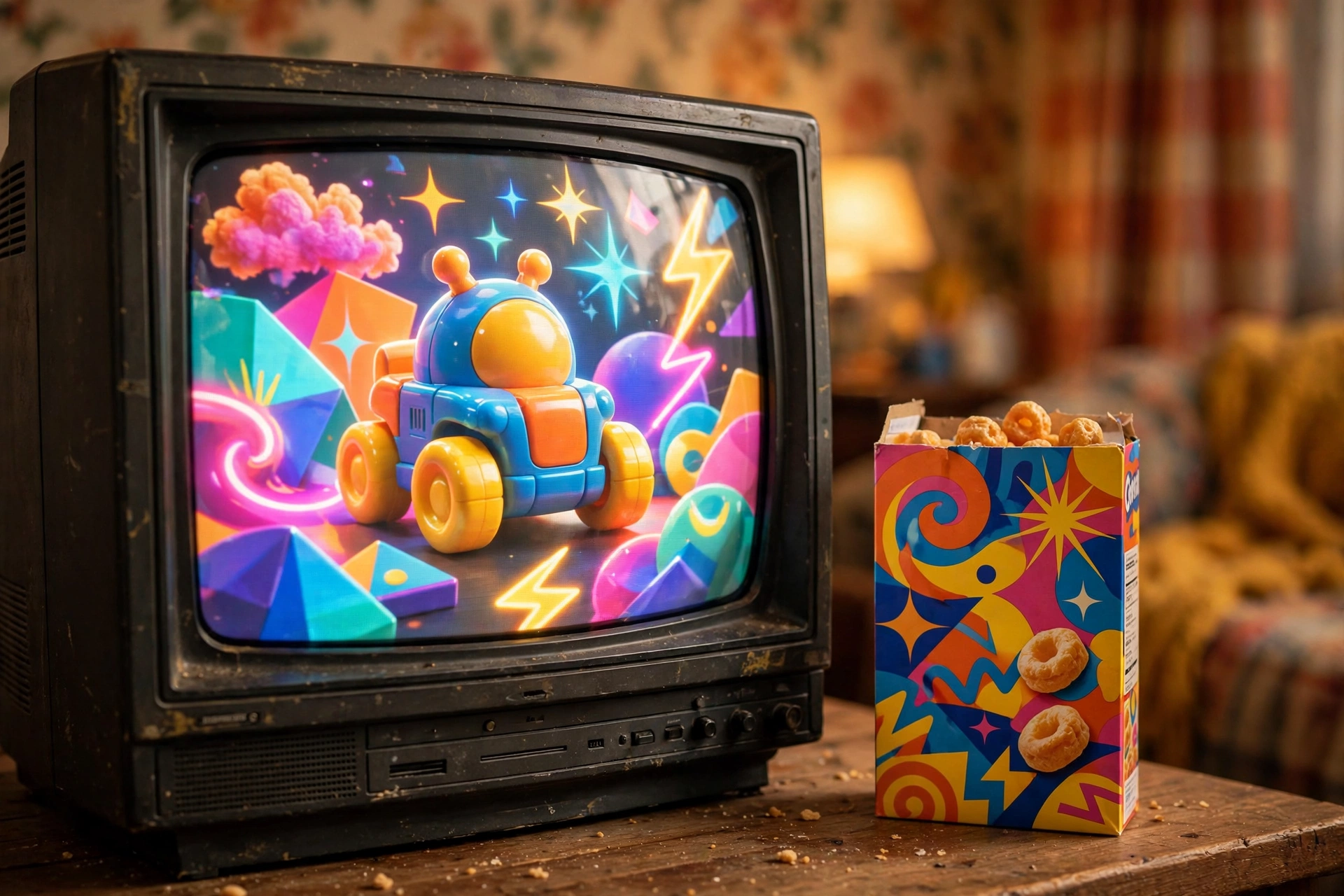
And let’s be honest about something: the ads were fun. The best ones were tiny stories with beginnings, middles, and ends. A problem appears. The product solves it. Everyone celebrates. It was storytelling in its purest, most efficient form, and kids — who are the world’s most demanding audience — ate it up. A boring commercial died instantly. A great one became folklore.
The Jingles That Became Our Second Language
Every generation has its anthems, and thanks to old TV commercials, ours just happened to be about breakfast cereal and cleaning products. Think about how strange that is. We can forget a phone number in ten seconds, but we can perfectly recite a song about a sandwich that we haven’t heard in twenty-five years. The human brain is a weird and wonderful thing, and the jingle writers understood it better than most neuroscientists.
The genius of a great jingle was simplicity. Short words. Big feelings. A melody a five-year-old could hum. The best ones didn’t even need the product name until the very end — the tune alone did the selling. And they were engineered for group singing. That’s why they worked so well on playgrounds: one kid starts, three join in, and suddenly the whole class is performing an unpaid advertisement for something none of them could even buy by themselves. The advertisers got an army of tiny, enthusiastic brand ambassadors, and all it cost them was a catchy tune.
What gets me is how democratic it was. It didn’t matter what your family had or didn’t have. Everybody knew the jingles. Rich kids, poor kids, city kids, country kids — we all sang the same songs. In a world that was already starting to divide people by what they owned, the commercials were one of the last truly shared experiences. You could move to a new school, know nobody, and still bond over the ads. That was worth more than the products ever were.
The Catchphrases That Escaped the TV
Jingles had words, but catchphrases had legs. A great catchphrase from an old TV commercial left the television and moved into real life. Kids used them as greetings. Teachers confiscated them. Parents got sick of them. A single line from a thirty-second ad could become the defining phrase of an entire school year, repeated thousands of times by children who had no idea they were doing a corporation’s marketing for free — and didn’t care, because it was funny.
The best catchphrases worked because they were flexible. You could use them when you were happy, when you were annoyed, when you wanted to make your friends laugh. They were social tools disguised as advertising. And decades later, say one of those lines to someone your age and watch their face light up. It’s an instant handshake. A secret password. Proof that you were there.
The Toy Commercials: Thirty Seconds of Pure Desire
Now we come to the heavyweight champions of the commercial break: the toy ads. Nothing — and I mean nothing — moved a kid’s heart like a well-made toy commercial. The regular ads were fun. The toy ads were transformative. They didn’t just sell a product; they sold a whole world, and they did it in half a minute.
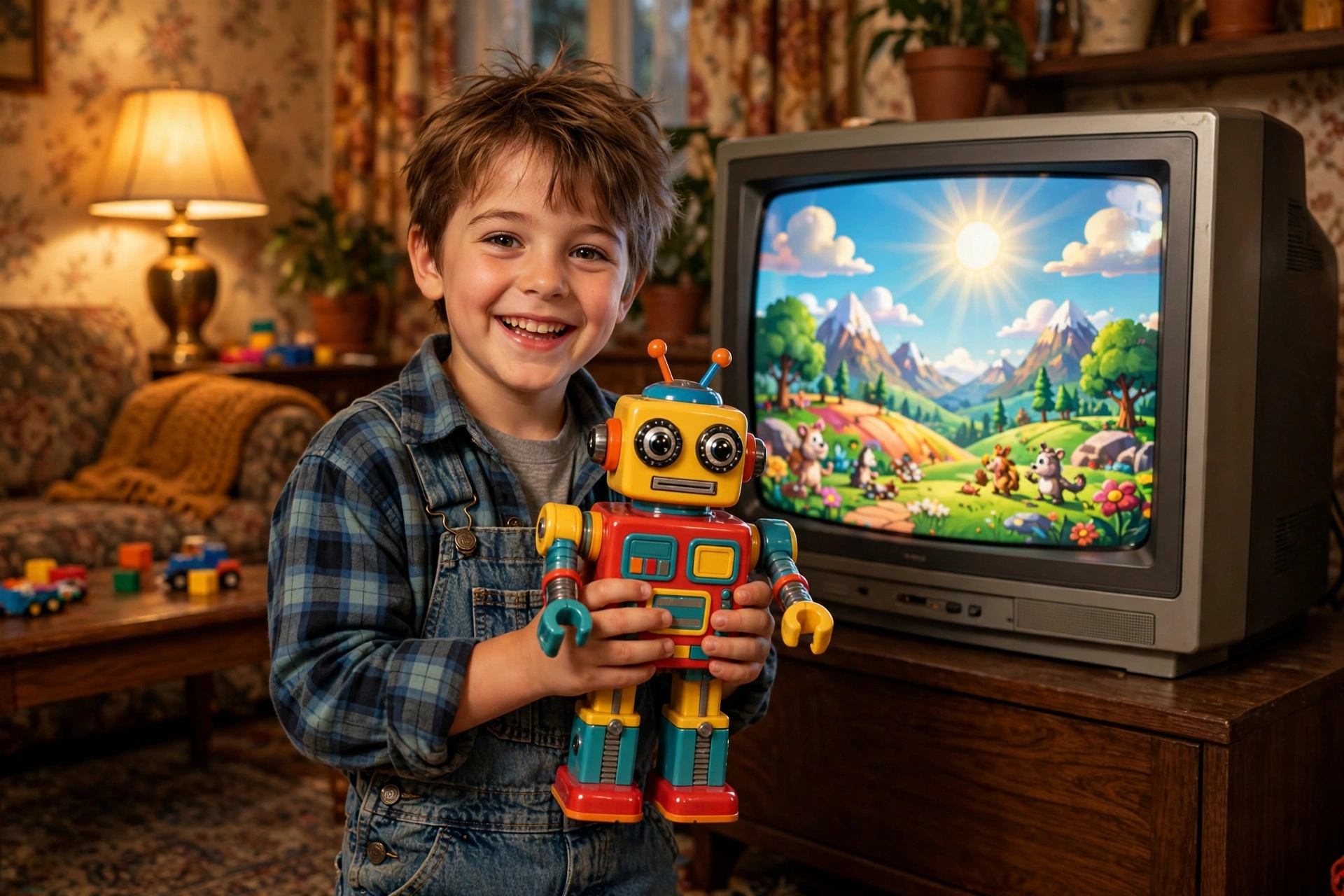
The formula was flawless. Open on the toy doing something impossible — flying, transforming, racing, battling. Cut to kids playing with it, and these kids were always having the best day of their lives. The lighting was perfect. The sound effects were enormous. Every movement the toy made was accompanied by a whoosh, a crash, a triumphant musical sting. And the voiceover — that deep, excited voice — made it all sound like the most important event in human history.
Here’s the part nobody talks about: the toy commercials were also masterclasses in imagination. Yes, the toy never actually did those things in real life. But the commercial gave you the blueprint. When you finally got the toy — and oh, the campaigning that went into getting it, the hints dropped for months, the strategic good behavior — you didn’t just play with it. You recreated the commercial. The ad had taught you how to dream about it. In a way, the thirty seconds of television were the instruction manual for your imagination.
And the disappointment? Let’s talk about the disappointment, because it was part of the ritual. The toy arrives. It’s smaller than it looked. It doesn’t fly. The batteries are, inevitably, not included. And yet — and this is the beautiful part — you loved it anyway. Because the commercial had already done its real job: it had made the toy yours before you ever touched it. The plastic was just a souvenir of the dream.
The Ads We Watched as a Family
Not all old TV commercials were for kids, and that’s worth remembering. The evening commercial breaks were family time in their own way. Mom and Dad watched the same ads we did, and the great ones spoke to everybody at once. The funny ones made the whole room laugh. The emotional ones — and there were some genuinely emotional ones — could quiet a whole living room.
Those family ads had a different kind of staying power. They weren’t about desire; they were about recognition. They showed families that looked like yours, dealing with mornings like yours, laughing at things like the things you laughed at. In thirty seconds, they said: we see you. And when you’re a kid, seeing your own life reflected back — even in an advertisement — feels strangely validating. It says your ordinary days are worth putting on television.
Some of the most beloved ads of the era barely mentioned a product at all. They were little films — a grandfather and a grandson, a dog waiting by the door, a holiday table full of food. The product showed up in the last five seconds, almost like an afterthought. The advertisers had figured out something important: if you make people feel something, they’ll remember who made them feel it. Decades later, we remember the feeling. The product name is just the tag on the memory.
When Commercials Became Events
Here’s something younger readers might find hard to believe: there was a time when people actually looked forward to certain old TV commercials. Not in a ironic way. Genuinely. The big holiday ads were appointment television. You’d hear that one was coming and make sure you were in the room. Families discussed them at dinner. Kids reenacted them at school the next day. A great commercial could dominate the conversation for a week — the same way a great episode of a show could.
Why did that happen? Because commercials were one of the few things everyone experienced at the same time. There was no on-demand, no skipping, no second screen. When an ad aired during the big game or the holiday special, millions of people saw it in the same moment. It was a shared event, and shared events create culture. We talk about viral videos now, but a classic commercial was viral before the internet existed — it spread through playgrounds, offices, and dinner tables instead of feeds.
That simultaneity is what we’ve lost, and I think it’s worth mourning a little. Today, two people can watch the same show and see completely different ads. The shared reference points are gone. Nobody’s going to bond over a pre-roll ad they both skipped. The old TV commercials gave strangers something to talk about. That’s a small thing, but small things add up to a culture.
The Ones That Made Us Cry
Not every memorable commercial was funny or catchy. Some of the most legendary ads were the ones that made an entire country tear up. The holiday ads, especially, became a genre unto themselves — short films about family, kindness, and coming home. They aired once a year, and people waited for them like they waited for the holidays themselves.
There’s a particular kind of genius in making someone cry in thirty seconds. It requires perfect casting, perfect music, and a story so simple a child can follow it. And when it worked, it really worked. Grown adults — tough, cynical grown adults — would get misty-eyed over an advertisement for something they’d never even buy. Because it wasn’t about the product. It was about the feeling the product was borrowing: warmth, belonging, love. The best ads didn’t sell things. They sold the moments things were part of.
What the Old Ads Teach Us Now
So what do we do with all these memories? For one thing, we can appreciate the craft. Those old TV commercials were made by people who took thirty seconds seriously — writers, directors, composers, and actors who treated a soap ad like it was cinema. In an age when most digital ads are designed to be skipped, there’s something almost noble about a time when the ad itself was the entertainment.
For another, we can notice what we’ve traded away. The old ads were interruptions, yes — but they were shared interruptions. They gave us common ground. Today’s advertising is hyper-targeted, which means it’s hyper-private: your ads are yours, mine are mine, and never the twain shall meet. More efficient? Absolutely. More human? I’m not so sure.
And maybe, most importantly, we can let ourselves enjoy the nostalgia without apology. Singing a jingle from 1994 isn’t silly. It’s a connection — to your childhood, to your family around the TV, to millions of strangers who sang it too. Those old TV commercials were never just selling us things. They were giving us a shared language, one catchy tune at a time. And languages don’t die. They just wait for someone to start singing.
If this trip down memory lane hit home, you’ll probably love our piece on Saturday morning cartoons — the shows those very commercials interrupted. And for a fun bit of history, Wikipedia’s overview of the television advertisement traces how these little thirty-second films grew into one of the most powerful cultural forces of the twentieth century.
Pingback: 90s Sitcoms: Best TGIF Nights & Family TV Memories