You didn’t choose classic rock. It chose you — usually through a car stereo, turned up way too loud, with a parent or an older sibling drumming on the steering wheel like their life depended on it. Before you knew the names of the bands, before you understood a single lyric, you knew the feeling: that surge when the guitar kicks in, that chorus that makes a whole car full of people sing at the top of their lungs. That’s the thing about this music. It doesn’t ask for your attention. It takes it.
Classic rock isn’t a strict genre with clean borders — it’s an era, roughly the late sixties through the early nineties, when rock music was the biggest cultural force on the planet. Britannica traces rock’s roots through blues and rebellion, but what it became in the classic era was something else entirely: stadium-sized, mythic, and permanent. These songs don’t age. They just wait for the next generation to discover them, and the next one always does.
The Car Radio University
For most of us, the education started in the back seat. Long drives, windows down, and a parent who had Opinions about music. Dad’s rule was simple: “This is real music.” Mom would roll her eyes, but she’d be singing along by the second chorus — they always did. You didn’t have a choice in the curriculum. Led Zeppelin, The Rolling Stones, Fleetwood Mac, Creedence Clearwater Revival — they arrived in a fixed rotation, like it or not.
And here’s the strange part: at first, you didn’t like it. It was old people’s music. It was loud and the singers sounded like they were shouting and the songs were too long — what was that one song that just kept going with the guitar part in the middle? But then something happened. You caught yourself humming it. Then you were waiting for it. Then you were the one reaching for the radio dial, and your parent would give you this look — this knowing, victorious look — because they’d been waiting for this moment for years. The conversion was complete. You were one of them now.
The car was the perfect classroom because you couldn’t skip. No playlists, no shuffle, no algorithm. The DJ played what the DJ played, and if you wanted the good stuff you had to sit through the commercials and the songs you didn’t know yet. Which meant you absorbed entire albums by osmosis. You knew the deep cuts. You knew which track came after which. Years later, hearing the opening notes of a song you haven’t thought about in decades will still put you right back in that back seat, watching telephone poles blur past the window.
Classic Rock Stadium Anthems: Music Built for Thousands
Some songs aren’t meant for headphones. They’re meant for fifty thousand people screaming them at the sky.

“We Will Rock You” might be the most efficient piece of music ever written — two stomps, a clap, and suddenly an entire stadium is a percussion instrument. Queen understood something fundamental: the best rock anthems aren’t performed at the audience, they’re performed with them. “We Are the Champions” turned every sports victory into a coronation. Journey’s “Don’t Stop Believin'” — a song about small-town dreams that somehow became everyone’s story — still closes out bars and weddings and championship games, and the room always, always sings the “streetlight people” part like it’s a religious text.
The guitar solo deserves its own paragraph, honestly its own holiday. The solo was the moment the song stopped being a song and became a duel — one person, one guitar, against the laws of physics. Hendrix at Woodstock, playing the national anthem like it was on fire. Jimmy Page’s bowed-guitar madness. Slash stepping out onto a stage in front of thousands and making a Les Paul sound like it was confessing its sins. Kids air-guitared these solos in bedrooms across the world with a dedication that bordered on religious. The tennis racket was the beginner’s instrument. The broom was for the committed. If you had an actual guitar, you were basically royalty.
And the frontmen — rock’s true mythology. Freddie Mercury commanding Wembley like he owned the air itself. Robert Plant wailing like a force of nature. Mick Jagger, who at an age when most people are thinking about retirement is still out there doing what he’s always done, because some people are just built different. These weren’t just singers; they were proof that a single human being with enough charisma could hold the attention of a hundred thousand people. In an age before social media, that was the closest thing to a superpower.
Vinyl: The Format That Demanded Respect
Streaming gives you everything instantly, which means it gives you nothing to hold. Vinyl was the opposite — it was heavy, fragile, inconvenient, and absolutely magical.
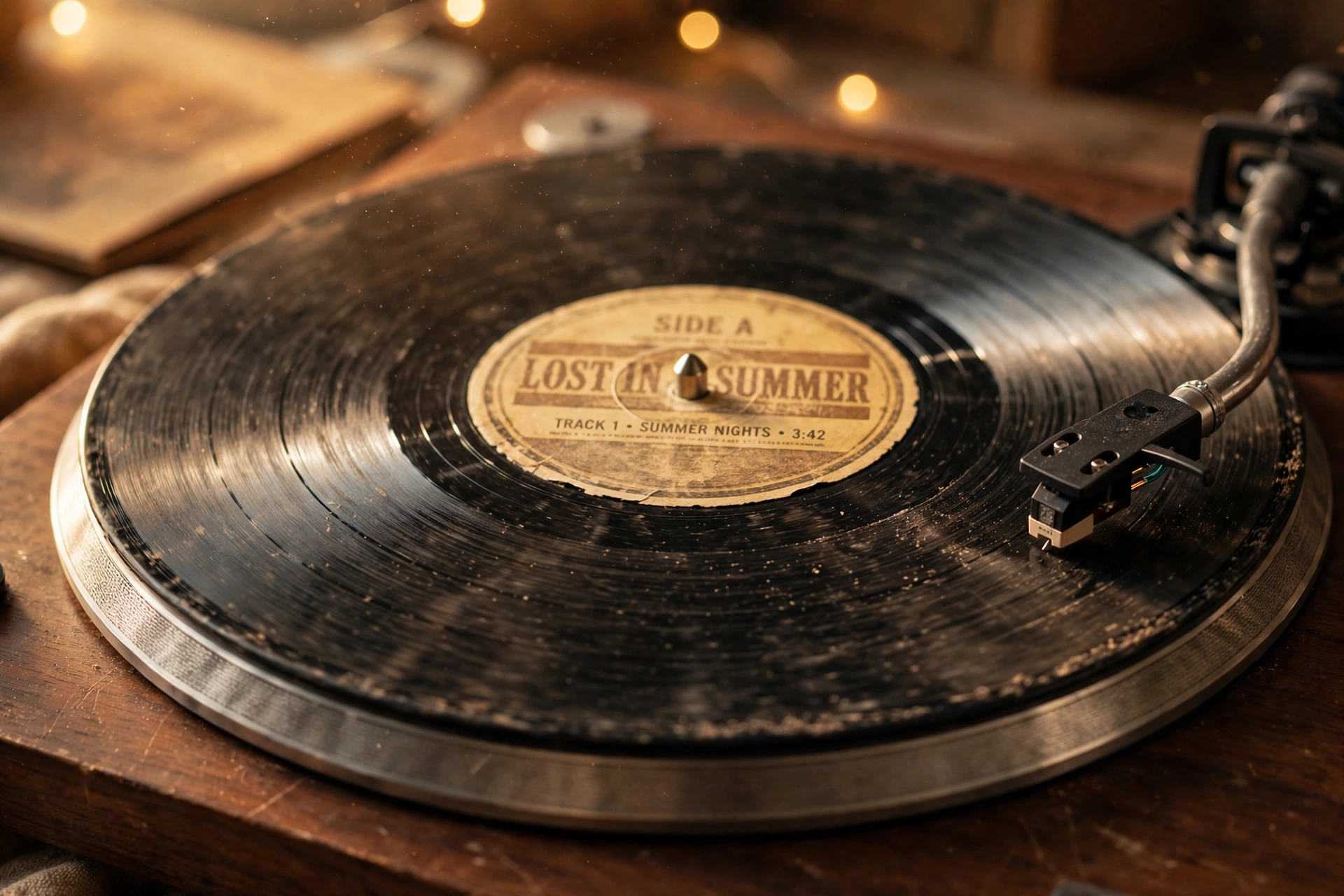
Playing a record was a commitment. You’d slide it out of the sleeve — carefully, by the edges, because fingerprints were the enemy — and study the cover art while the turntable spun up. Album covers were art galleries: the prism on Dark Side of the Moon, the zipper on Sticky Fingers, the sheer weirdness of every Yes album cover ever made. You’d read the liner notes. You’d memorize the lyrics printed on the inner sleeve, even the ones that were clearly wrong. And then the needle dropped, and there was that crackle — that warm, imperfect, human crackle — before the music began.
Sides mattered. An album had a Side One and a Side Two, and the order wasn’t random — it was architecture. The opening track was a statement. The closing track was a farewell. And flipping the record was an intermission, a moment to stretch, to talk about what you’d just heard, to decide whether to play it again. Nobody skipped tracks on vinyl. Skipping meant getting up, lifting the needle, guessing where the next song started, and probably scratching the record. You listened to the whole thing, in order, like the artist intended. It sounds exhausting. It was wonderful.
The record collection was also a personality statement. Your albums, spine-out on a shelf, told visitors exactly who you were. Alphabetical or by genre? That was a real debate with real stakes. Lending a record was an act of profound trust — “You scratch it, you buy it” wasn’t a joke, it was law. And the holy grail, the thing every collector dreamed of, was the original pressing: the first run, the one that sounded the way it sounded in the studio, before remasters and reissues. Finding one in a bargain bin felt like discovering treasure.
The Mixtape Connection
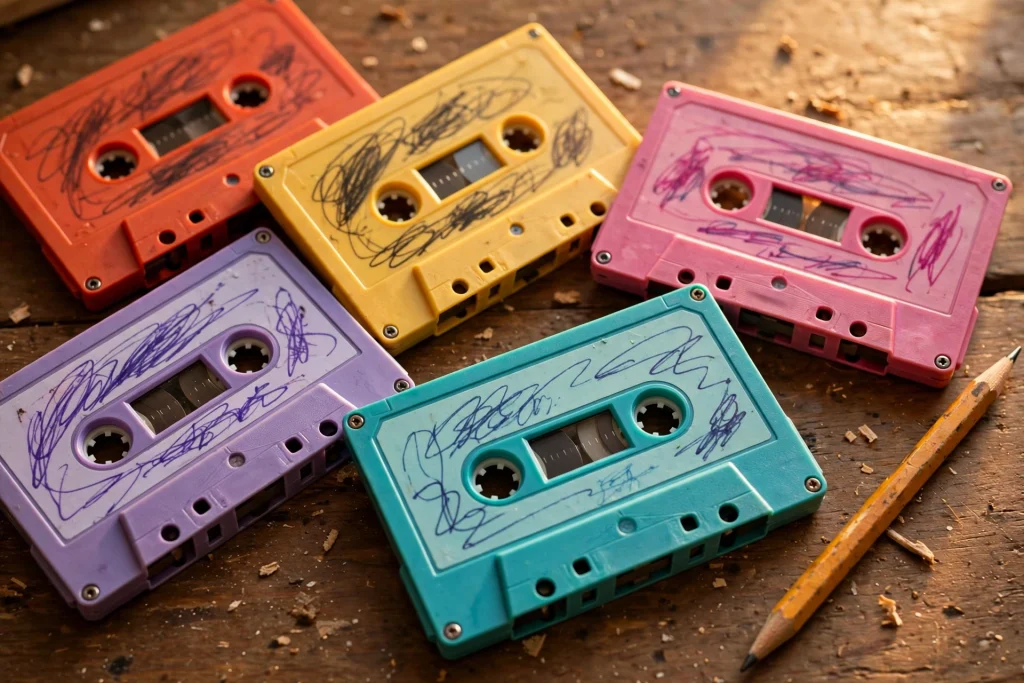
Classic rock and the mixtape were made for each other. Rock gave you the raw material — the anthems, the ballads, the deep cuts — and the mixtape let you become the curator. The lost art of the mixtape deserves its reputation, because making a tape of classic rock songs for someone was one of the most intimate things you could do. Every track was a message. The order was an argument. And the person who received it understood exactly what you were saying, because they’d grown up in the same car-radio university you had.
The slow song was the strategic centerpiece. Every great rock mixtape had one — the lighter-in-the-air ballad that proved you had depth. “Stairway to Heaven” was the obvious choice, which is why the real connoisseurs went deeper: “Wish You Were Here,” “Behind Blue Eyes,” “Dust in the Wind.” Putting the wrong slow song on a mixtape could ruin a friendship. Putting the right one could start a relationship. The stakes were enormous and nobody talked about them, which made them even more enormous.
Taking It on the Road
Then came the Walkman, and classic rock went mobile. Suddenly the anthems weren’t confined to the car or the living room — they were in your ears on the bus, on the walk to school, on the bleachers at the game. The experience changed. With headphones on, the music became private, interior. You weren’t sharing it with the car anymore; it was yours. The guitar solo wasn’t a stadium event now — it was a secret between you and the song.
This was also when the generational war over music got interesting. Parents who’d grown up on Elvis thought Zeppelin was noise. Kids who grew up on Zeppelin thought their parents’ music was ancient. And then, inevitably, the kids grew up, had kids of their own, and played Zeppelin in the car — and the cycle continued. Classic rock is the rare genre that wins every generational war by simply outlasting the opposition. The kids always come around. They always do.
The Hall of Fame Question
Ask a group of classic rock fans who belongs in the Rock & Roll Hall of Fame and clear your schedule. This debate has ended friendships. Is it about sales? Influence? Longevity? The snubs are legendary — bands that defined the genre waiting years for induction while the arguments raged. But here’s the thing: the Hall of Fame is a building in Cleveland. Classic rock doesn’t need a building. It’s in every car, every bar, every wedding DJ’s emergency playlist. Immortality was already achieved. The plaque is just paperwork.
Why It Never Dies
Every few years, someone declares rock dead. It’s been declared dead since approximately 1975, and it keeps refusing to cooperate. The reason is simple: these songs were built to last. They were written by people who’d grown up on blues and gospel and country, recorded by engineers using tape and instinct, and tested in front of live audiences who’d let you know immediately if a song didn’t work. No focus groups. No algorithms. Just a band in a room, trying to make something that would make a crowd lose its mind.
And it worked. “Bohemian Rhapsody” is fifty years old and still makes teenagers cry. “Sweet Child O’ Mine” still stops conversations when that opening riff starts. “Hotel California” is still the song everyone plays when they get their first guitar, badly, with total commitment. These aren’t just songs anymore — they’re infrastructure. They’re part of how the culture talks to itself.
So turn it up. Roll the windows down. Drum on the steering wheel like your life depends on it. Somewhere, a kid in a back seat is hearing it for the first time — and in about six months, they’re going to reach for the radio dial themselves. The conversion is coming. It always comes.
Pingback: Vinyl Records: The Warm Crackle That Never Truly Left
Pingback: Disco Era Memories: Mirror Balls, Night Fever & Dancing
Pingback: American Top 40 Memories: Casey Kasem's Countdown