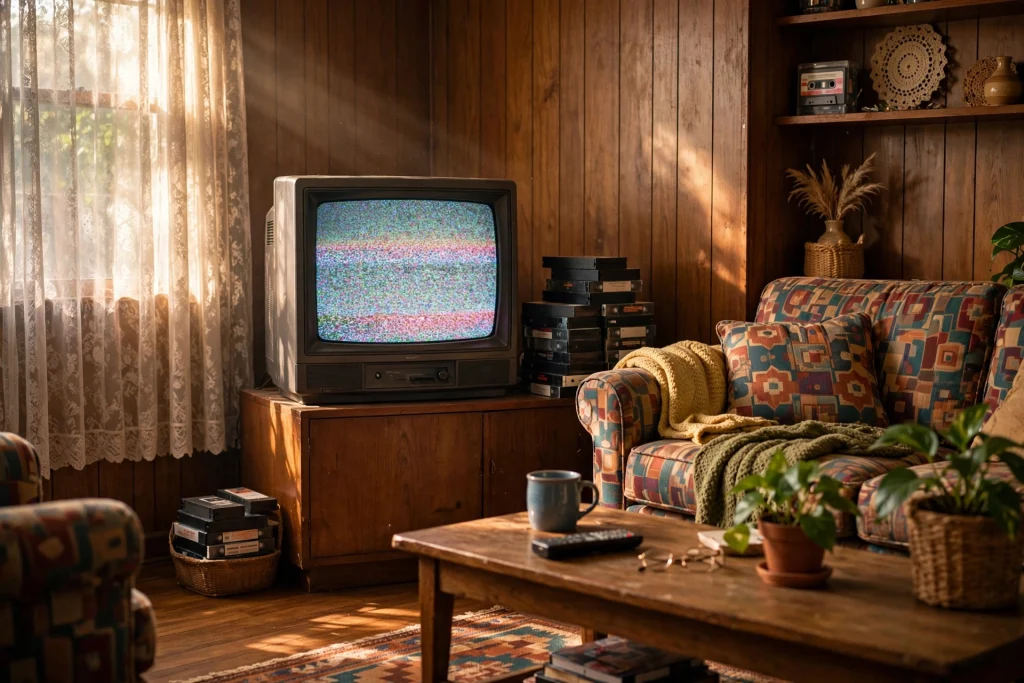
Tonight, time itself is giving you a gift — one extra hour. At 2 AM on Sunday morning, November 1st, 2026, clocks across most of America quietly slide backward to 1 AM, and just like that, Sunday stretches into a 25-hour day. For once in your life, the universe is not asking for more of your time. It is handing an hour back, no strings attached. And if you grew up before smartphones did all the thinking for us, that one little hour came wrapped in a whole ritual — the fall back memories that still make us smile every single November.
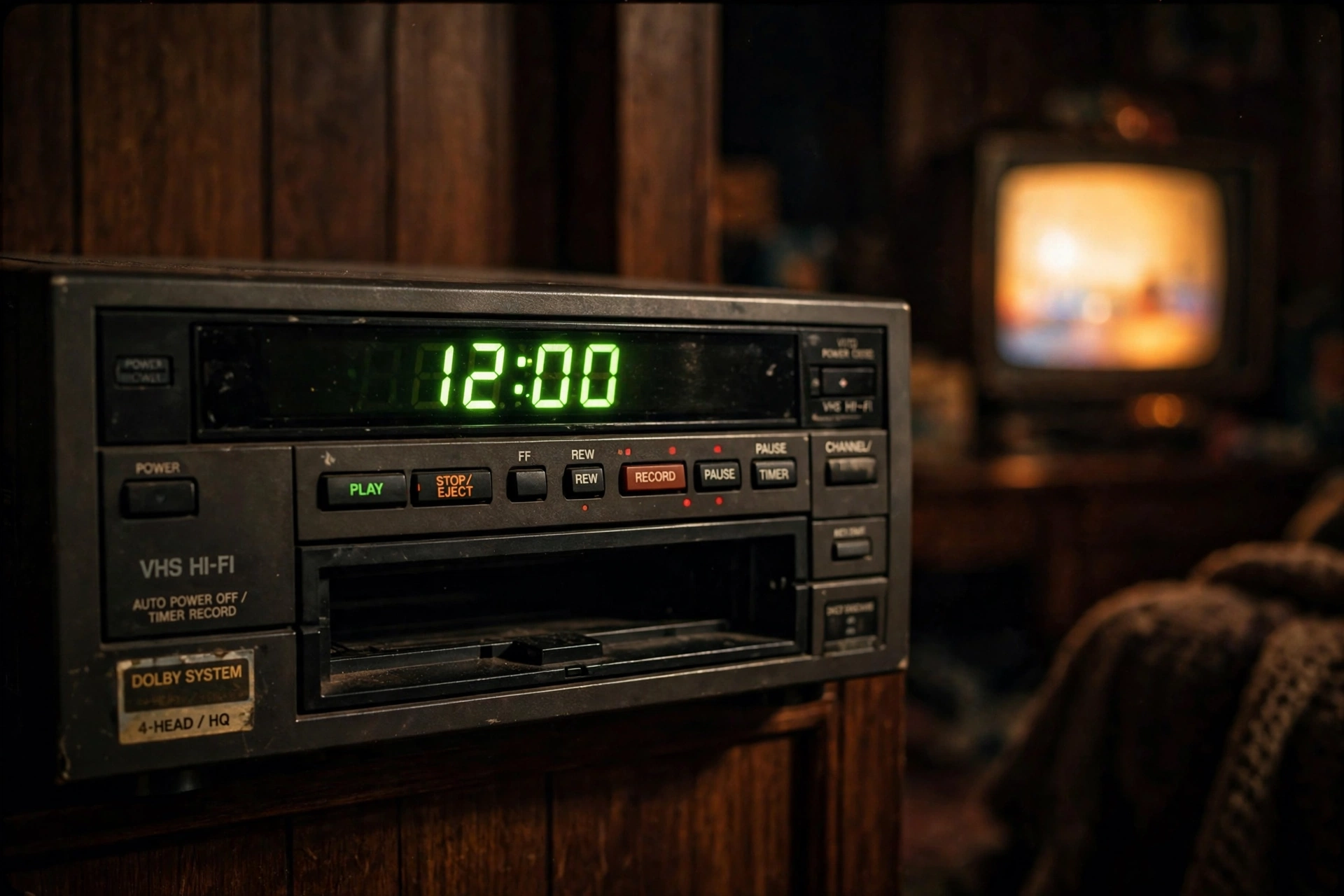
Because it was never really about the hour, was it? It was the Saturday night walk through the house — the kitchen stove, the microwave, the bedroom alarm clock, the VCR that had been blinking 12:00 since approximately 1997 — changing every single clock by hand. It was your dad on the porch with a wristwatch in each hand, squinting at the sky like he was double-checking with the universe. Fall back was a team sport. Nobody changed all the clocks alone — and somebody’s mom always called from the kitchen: “Did anybody change the stove?”
Table of Contents
The Glorious 25-Hour Day
Let us start with the best part, because this is the part nobody complains about: tonight is the one night of the year when you officially get more sleep. Fall back is the only time change that gives instead of takes. Spring forward steals an hour — everybody grumbles, everybody drags through Monday. But fall back? Fall back is the generous cousin. An extra hour under the covers. An extra hour of Sunday morning lying there doing nothing.
And it is a genuinely longer day — 25 hours from midnight to midnight, the only one of its kind on the whole calendar. People have fun with that fact. Radio DJs lived for it: “It’s 1:30 in the morning… and in one hour, it’s going to be 1:30 in the morning again!” That joke never got old, no matter how many Novembers you heard it. There is something deliciously strange about living the same hour twice — like a little glitch in the universe, and for once you were in on it.
The morning itself had its own flavor. You woke up unsure what time it really was. The alarm clock said one thing, your stomach said another, and the sun through the window seemed to be taking sides. And the pets? Dogs and cats do not own watches, and they do not care about your federal timekeeping. Dinner is at dinner time — and when you tried to make them wait an extra hour, you got that slow, accusing, we-have-been-betrayed look that no clock change could ever negotiate away.
Changing Every Clock in the House — By Hand
Now, the ritual. Saturday night, after dinner, someone — usually Dad — would stand up and announce it like a general issuing orders: “All right, clocks.” And the whole house would fan out on a mission. The stove clock. The microwave. The coffee maker. The bedroom alarm clocks. The car dashboard. The wristwatches. Every single timepiece in the building had to be found, read, and pushed back one hour, one by one, by hand.
And there was always the one clock that fought back. The microwave buttons were never quite intuitive. The car dashboard required the owner’s manual and three people standing around it. The stove clock had its own tiny personality — you held the button and it zipped past 11:40 like it was trying to escape. Somewhere in every American home there was at least one clock that got changed in March and then stayed wrong for the next six months, because nobody could remember how to work it.
And then there was the VCR — the great unsolvable mystery of American domestic life. Every household had one flashing 12:00, endlessly, hopefully, forever. Somebody’s dad tried to set it once, back in 1994, and it ended with the VCR taping over a wedding video, and nobody ever touched it again. The blinking 12:00 became a piece of furniture. A family member. It blinked through birthdays and holidays and whole childhoods without a single successful reset.
Spring Forward, Fall Back — The Five Words Every Kid Knew
How did we all know which way to turn the clocks? Five little words: “Spring forward, fall back.” Every kid in America learned that rhyme the way they learned the alphabet song. A teacher said it once, a parent said it twice, and it was lodged in your brain forever. Say it out loud right now — I bet you still can, without even thinking.
It is a perfect little mnemonic, really. Spring: the clocks spring ahead, an hour lost, everybody tired and cranky for a week. Fall: the clocks fall back, an hour gained, everybody rested and smug. No child ever needed a second explanation.
And it stuck to everything. Your dad would mutter it in the car while stabbing at the dashboard buttons. Your grandmother would say it on the phone on Saturday, reminding your mom, who reminded you. Whole chains of reminders, coast to coast, powered by five words.
Dark by Dinner — When the Evening Disappeared Overnight
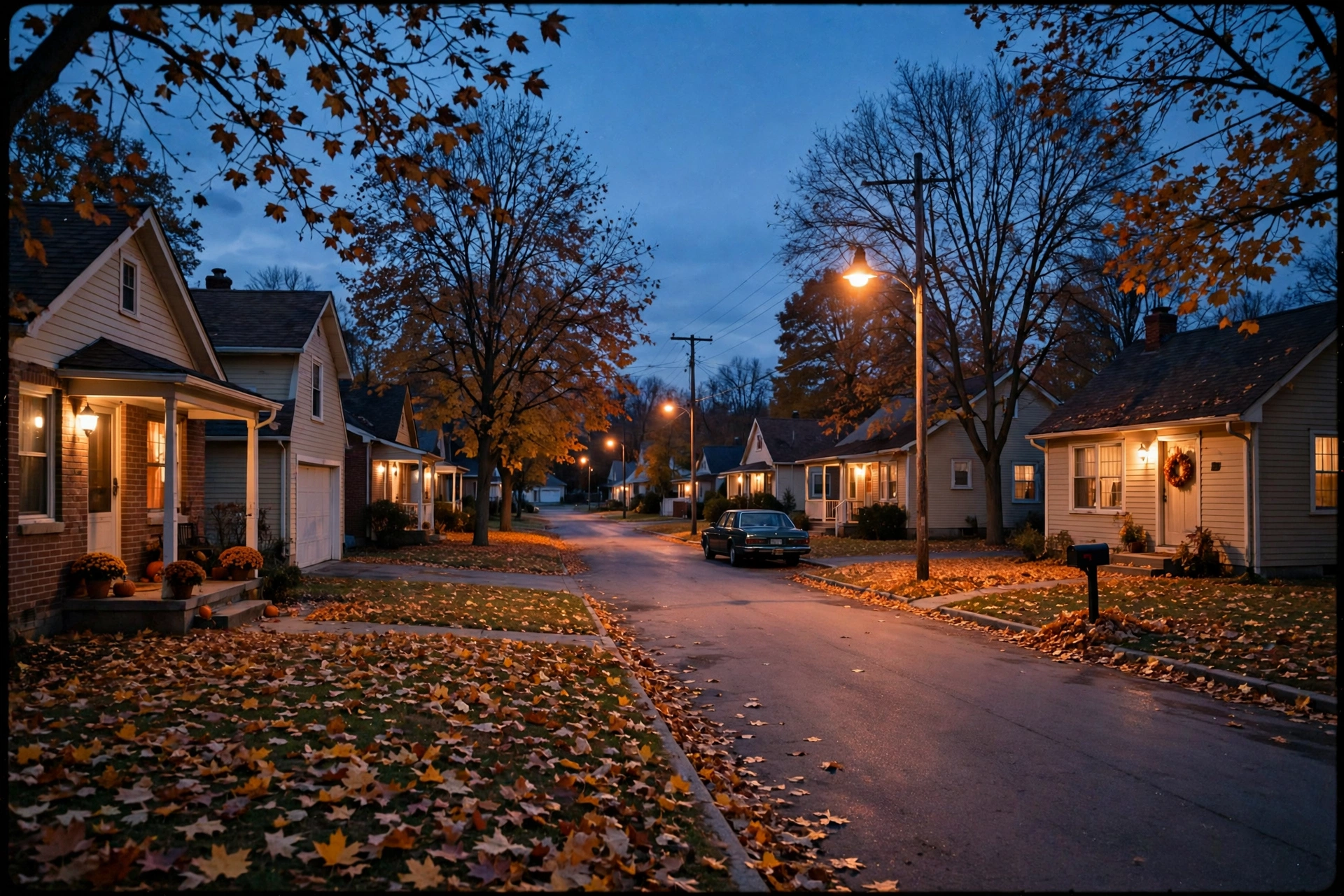
Here is the trade, and everybody knew it: you got your extra hour of sleep, but you paid for it with the light. Starting tonight, the sun starts clocking out an hour earlier. Dinner happens in the dark. Overnight, without warning, the evenings vanish.
If you grew up in the fall-back era, you remember exactly how it felt. One Saturday you were playing outside after dinner in that golden October light, and the next Saturday you stepped out the door and it was pitch black. The streetlights had already buzzed on. The porch light was doing all the work. Your whole world had shrunk to the warm little bubble of the house, and everything beyond the windows was dark.
Kids were baffled at bedtime — it was dark outside, so it must be late, but Mom said it was only seven. Pets were worse: the dog stood by his bowl at what his stomach insisted was dinner time, a full hour “early” by the new clock, and no amount of explaining could move him. For a week, the whole house ran on two time zones: clock time, and stomach time.
But here is the part we forget to miss until it is gone: the coziness. Dark-by-dinner evenings invented the whole idea of autumn comfort. The lamps glowing in the windows. The kitchen smelling like whatever was in the oven — pot roast, apple pie, soup. The furnace kicking on with its familiar rumble. The television glowing in the living room while the whole neighborhood sat in the dark outside. Fall back turned the house into a lighthouse, and we were all so happy to be inside it.
“Fall back didn’t steal the evening. It just moved all the best parts of it indoors.”
Why Do We Even Do This? A Quick Trip Through 240 Years
Every year, somebody at the dinner table asks the question: why do we even do this? And the answer is a wilder ride than you would expect. The idea of shifting clocks to save daylight is older than the light bulb — it goes all the way back to 1784, when Benjamin Franklin, living in Paris, wrote a satirical essay called “An Economical Project for Diminishing the Cost of Light.” He joked that Parisians should be woken by cannon fire at sunrise to save candle wax. It was a joke. But the seed was planted.
1918: America’s First Try
The real thing arrived with World War I. The Standard Time Act of 1918 introduced daylight saving time in the United States for the first time — a wartime measure to save fuel. It was repealed the very next year, in 1919. Then World War II brought it back as “War Time” — year-round daylight saving from 1942 to 1945 — and when the war ended, so did the experiment. For decades afterward, the whole thing was a patchwork: every town and state did its own thing, and travelers never knew what time it was anywhere.
1966: The Law That Made It Official
Then came President Lyndon B. Johnson and the Uniform Time Act of 1966, which finally created one national framework for daylight saving time. No more guessing. The rhythm we still follow today — clocks forward on the second Sunday in March, back on the first Sunday in November — was set in 2007 under the Energy Policy Act of 2005.
1974: The Year America Tried It Permanently — and Changed Its Mind
But the most dramatic chapter came in 1974. In the middle of the energy crisis, President Nixon signed year-round daylight saving time into law — the Emergency Daylight Saving Time Energy Conservation Act — and it took effect on January 6, 1974. The idea was to save energy. The reality was dark, freezing winter mornings, with children walking to school in what one report called “jet black” darkness. In the early weeks, eight children in Florida were killed in traffic accidents in the darkness.
Public support collapsed with shocking speed: 79 percent of Americans backed the idea in December 1973, and by February 1974 it had cratered to 42 percent. Parents were furious. Schools pushed back start times. The whole country decided, together, that permanent daylight saving was a mistake — and President Ford signed the repeal in October 1974, after barely ten months. For the full, gripping account, the Smithsonian’s retelling of the 1974 experiment is one of the best reads on the internet.
Where We Are Now
Today, almost the whole country falls back together — the exceptions are Hawaii and most of Arizona, which skip daylight saving entirely (though the Navajo Nation in Arizona does observe it). The debate never really ended: the Sunshine Protection Act, which would make daylight saving time permanent and end the clock changes, passed the U.S. House 308–117 on July 14, 2026 but has stalled in the Senate. Whatever happens next, one date is already on the calendar: daylight saving time returns on Sunday, March 14, 2027. For the exact hour-by-hour details of tonight’s change, timeanddate.com’s 2026 DST rundown has everything.
Tonight, Make Some New Fall Back Memories
So here is my suggestion for tonight. When the clocks roll back at 2 AM, be awake for it — or at least be aware of it. Pour something warm. Step outside and look at the dark. Remember the Saturday nights of your childhood: the parade of clocks, the blinking VCR, your dad on the porch with the wristwatches. Remember that for one night, time itself was generous.
And tomorrow morning, when you wake up and the world feels an hour kinder, take it slow. You have earned the extra hour — all of America has. Sleep in. Have the second cup of coffee. Watch the morning light arrive a little earlier than it did yesterday. The dark evenings will take some getting used to, but the lamps are warm, the kitchen smells good, and the whole long cozy season is stretching out ahead of us.
And since last night was Halloween — if the spooky season has you feeling nostalgic, come relive it with us: our trick-or-treating memories from the 70s and 80s and yesterday’s deep dive into candy corn memories are waiting for you.
Now tell me — and I really want to know: did your family change the clocks on Saturday night, or did you all wake up confused on Sunday morning? Were you a change-every-clock person, or was there always one dashboard clock that stayed wrong until March? And what is the one fall-back memory that still makes you smile? Drop it in the comments — I have a feeling this one is going to bring back a flood of them.