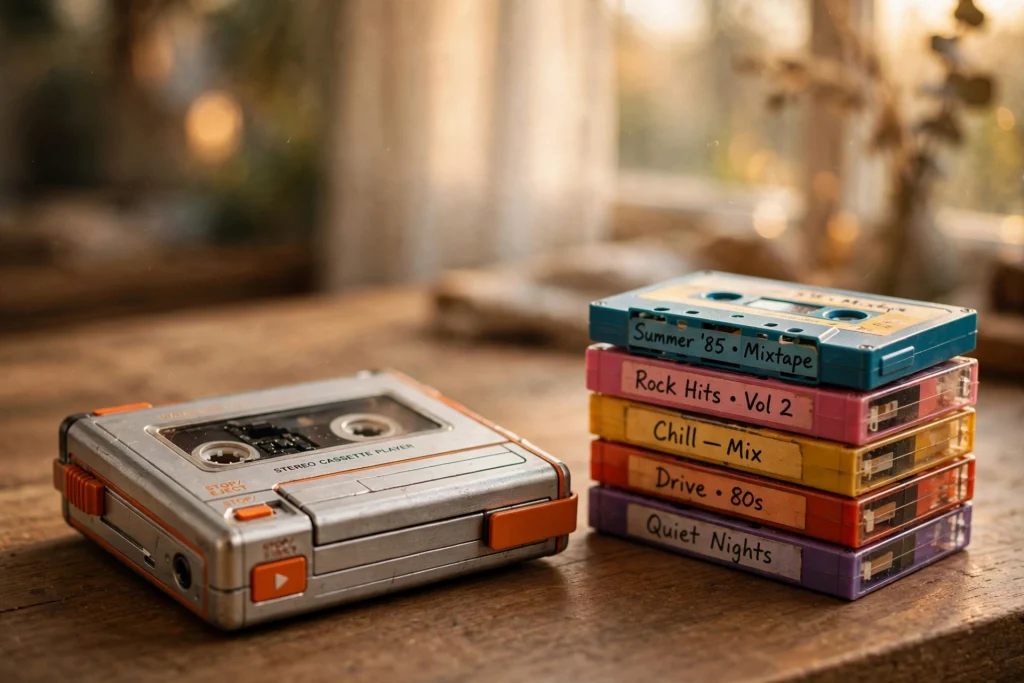
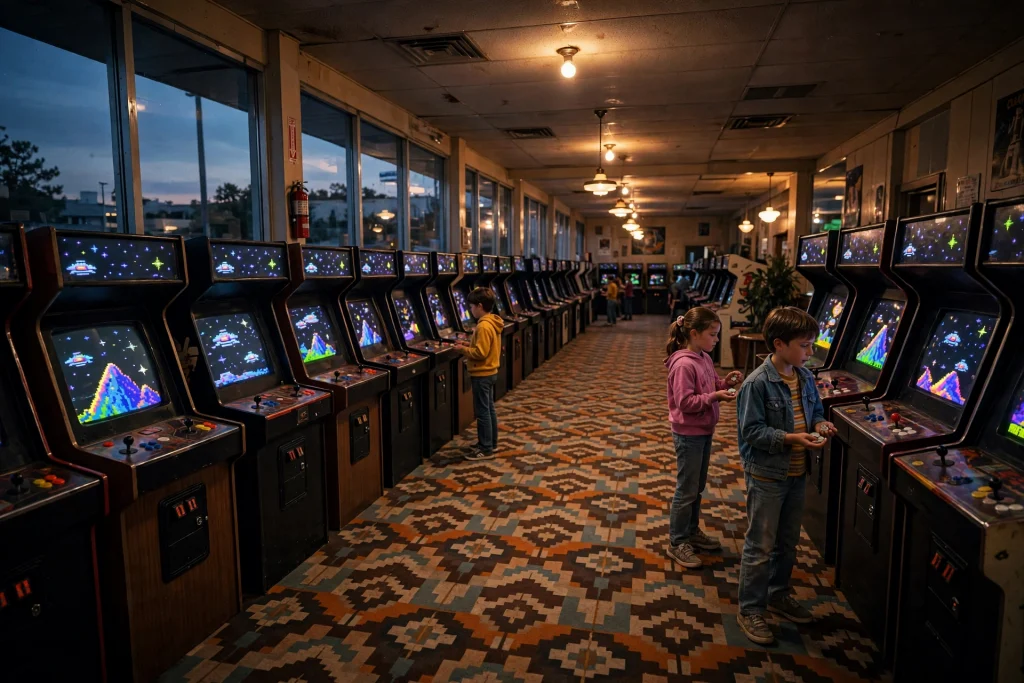
There are certain sounds that can teleport you backward in time. The screech of a dial-up modem. The clack of a flip phone snapping shut. And for millions of us who grew up in the 90s, the tinny, two-tone ding of the Game Boy boot-up screen — that little “Nintendo” dropping from the sky like a pixelated blessing — is the single strongest time machine ever made. The Game Boy didn’t just entertain us. It followed us under the bedsheets, into the backseat of long car rides, and onto every school playground in the country. It was the first gadget that truly belonged to us alone.
I can still feel the weight of it in my hands. That chunky gray brick with the chunky buttons, the cross-shaped D-pad pressing into my left thumb, the faint smell of warm plastic and AA batteries. Every kid I knew had a story about theirs. Mine starts in the summer of 1990, when my cousin let me hold his for exactly one Tetris game at a family barbecue — and I have honestly never wanted anything so badly in my entire life.
1989: The Little Gray Brick That Shouldn’t Have Worked
Let’s set the scene. It was 1989. Arcade machines were still kings. The Nintendo Entertainment System had the living room on lockdown. Portable gaming, to the extent it existed at all, meant those flimsy single-game LCD handhelds — the ones where you dodged the same three pixel cars for eternity and then the battery died and nobody cared.
Then Nintendo released the Game Boy, and everything about it felt slightly absurd on paper. It had a screen the size of a postage stamp, four shades of murky green instead of color, and graphics that made the NES look like a supercomputer. It was designed by Gunpei Yokoi, Nintendo’s brilliant engineer, who believed in something he called “lateral thinking with withered technology” — old, cheap, well-understood tech could beat flashy new hardware if you used it cleverly.
And honestly? He was completely right. The Game Boy launched at a price families could afford, ran for hours on ordinary batteries, and had one killer trick its fancier competitors didn’t: Tetris, bundled right in the box. While the console wars of the era raged between Nintendo and Sega in living rooms, the little gray brick quietly conquered backpacks and backseats. Across its whole line — the original, the Pocket, the Color — it eventually sold more than 118 million units. It didn’t win by being the most powerful. It won by being the most playable.
Tetris: The Pack-In That Changed Everything
Here’s a thing most people forget: the Game Boy almost shipped with a different pack-in game. Nintendo’s own Super Mario Land was the obvious candidate — Mario was the biggest star in gaming, after all. But a Nintendo executive named Henk Rogers had just secured the handheld rights to a Soviet puzzle game called Tetris, and he argued, with what history proved was total genius, that Mario sold to kids while Tetris sold to everyone.
He was right in a way that still feels staggering. Grandmothers played Tetris. Bus drivers played Tetris. My mom — who to this day cannot operate a TV remote without calling for help — played Tetris on my Game Boy until the batteries gave out and then demanded more batteries. The falling blocks were universal. No instructions needed, no story to follow, just that perfect loop: rotate, fit, clear, repeat.
And the music! That bouncy Russian folk melody — “Korobeiniki” — sped up as your stack got taller until your heart was pounding in time with it. When people talk about perfect game design, they’re usually describing Tetris without realizing it.
The Screen We Loved Anyway
Okay, let’s talk honestly about that screen. By modern standards, the original Game Boy display is comically bad. No backlight — you played by whatever light the universe gave you. Four shades of olive-green. Ghosting so dramatic that fast-moving sprites left little phantom trails behind them, like the pixels were too tired to keep up.
But here’s the strange thing: we never once complained. Not really. You just adapted — tilting the console toward the window, hunching under a streetlamp, angling yourself under the kitchen light like some kind of gaming contortionist. Every car ride after sunset became a desperate search for overhead lights at red lights. Ask anyone who owned one and they’ll nod — they remember the tilt.
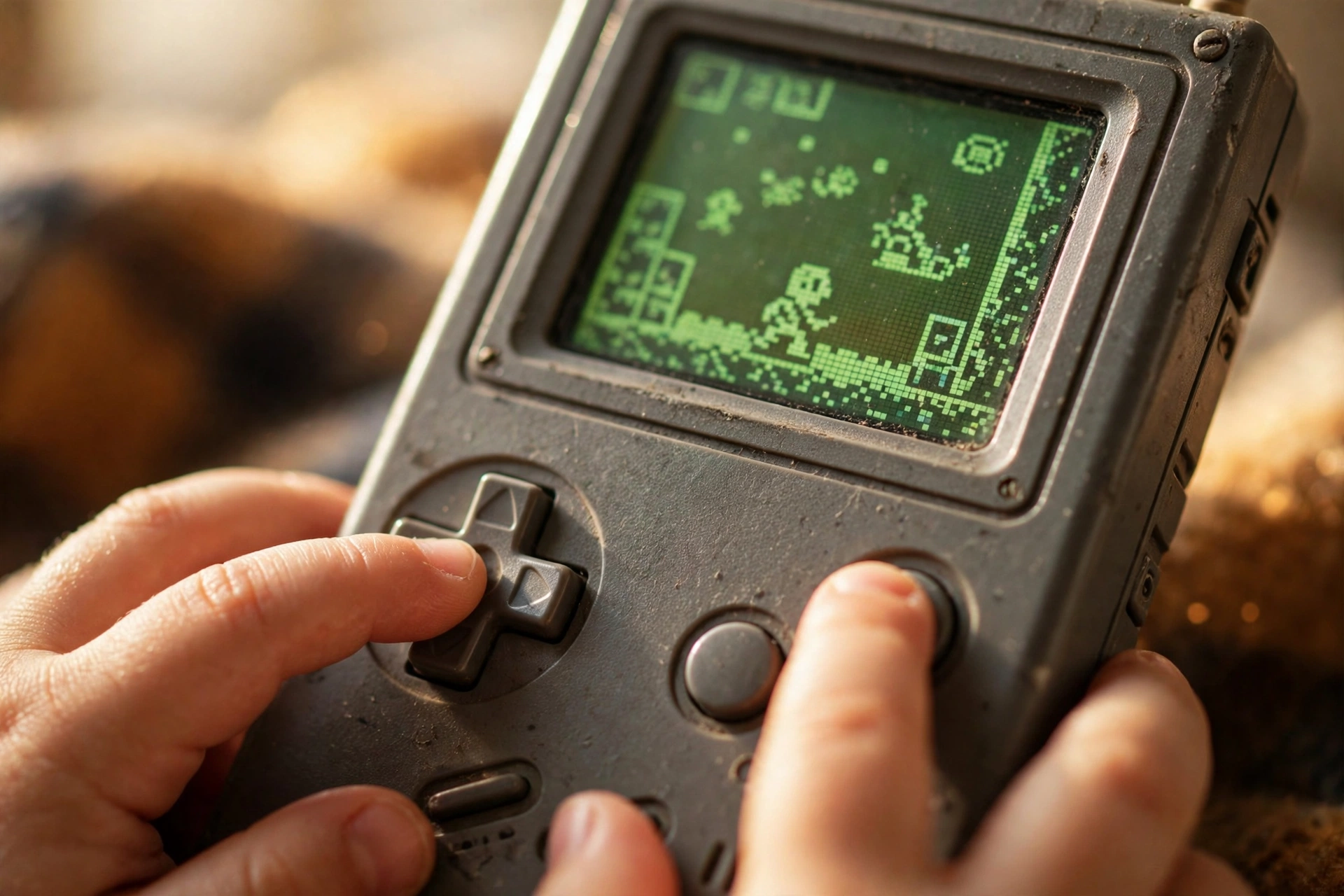
And the bedsheets thing — was that just me? There was something magical about playing under the covers at night, the greenish glow of the screen lighting up the little fabric cave you’d made, the volume turned all the way down so your parents wouldn’t hear. You weren’t just playing a game. You were smuggling joy past bedtime.
Years later, modders added beautiful backlit screens to old Game Boys, and they’re gorgeous — truly. But part of me feels like fixing the screen fixes something that was never broken. The squinting was part of the story.
Four AA Batteries and a Prayer
If the screen was the Game Boy’s charming flaw, the batteries were its honest-to-goodness villain. Four AA batteries. That was the price of admission, and the meter was always running. The official battery life was around 15 to 30 hours depending on the game and the volume, but to a kid, that felt like both forever and no time at all.
Every Game Boy kid developed the same sixth sense: the ability to hear their batteries dying. The sound would start to wobble, the screen would dim just slightly, and your stomach would drop because you knew exactly what was coming.
The Boss Fight Rule
There was an unspoken law on every playground: you do not start a boss fight on dying batteries. And yet — and yet — we all did it. We all stood there at 11% battery, staring at the final boss of Kirby’s Dream Land, doing the mental math like it was a hostage negotiation. “Can I beat him in eight minutes? Maybe if I don’t get hit…”
And when the power light flickered red? That little red LED next to the screen was the most feared light in a 90s kid’s life. Red meant stop everything, find batteries, now. No save points forgiving you. You either finished or you lost it all.
Rechargeable battery packs existed, and they were expensive, and they died even faster. So we all became battery scavengers, raiding TV remotes and flashlights, learning which brands lasted longest. Some kids’ parents bought batteries in bulk from warehouse stores, and those kids were royalty.
The Link Cable: Gaming’s First Handshake
Now we get to the thing that turned the Game Boy from a toy into a culture: the Link Cable. That thick gray cord with the chunky connectors was Nintendo’s strangest, smartest idea. It let two Game Boys connect for head-to-head play and, more importantly, for trading.
Picture a 90s school playground. Two kids sitting cross-legged on the grass, consoles connected by that cable, hunched over like surgeons. One kid has a Charizard. The other has a Blastoise. This is not a casual exchange. This is diplomacy.
The Trade That Took Twenty Minutes
The actual trading process was hilariously slow and dramatic. You’d connect, select your Pokemon, confirm, watch the little animation of the creature traveling down the cable, and hold your breath. Nobody — nobody — unplugged the cable mid-trade, because the playground legends were full of horror stories about kids who did and corrupted everything.
And then there was link battling in Tetris — two-player competitive Tetris, where clearing lines dumped garbage blocks on your opponent’s screen. Friendships were genuinely tested over link-cable Tetris.
The cable taught us something no game had taught us before: that gaming could be social in real life, face to face, with the person sitting right next to you. Long before online multiplayer, the Link Cable was the original social network — it just happened to be three feet long and gray.
1998: The Game Boy Color Revolution and the Pokemon Explosion
By the mid-90s, the Game Boy was supposed to be dying. The Sega Game Gear had color. New consoles were arriving. The little gray brick was nearly a decade old — ancient in tech years. Then 1998 happened, and Nintendo pulled off one of the greatest comebacks in entertainment history.
First came the Game Boy Color, finally giving us the color screen we’d dreamed about since 1989. And riding alongside it came two games that didn’t just sell well — they rewired childhood itself. Pokemon Red and Pokemon Blue.
If you weren’t there, it’s genuinely hard to explain how big Pokemon was. It wasn’t a game; it was a weather system. The playground economy ran on Pokemon cards, playground rumors ran on Pokemon secrets, and playground status ran on your Pokedex count. Kids who had never touched a video game were begging for Game Boys.
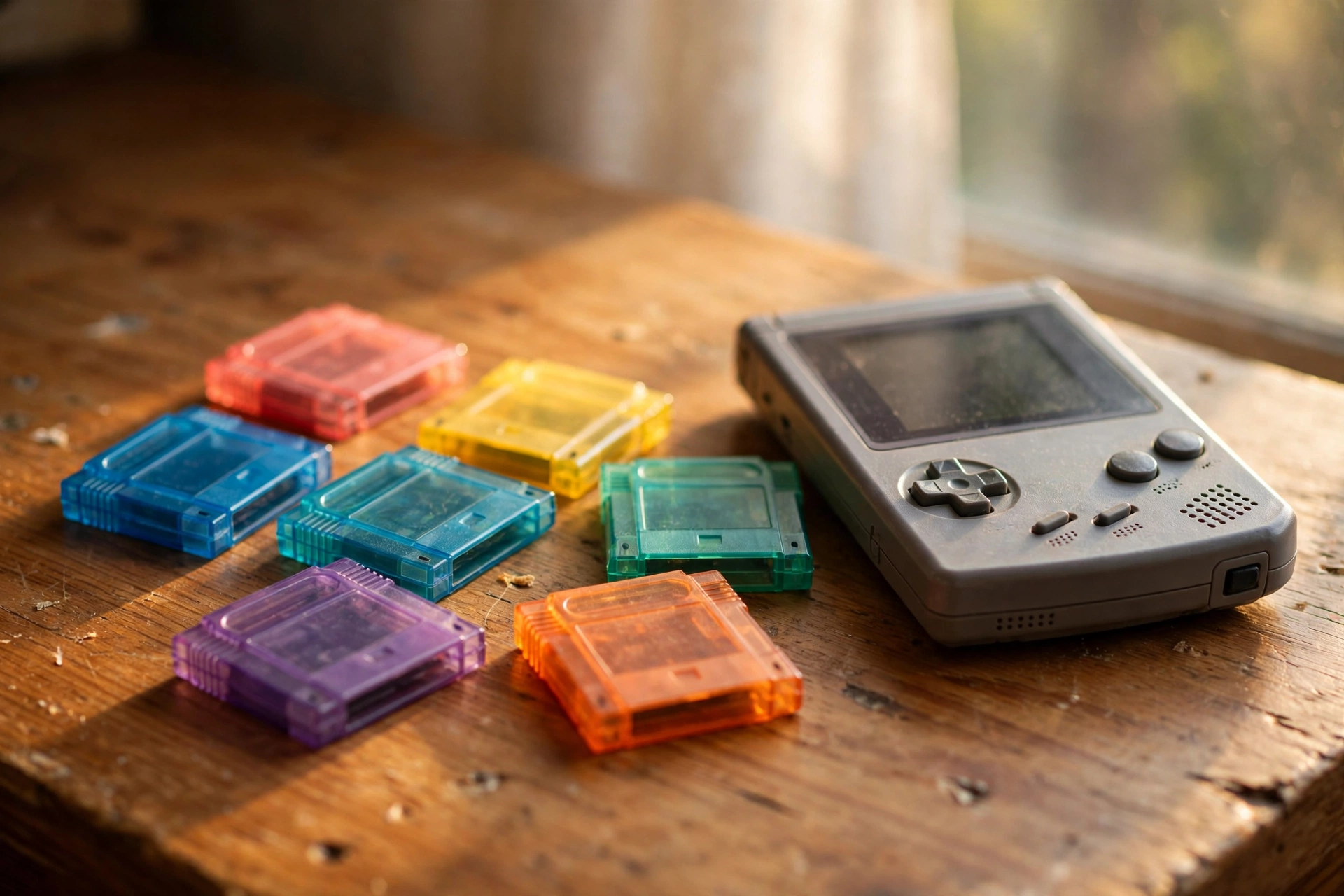
The Playground Economy
Trading reached its absolute peak in the Pokemon era. A level 100 Mewtwo was playground currency. Kids ran full trading businesses at lunch. “I’ll give you my Zapdos for your Articuno and your Gengar.” Deals were struck, betrayals were committed, legends were born. It was the 90s playground crazes at their absolute wildest.
Pokemon also did something quietly revolutionary: it made the Link Cable essential. You literally could not catch all 151 Pokemon alone — some only appeared in Red, some only in Blue, and a few only evolved when traded. Nintendo had built cooperation into the game’s DNA. To complete your journey, you needed a friend. In an era before online play, that was a radical, beautiful design choice.
Why We Still Can’t Let It Go
So why, in an age of phones more powerful than 1989 supercomputers, does the Game Boy still have this hold on us? Why do grown adults pay serious money for a thirty-year-old gray brick? Why do the chiptune melodies of Super Mario Land still get stuck in our heads?
Part of it is the simplicity. Modern games are magnificent, but they’re also work — tutorials, updates, battle passes, fifty-button control schemes. The Game Boy asked nothing of you except your attention. D-pad, A, B, Start, Select. That was the whole contract.
Part of it is the physicality. Cartridges you could hold and click into place with the most satisfying chunk in gaming history. A console with real buttons that clicked. A power switch that went thunk. Everything about the Game Boy felt real in a way touchscreens never will.
And part of it — the biggest part, I think — is that the Game Boy belonged to a specific chapter of our lives. It was there for the long car rides to grandma’s house. It was there under the bedsheets. When we get nostalgic about the Game Boy, we’re not really nostalgic about a gadget. We’re nostalgic about being nine years old, with nowhere to be and a full set of batteries.
The Collectors Keeping the Brick Alive
There’s a whole community now keeping the Game Boy alive — modders installing backlit screens, collectors hunting rare cartridge variants, musicians making entire albums with the original sound chip. The little gray brick has become a folk instrument, a design icon, a museum piece that people still actually play. Most gadgets from 1989 are e-waste. The Game Boy is a heirloom.
What the Little Gray Brick Taught Us
Looking back, the Game Boy taught a whole generation a few quiet lessons. It taught us patience — no saves, no shortcuts, just practice. It taught us that limitations can be a gift, that four shades of green were enough when the game was good enough.
Most of all, it taught us that play doesn’t need a living room. It can happen anywhere — in a backseat, under a blanket, on a playground bench with a cable linking you to your best friend. The Game Boy didn’t just make gaming portable. It made childhood portable.
So here’s to the little gray brick — to Gunpei Yokoi’s “withered technology,” to the ding of the boot screen, to Tetris at 2 a.m. under the covers. If you still have yours in a drawer somewhere, dig it out. Put in four fresh AAs. Tilt toward the light. And if you want to remember where Nintendo’s handheld journey really began — those 8-bit Nintendo days on the home console that started it all — you’ll find the roots of everything right there in your hands. You can also read more about the Game Boy’s history if you’re feeling the pull of the full story. Now if you’ll excuse me, I have a high score to defend.