It smelled like nothing else in the house — printer’s ink, fresh paper, and Christmas itself, all pressed between one heavy cover. If you carry sears christmas catalog memories in your heart, you know exactly what I’m talking about: that wonderful thud on the porch in late summer, the book that was somehow bigger than you were, and the feeling that the holiday season had officially begun months before the first snowflake fell.
They called it the Wish Book, and honestly, no name ever fit a book better. For generations of kids, it wasn’t a catalog at all. It was a treasure map, a daydream machine, a thick stack of pure possibility that lived on the living room floor from August straight through to Christmas morning.
The Day the Wish Book Landed on the Doorstep
Do you remember the exact moment? Not the holiday itself, but the arrival. The mail carrier hauling it up the walk, that heavy package landing on the porch with a satisfying thump. Kids would race each other to grab it, arms wrapped around a book that weighed nearly as much as they did.
And oh, that first flip-through. There was a ritual to it, almost sacred. You didn’t just open it — you spread it wide on the carpet, lay on your stomach, and sank in. The paper was thin, almost delicate, the kind that whispered when you turned a page. That sound alone could stop a whole room. Someone would say, “Is that the Wish Book?” and suddenly everybody was on the floor, noses practically touching the page.
Here’s what made it different from every other piece of mail: this book arrived when nothing was expected of it. It wasn’t a bill. It wasn’t a letter you had to answer. It was a gift that showed up months before Christmas, and it belonged to everyone in the house at once. Dad had his pages. Mom had hers. And the kids? The kids owned the toy section like it was their own private kingdom.
My favorite part was always the spine. A brand-new Wish Book had a stiff, proud spine, and by December that spine was cracked and sagging in a dozen places, each crease a record of some page that had been opened fifty times too many. You could tell what a family cared about just by where their book fell open on its own.
How Sears Christmas Catalog Memories Began in the Middle of the Great Depression
Here’s something that still amazes me: the book we remember so fondly was born in the hardest of times. The first Christmas-specific Sears catalog — then simply called the Sears Christmas Book — debuted in 1933, right in the depths of the Great Depression. It was a modest thing, just 87 pages, but it was packed with small wonders: fruitcakes, Mickey Mouse watches, and even live singing canaries you could order by mail.
Think about that for a second. In 1933, when money was so tight that families were counting every penny, Sears sent out a book of wishes. Not a book of things you could afford — a book of things you could dream about. That’s been the secret all along. The Wish Book was never really about selling. It was about the dreaming.
By the time the Depression ended, the Christmas Book had already woven itself into American holiday life. Kids who had circled toys with a stubby pencil in 1933 grew up and watched their own children do the exact same thing in the 1950s and 60s. The pages changed. The ritual never did.
It’s worth noting that Sears had been printing its famous general catalog long before the Christmas edition existed — the legendary “Big Book” that sold everything from jewelry to farm equipment to pianos to whole houses, according to its history. The Christmas Book was something different: a seasonal volume with one job — making the holidays feel magical.
The Ritual Every Kid Knew by Heart
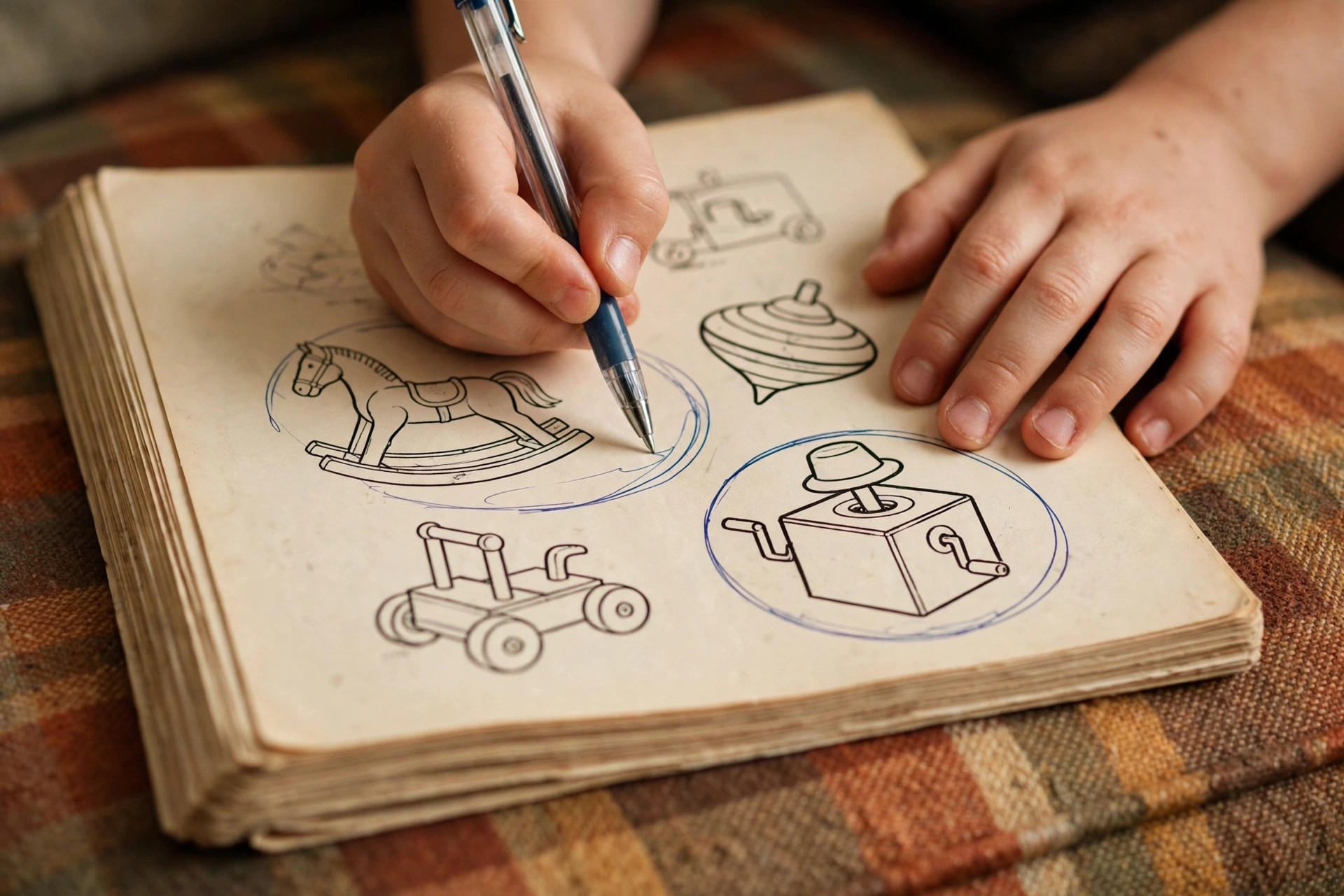
Every family had their own version, but the core ritual was universal, wasn’t it? First, you claimed the toy section. Not asked — claimed. You folded back the pages so the toy section stayed open, and that stack of dog-eared corners became a landmark your siblings learned to respect.
Then came the pen. Not just any pen — the special one. Maybe it was blue, maybe it was red, but it was the pen you used for one thing only: circling. And you didn’t just circle a toy. You circled it with intention, pressing hard enough to leave an indent on the next three pages. That indent was your signature. It said: I have decided. This is the one.
But here was the thing — you never circled just one. Oh no. A real Wish Book veteran circled a dozen, ranked them in a private mental list, and then spent weeks rearranging that list. Monday’s number-one choice was a bike. By Thursday, it was a train set. Come November, you’d circled something entirely different and convinced yourself you’d wanted it all along.
Siblings turned it into a science. “You already circled that one,” my brother would say, flipping past a page I’d marked. “You can’t have two number ones.” And we’d argue about catalog strategy the way generals argue about battle plans, as if the fate of Christmas itself hung on whether the red fire truck or the blue one got the thicker circle.
And let’s talk about the smell of those pages for a moment, because I swear I can still summon it. That mix of ink and newsprint and something almost sweet — like the pages had been baked in an oven. You’d press your nose right into the spine of the book and breathe it in, and somehow that smell meant Christmas was coming even when the calendar said August. Nothing on a screen has ever smelled like hope.
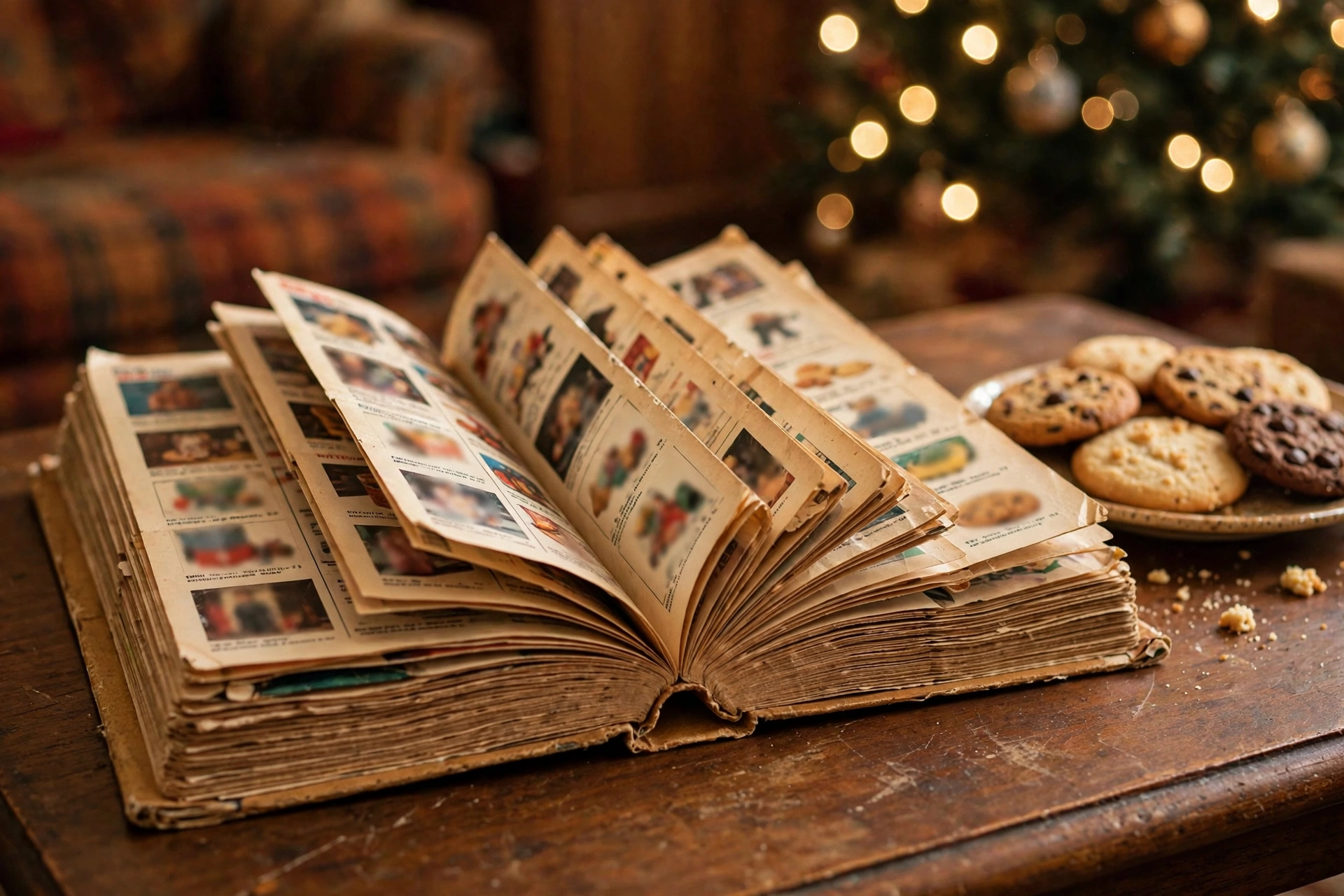
The book lived in the house for months. It migrated from the coffee table to the floor to the corner of the couch, collecting cookie crumbs and bent corners along the way. In our house it sat right next to the other giant book in the house — and between the two of them, they held the answers to every question a kid could ask. One told you where everything was. The other told you everything you wanted.
When the “Book of Wishes” Got Its Real Name
Here’s my favorite detail in the whole history of the Wish Book: Sears didn’t actually name it that. We did. For decades, families across the country called it the “book of wishes,” and in 1968 Sears finally listened and made it official, formally renaming the catalog the Wish Book.
Can you imagine that? A company so big it was practically a country, changing the name of its flagship holiday catalog because kids and parents had already decided what it should be called. That’s not marketing. That’s love.
By that 1968 edition, the book had ballooned to 608 pages — a true doorstop of a volume. Collectors note that some editions ran past 800 pages, and often about a third of the whole thing was toys. Just think about that: hundreds and hundreds of pages of nothing but the stuff of childhood dreams, printed by the millions. The printing plant that produced the Sears catalogs was reportedly turning out up to 7 million copies of the big books each year.
And the Wish Book arrived in late summer, just as kids were heading back to school — which meant that by Thanksgiving, those books were absolutely wrecked in the best possible way. Dog-eared, spine-cracked, pages circled and sometimes even snipped out to illustrate wish lists for Santa. You had months to wish, and every one of those months left its mark on the pages.
You can read the full Wish Book story — its 1933 debut, the 1993 discontinuation of the big-book catalogs, the brief comebacks — but no timeline quite captures what it felt like to be nine years old with that book in your lap. Some things you can’t learn from dates. You had to be there, carpet under your elbows, pen in your fist.
The Toys That Ruled the Wish Book Years
Flip through a Wish Book from any decade and you’re reading a secret history of American childhood. The toys changed every few years, but the feeling on those pages never did.
In the 1930s, the catalogs carried the simple wonders of the era — dolls with painted faces, electric trains that felt like pure magic, pedal cars that sold for about ten dollars and might as well have been real automobiles to a five-year-old. By 1942, with the world at war, the Christmas Book urged families to send gifts to members of the Armed Forces, and families did their holiday shopping from home because wartime rationing of gasoline and tires made trips into town difficult.
The late 1940s brought the cowboy craze — Western TV heroes rode across those pages, and kids who had never been west of the Mississippi wanted nothing more than a holster set and a ten-gallon hat. The 1960s turned every kid into a junior astronaut, with space toys and action figures capturing the excitement of the race to the moon. Hot Wheels cars, G.I. Joe, electric football games — each generation had its obsession, and the Wish Book always knew exactly what it was.
What Kids Actually Circled, Decade by Decade
Here’s the beautiful thing: the Wish Book wasn’t just selling toys. It was documenting childhood itself, year by year. The 1950s pages overflow with baby-boom abundance — rocking horses, dollhouses, chemistry sets. The 1970s bring string-art kits, board games with delightfully cooperative families on the box, and the first electronic toys that beeped and blinked.
The 1980s? That’s when the toy section truly exploded. Video game screenshots kids would never see again, action figures from every cartoon on Saturday morning, dolls with entire wardrobes. Kids who grew up in the 80s will tell you those pages are burned into their brains like nothing else. Close your eyes and you can still see them.
And through it all, the classics endured. Trains. Dolls. Bikes. Balls. The toys that had been circled in 1933 were still being circled in 1993, just with shinier paint and better batteries. Some wishes never go out of style.
The Pages We Skipped — and What They Taught Us Anyway
Every kid sped past certain sections — the tools, the appliances, the endless pages of grown-up clothes. But here’s the secret: we absorbed those pages anyway. Flipping through them year after year, we learned what a complete household looked like, what a “nice” living room was supposed to contain, what our parents quietly wished for while we were busy circling toys.
Looking back, those skipped pages were teaching us something the toy section never could: that Christmas wasn’t just about us. Mom had circled a mixer. Dad had folded the corner on a page of power tools. The Wish Book was a family document, and everybody’s dreams were in there if you knew where to look.
There’s a wonderful line in this beautiful tribute in the Akron Beacon Journal — that for many kids, the arrival of the annual Wish Book was nothing less than the unofficial herald of the holiday season. Reading it now, from an adult’s perspective, you realize the writer was describing something much bigger than a catalog: a whole era’s idea of what the holidays should feel like.
Why Circling a Picture Beat Clicking “Add to Cart”
Let me ask you something: when was the last time an online shopping cart made your heart race? Take your time. I’ll wait.
That’s the thing. The Wish Book understood something about desire that no algorithm ever will: wanting is better when it takes a while. You didn’t just see a toy and buy it. You saw it, circled it, thought about it for three months, talked your best friend into wanting it too, redrew your circle when the pen mark faded, and finally — finally — found out on Christmas morning whether the wishing had worked.
Those months mattered. Psychologists have a fancy name for it — delayed gratification — but kids in 1975 didn’t need a fancy name. They just knew that the toy they circled in September and dreamed about until December felt like a miracle when the wrapping paper came off. A miracle you could order in one click? That’s not a miracle. That’s a transaction.
The Wish Book also made wishing a team sport. You compared circles with your siblings. You negotiated with your parents — “If I get the bike, you can have the bigger stocking.” You showed the page to Grandma on the phone and described the toy in loving detail while she said “mm-hmm” and wrote it down. Try doing that with a screenshot.
And the anticipation had a physical location: that book, on that floor, with those bent pages. You could walk over to your wish any time you wanted and visit it. Kids today have wish lists too, but they’re buried in an app somewhere. Ours had a smell. Ours had a weight. Ours left ink on your fingers.
Shopping for toys back then was an event, not an errand — the same way a trip to the corner store for penny candy turned toy shopping into an afternoon adventure. You didn’t just acquire things. You experienced the wanting of them, and the wanting was half the fun.
The Slow, Quiet Fade of a Giant
All good things change, and the Wish Book was no exception. In 1993, Sears discontinued its big-book catalogs in the United States, and the Wish Book began to shrink — noticeably, year by year, like a sweater washed too many times. The internet was blooming, advertising was moving online, and the giant paper dream machine started to feel like a relic.
By 2005, the transformation was almost comical: Sears was producing something called the “Little Big Wish Book,” a tiny 2.5-by-2.5-inch pamphlet that got tucked into packages from online orders and handed out at auto centers. Imagine that — the book that once weighed as much as a toddler, reduced to something smaller than a coaster.
Sears tried to bring the magic back. There was a roughly 100-page edition in 2007, a mobile version in 2010, and a 120-page print revival in 2017. But as one nostalgic writer put it after flipping through the slim new version, it was no more extraordinary or magical than an ad circular. The pages were there. The feeling wasn’t. You can’t compress sixty years of childhood into 120 pages and call it the same book.
And honestly? Maybe that’s okay. Maybe some things are supposed to belong to their era. The Wish Book wasn’t just a catalog — it was a product of a specific world: a world with one big book in the house, months of anticipation, and kids on the carpet with a pen. That world is gone, and no revival edition can bring it back. But the memories? Those aren’t going anywhere.
What the Wish Book Gave Us That a Screen Never Will
Here’s what I keep coming back to, every time I think about that book: it taught us how to want things beautifully.
Not greedily. Not impatiently. Beautifully. With a pen and a circle and three months of dreaming. With negotiations and strategy sessions and whispered conferences with siblings. With the sweet, specific ache of seeing something wonderful and deciding, consciously, that it was worth waiting for.
The Wish Book was the first thing that ever taught us how to dream on paper. Before vision boards and Pinterest and mood boards, there was a kid on a shag carpet, pressing a blue pen into newsprint so hard it dented the next three pages. That dent was hope, made physical.
We had months to wish — and that’s what made the wishing matter.
Nobody ever circled anything in a hurry. That was the whole point.
So here’s my question for you, and I genuinely want to know: what did YOU circle in the Wish Book? Was it the train set with the little crossing gates? The doll with the impossible wardrobe? The bike you were absolutely, positively sure would change your life? And the real question — the one that matters — did it ever actually show up under your tree on Christmas morning? Tell me everything. The comments are open, the coffee’s on, and I have all day.

Pingback: Five-and-Dime Store Memories: Woolworth's Lunch Counter Days