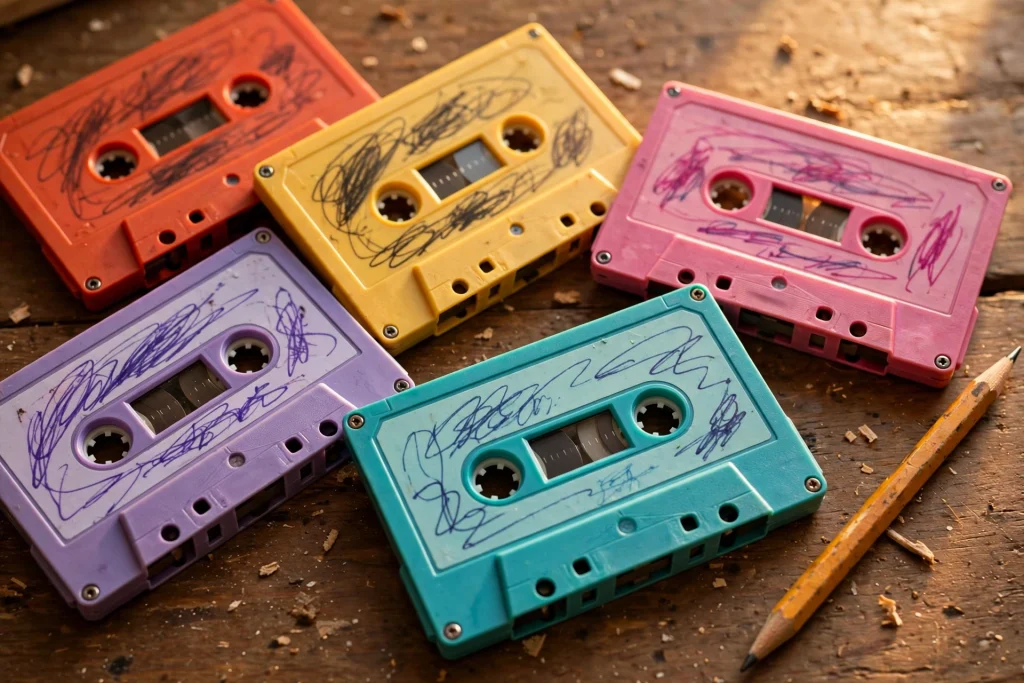
You could hear it from the parking lot. The gym doors swung open and out poured the sound of a hundred pairs of bobby socks squeaking and sliding across varnished wood, and just underneath it, the opening chords of a slow song drifting from a record player in the corner.
For one heartbeat, standing there with your dime admission sweating in your palm, your heart forgot how to keep time.
Some of my sweetest sock hop memories live right there in that doorway moment — the pause between the everyday world and the Friday-night world, the instant before you stepped inside and an ordinary school gym became the center of the universe.
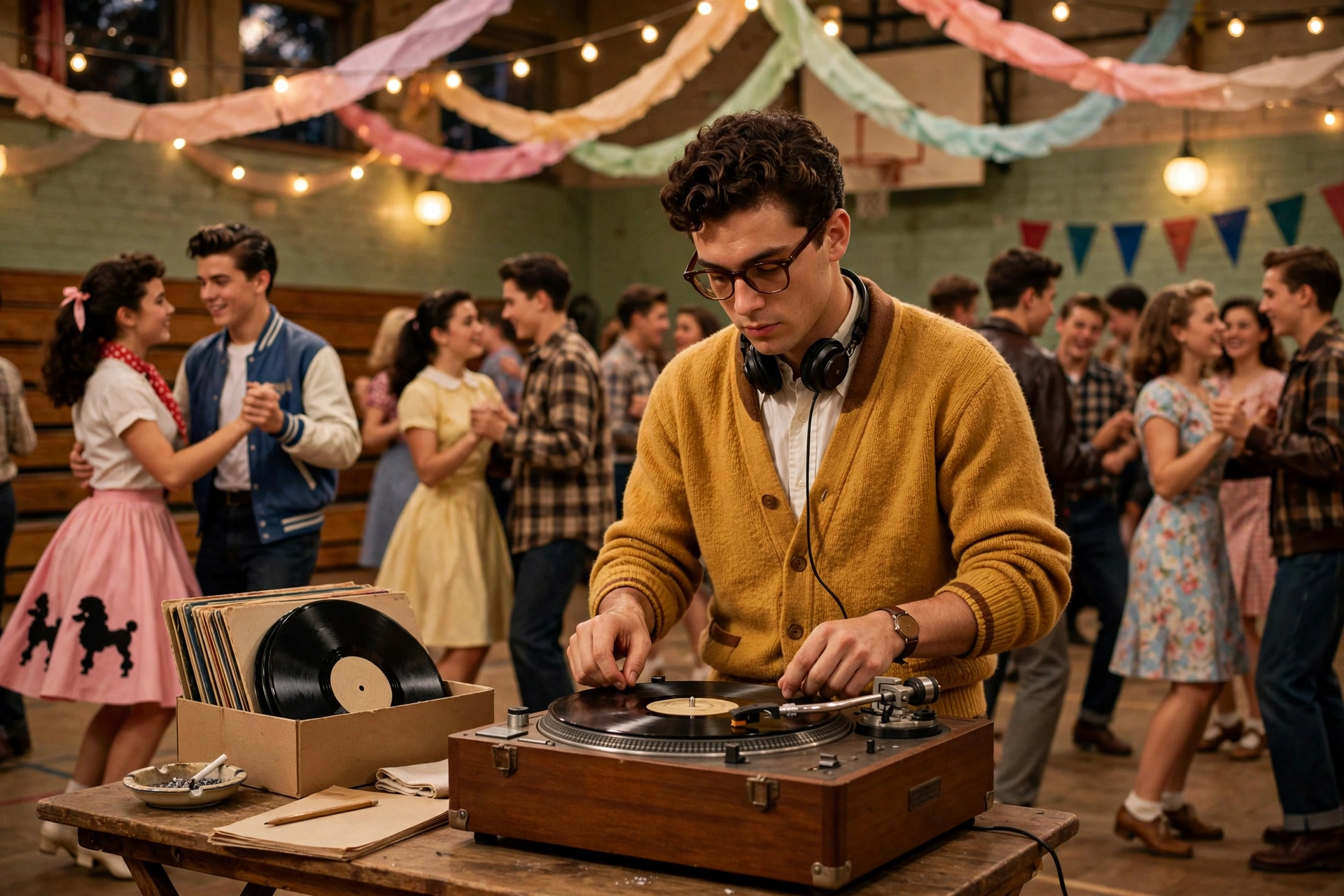
Do you remember the smell? Floor polish still fresh from the afternoon, sweet red punch in paper cups on a folding table, and the papery scent of crepe-paper streamers sagging under their own weight from the basketball hoops. The lights were dimmed, the bleachers were pushed back, and someone’s older brother was up on a folding chair taping one more streamer that wouldn’t stay put.
Nobody cared that it was just the gym. For three hours on a Friday night, it was a ballroom, a concert hall, and the most important place on earth.
I can still see the girls lined up along one wall and the boys lined up along the other, everybody pretending not to look while looking at everything. The girls in their poodle skirts and twin sets, cat-eye glasses and hair sprayed into beehives that could have survived a hurricane.
The boys in letterman jackets and ducktails slicked down with enough Brylcreem to grease a Buick. And every single one of them in socks — plain white ankle socks, because shoes were not allowed on that floor. Not on Friday nights. Not ever.
Table of Contents
My Favorite Sock Hop Memories Start With the Squeak of Socks on Wood
There is a sound that no recording can ever capture, and it lives only in sock hop memories. It is the sound of a polished gymnasium floor full of teenagers in stocking feet — not barefoot, mind you, but sock-footed — sliding, twirling, and shuffling across varnish. It had its own rhythm, a kind of shush-shush-SQUEAK that changed with the song.
Fast songs made it frantic. Slow songs made it soft and dreamy. And when a whole gym of kids tried to do the same new dance step at the same time, it sounded like a flock of geese learning to fly.
My friend Carolyn used to say she could tell how good the night was going to be by the first thirty seconds on that floor. “Listen,” she would whisper, grabbing my arm the second we walked in, and she was right. If the floor sounded busy, the night would be busy. If it sounded sleepy, somebody was about to start a conga line to fix it. That floor was the heart of everything, and our socks were our dancing shoes.
The gym floor was our ballroom, and a pair of white bobby socks was all the ticket we needed.
Think about how strange that would sound to a teenager today. No tickets on a phone. No playlist on a speaker. No car waiting outside. You walked in with a dime, you left your shoes at the door in a jumbled pile that smelled faintly of leather and gym socks, and you danced in your stocking feet like Cinderella’s whole town showed up at once.
Ask anyone who was there, and they will tell you the same thing: the socks were part of the magic. You could slide. You could spin. You could feel the floor talk back to you.
Why They Were Called Sock Hops (Yes, It’s Exactly What You Think)
People ask me this one all the time, and the answer is as simple and sensible as the 1950s themselves. The dances were called sock hops because the kids took their shoes off. That’s it. That’s the whole beautiful story.
The Gym Floor Rule
School gymnasiums had varnished wooden floors, and varnish is a precious thing. Street shoes — saddle shoes, loafers, penny loafers with actual pennies in them — would scratch and scuff that glossy surface, and the school janitor would have some strong words about it on Monday morning. So the rule was set: no shoes on the gym floor during dances. Everybody danced in their socks. And since the dances were held in the school gym, and everybody was hopping around in their socks, the name wrote itself. According to the history of the sock hop, these dances were publicized as “sock hops” as early as 1943, and they grew right alongside rock and roll into one of the defining rituals of the 1950s.
There was something wonderfully democratic about it. It didn’t matter whether your family had money or didn’t. When everybody’s shoes were in a pile by the door, everybody looked the same from the ankles down. Rich kids, poor kids, athletes, bookworms — all of them just sock-footed kids sliding around a gym floor, and the only thing that mattered was whether you could keep the beat.
A Phrase That Stuck Around
The funny thing is how quickly the name became something bigger than its explanation. “Sock hop” stopped meaning “a dance where you remove your shoes” and started meaning “the best night of the week.” When Danny & the Juniors released “At the Hop” in 1957, it documented exactly this world — the dance floor, the record player, the whole glorious scene — and the phrase was stamped into American culture forever. Grandparents who have never explained anything else in their lives will light up and explain a sock hop without being asked. It is one of those rare terms that carries its own joy inside it.

The Music That Made the Whole Gym Move
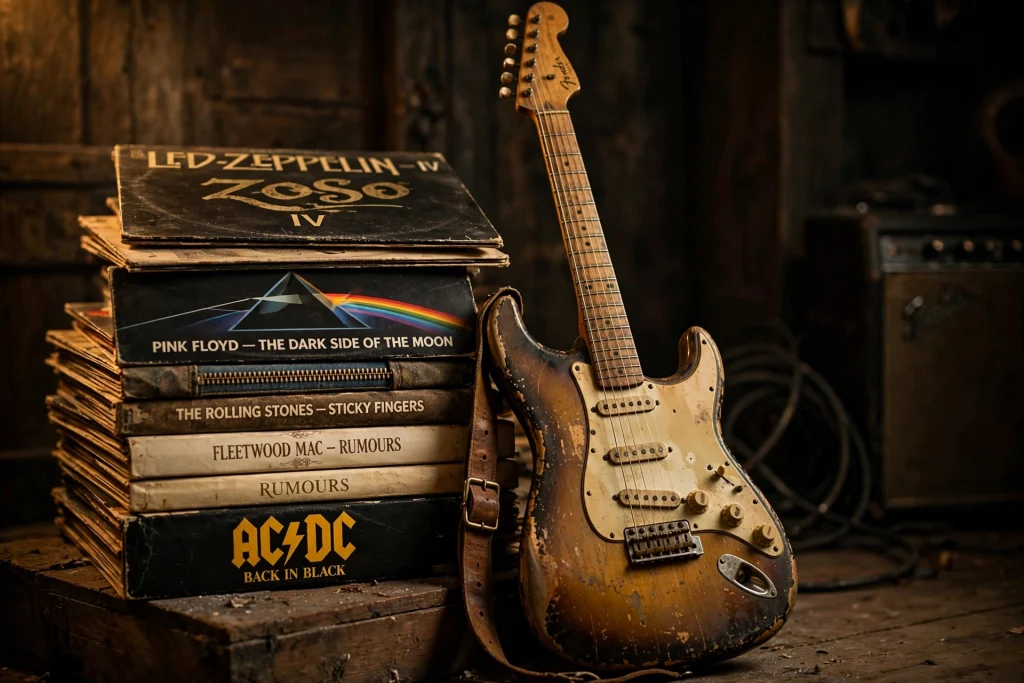
Long before anyone carried their music around on their shoulder during the boombox era, an entire Friday night could fit inside one crate of vinyl records. The DJ wasn’t a celebrity. He was usually a senior with a record player, a borrowed microphone, and the confidence of a small-town mayor. And when he dropped the needle, that whole gym leaned in like it was hearing a secret.
The DJ With His Crate of Vinyl
Our DJ was a boy named Ronnie who kept his 45s in a wooden crate his father had made him, alphabetized, God help us, alphabetized. He treated those records like treasure, and in a way they were. Each one was a little black promise: this song will make the floor shake, this song will make the couples sway, this song is the one you play when you want everybody singing at once.
He had the touch. He knew when the fast dances were getting the crowd tired and it was time to drop a slow one. He knew the exact record that would get the teachers to stop patrolling and start tapping their feet.
There were no playlists, no algorithms, no shuffling. Just a turntable, a stack of 45s, and a teenager’s instincts. When the needle scratched and the music wobbled for half a second, nobody complained. That little wobble was part of the night, like the smell of the punch and the streamer that kept falling down. Perfection would have felt wrong. We wanted it human.
Songs We All Knew by Heart
And oh, the songs. Bill Haley’s “Rock Around the Clock” could turn a sleepy gym into a stampede in eight bars. Chuck Berry’s guitar made the floorboards hum. Buddy Holly’s voice made the girls sigh in a way their mothers pretended not to notice. The Platters’ smooth harmonies were made for slow dancing, and “In the Still of the Night” by the Five Satins could quiet two hundred teenagers down to a hush — try getting that kind of silence out of kids today without confiscating their phones.
We didn’t just listen to these songs. We lived inside them. Everybody knew every word, every drum fill, every saxophone break. When “Yakety Yak” came on, the whole gym did the shouting part. When the first notes of “Earth Angel” floated out, couples materialized out of thin air like the song had summoned them. Music wasn’t background noise at a sock hop. Music was the reason the walls existed. And when that last slow song played, nobody — nobody — sat it out.
Three minutes. One slow song. And a memory that has lasted sixty years.
The Slow Dance: Three Minutes That Felt Like Forever
If the fast dances were the party, the slow dances were the point. Everything about a sock hop built toward those three quiet minutes when the DJ dimmed the lights a little lower, dropped the needle on something dreamy, and the whole gym exhaled. Two hundred kids who had been shouting and sliding and doing the Stroll suddenly went still, and you could hear the needle’s soft hiss before the first note landed. That hiss was the most exciting sound in the world.
Working Up the Courage to Ask
Here’s the part nobody talks about enough: the asking. In 1958, you didn’t send a text. You didn’t like a photo. You walked — on trembling sock feet — all the way across a gymnasium floor, past the punch table, past the chaperones, past every witness on earth, and you asked a girl to dance with your actual voice. “Would you like to dance?” Five words. It felt like defusing a bomb.
I have watched grown men — grandfathers now, with great-grandchildren — go pale remembering this. Because it was the bravest thing they had ever done, and they knew it. The walk across that floor was longer than any hallway in the school. Every eye followed you. Your friends were watching. Her friends were watching. The chaperone by the door was watching. And if she said yes, you floated. If she said no — well, you learned something about resilience that no pep talk could ever teach you. Either way, you had to walk back.
The girls had their own version of the ordeal. The “ladies’ choice” dances and the snowball dances and the spotlight dances were mercy rules, chances for a girl to ask without the whole ritual of being chosen. And let me tell you, when the DJ announced a ladies’ choice, the floor changed instantly. Boys who had been leaning against the bleachers trying to look bored suddenly stood very straight. Girls who had been giggling in a corner suddenly went quiet and purposeful. It was the one moment when the power flipped, and the whole gym held its breath.
Hand on Shoulder, Heart in Throat
And then there you were. His hand on your shoulder — or her hand in yours — swaying in a slow circle under sagging crepe paper, with two hundred other couples doing the same dance three feet away from you, and it felt like you were completely alone. The chaperones kept the lights dim but not dark. The teachers walked the edges of the floor with their arms folded, making sure the distance between couples stayed decent. But inside that little circle of a slow dance, the rest of the world went soft and blurry.
Do you remember what your first slow dance felt like? The careful way you held each other, like you were both made of something breakable. The way you could hear your own heartbeat and were sure the other person could hear it too. The smell of her hairspray or his aftershave. The way the song seemed to last forever and end too soon, both at the same time. Paul Anka’s “Put Your Head on My Shoulder” wasn’t just a song title — it was an instruction, and a whole generation followed it.
Nobody ever forgot who they held during the last slow dance of the night. Ask anyone. They will tell you the song, the gym, the color of her dress or the cut of his jacket, like it happened last Friday. That is the thing about slow dances at a sock hop: they were only three minutes long, and they never ended. Not really. They’re still going, somewhere in the back of the heart, every time an old song comes on the radio.
Dressing the Part: Poodle Skirts, Letterman Jackets, and Ducktails
You couldn’t just show up at a sock hop. Well, you could, but you wouldn’t. The getting ready was half the event. Girls spent the whole afternoon on their hair and the whole week deciding on their outfit, because what you wore to the sock hop was a statement, and everybody read it.
What the Girls Wore
The poodle skirt is the one everybody remembers, and for good reason — it was perfect. A wide felt circle skirt that flared out when you twirled, with a poodle appliqué trotting around the hem like it owned the place. Underneath, layers of crinoline petticoats that rustled when you walked and billowed when you danced.
Add a tight sweater or a twin set, a scarf tied at the neck, saddle shoes or ballet flats (carried in a bag, since shoes came off at the door), and hair done up in a ponytail with a ribbon or teased into a beehive.
Cat-eye glasses. A charm bracelet that jingled when you moved your wrist. You didn’t just walk into the gym. You arrived.
And the bobby socks — the famous white ankle socks that gave the whole night its name — were folded down just so, sometimes with a little lace trim. Girls compared socks the way kids today compare sneakers. Plain white was classic. A little ruffle at the top meant you had style. It sounds like a small thing, but in 1957, a small thing was everything.
What the Boys Wore
The boys had their own uniform, and it was just as strict. A letterman jacket if you had earned one — and if you hadn’t earned one, you borrowed your older brother’s and hoped nobody asked questions. White T-shirt with the sleeves rolled, or a button-down shirt with the collar up.
Jeans with the cuffs rolled high, or khakis pressed sharp. And the hair — the glorious, architecture-defying hair. Ducktails in the back, pompadours in the front, sideburns just long enough to worry the principal. Brylcreem, Vitalis, or whatever grease your father used, applied with the seriousness of a military operation.
There was an unspoken contest every Friday night: who looked the sharpest. The winner didn’t get a trophy. He got something better — a girl’s hand in his during the slow dances. And every boy in that gym knew it.
The End of the Night: Punch Cups, Crepe Paper, and the Walk Home
All good things ended at ten o’clock, and the end of a sock hop had its own rituals. The DJ would announce the last dance — always a slow one, always the one that mattered most — and couples who had been shy all night suddenly found each other on the floor. When the needle lifted for the final time, nobody moved for a second. Then the lights came up, harsh and honest, and the magic dissolved into a regular school gym with paper cups on the floor.
The punch table told the story of the night. Empty cups stacked in leaning towers. The punch bowl with red dregs at the bottom and a ladle resting crooked. Cookie crumbs on the tablecloth. Somebody’s mother had made those cookies, and somebody’s mother was probably waiting in the parking lot right now, engine running, wondering why teenagers couldn’t just say goodbye and get in the car.
Then came the great shoe scramble by the door — a hundred pairs of shoes in a pile, and everybody digging for their own while hopping on one sock foot. The streamers were already being taken down by the cleanup crew, the ones who had drawn the short straw on the decorating committee. The balloons popped one by one. And couples walked out into the cool night air, suddenly shy again now that the music had stopped, walking a little closer together than they had walked in.
Years later, dancing would trade the gym for glitter and mirror balls during the disco era, and that was fine, that was its own kind of wonderful. But it never replaced this. Nothing replaced the squeak of socks on varnish, the dime in your palm, the walk across the floor to ask one terrifying, wonderful question.
The streamers came down on Monday morning. The feeling never came down at all.
So here is my question for you, and I mean it from the bottom of my heart: who did you slow dance with at your first sock hop? Do you remember the song? The color of the streamers, the taste of the punch, the way your knees shook on that long walk across the gym floor? Tell us in the comments — because somewhere out there is the person you danced with, and they might just be reading this and smiling, swaying a little, sixty years later, under crepe-paper streamers that only exist in memory now.